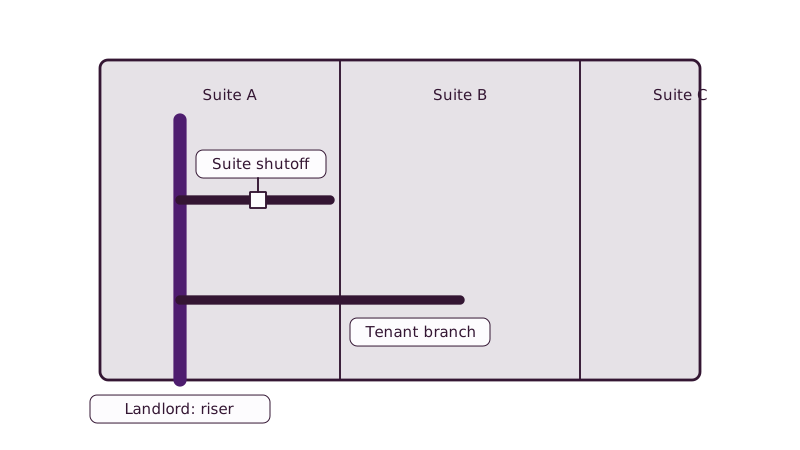
A commercial plumbing emergency is any leak, overflow or backup that stops customers from being served or threatens the building, and the first move is the same everywhere: close the main shutoff, keep people away from wet electrical gear and write down what happened. Then send the request on our quote page so a local plumber who works on commercial buildings can be arranged. Residential-scale problems start from the Rubidoux Ridge Plumbing home page.
Which problems are emergencies in a commercial building?
Anything you cannot stop or contain by closing a fixture valve counts: a broken supply line spraying a stockroom, a main sewer backing up out of floor drains, a water heater that fails and floods a utility closet or a gas odor in a kitchen. A running toilet or a slow sink is a normal booking, not a rush.
Commercial sites change the stakes. Water on a tile floor in a retail shop is a slip hazard during opening hours. A backed-up restaurant drain may raise health-rule questions, so check with the county health department. Tenants in a shared building may find the problem sits in the landlord's pipe, so the first call can be to the property manager as well.
Mention the business type when you write in. A salon, a dental office, a taqueria and a warehouse all need different equipment, from floor sinks and grease handling to sand-oil separators and multiple restrooms.
What should I do in the first ten minutes?
Close the main water valve for the unit or the building, stop using every fixture and cut power in rooms with standing water, but only when the panel can be reached dry. Move inventory and paperwork off the floor, photograph the source and the damage, and tell anyone on site to stay clear of wet cords and outlets.
Find the shutoff before anything happens. In multi-tenant buildings there may be one for each suite and one for the whole property, and a landlord often holds the key to the riser room. Where water comes through a ceiling, clear the floor below it and keep people out of that area, because a soaked ceiling panel can drop without warning.
For gas, get out of the building and ring SoCalGas on 1-800-427-2200 when outside. SoCalGas serves Riverside, Moreno Valley and Loma Linda, per its published cities-served list. Call 911 if the smell is strong.
Write the time, what you shut off and what you saw. Insurers and landlords usually ask for exactly that.
Who fixes it, the tenant or the landlord?
The answer turns on your lease and the location of the failure. Pipes inside the leased space and fixtures you installed are often the tenant's concern, while risers, the main sewer lateral and shared lines are usually the property owner's. Read the lease, notify the landlord immediately in writing and ask which plumber they want to use before work begins.
Disputes slow repairs, so do the stop-the-damage steps first and sort the cost afterward. Keep every invoice and photograph. A plumber's written quote should state the cause and the scope, which helps the later conversation about who pays.
Property managers often have preferred vendors and access rules for elevators and after-hours entry. When we arrange a visit, tell us if the building requires a certificate of insurance or a work order. You can note it in the request.
Where can I find a commercial plumber close to me in Riverside?
Describe the business, the problem and the address area on our request form, and we'll arrange for a local plumber who takes commercial work to contact you. The form and phone are staffed Monday to Friday, 9am to 5pm. We cannot promise a response time, so for an active flood close the main first.
Commercial jobs differ from home repairs: larger pipe sizes, grease and sand traps, backflow assemblies, multi-fixture restrooms and landlord approvals. Ask the plumber whether they do this kind of work regularly and whether they carry the business insurance your lease asks for. California's Contractors State License Board explains at cslb.ca.gov how to check a contractor's license, which is worth doing before a large repair.
Spaces in Moreno Valley and Loma Linda run through different building divisions from Riverside. Permit rules turn on the job and the address, and the quote from the plumber ought to state them.
What will the plumber probably check first?
The plumber locates the shutoffs, finds where the water or waste is actually coming from, and works out whether the fault is a fixture, a branch line or the main. For a backup, a camera or a cable run through the cleanout shows where the blockage is. For a leak, pressure and access to the wall or ceiling decide the route.
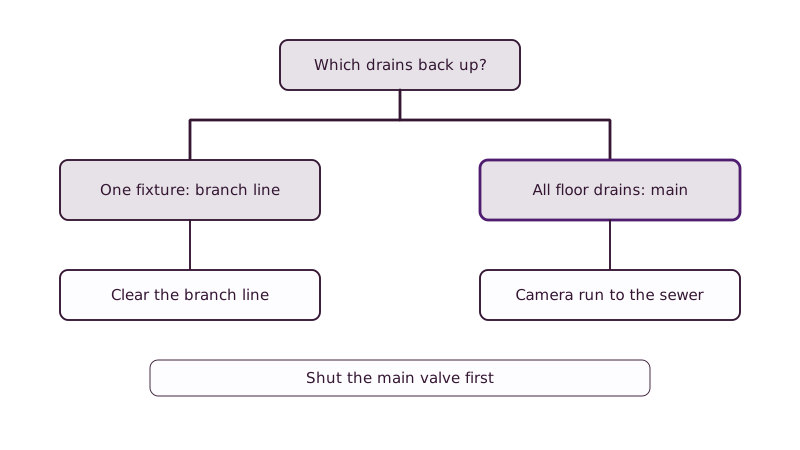
Expect questions about when it began, what changed and whether other tenants have the same trouble. A single drain backing up points to a branch line. All floor drains backing up points to the main lateral or the city sewer, which in Riverside is maintained by Public Works, (951) 826-5311 for the non-emergency line. The sewer authority covers the public line, but the lateral serving your building is often the owner's, so check the lease and the property records.
Written quotes come before larger repairs. Emergency stabilizing steps, such as stopping a leak or clearing a drain, may start sooner, and you should ask what is covered by that first step.
Common questions
Is a permit required for an urgent repair at a business?
How does a commercial plumber differ from a residential one?
Is it possible to receive a written price ahead of the work?
What should I have ready when I submit the request?
Guides in this section
- Commercial plumbing
Commercial backflow testing for Riverside, Moreno Valley and Loma Linda businesses: who sets the schedule, what a test involves and how to…
- Costs
What published guides say a plumber charges per hour, how commercial work is priced differently, and how to compare written quotes for…
Sources used
Page updated