Yes, a drip costs you, though seldom enough to explain a big jump alone. EPA WaterSense estimates a faucet dripping once per second at upward of 3,000 gallons annually. If a bill suddenly leaps, suspect a buried pipe, an irrigation line or a toilet first. Fixture repairs live in our faucet, sink, shower and disposal hub, while this page tells you whether your drip is the culprit.
Along the way: a meter-reading test, the other usual suspects, and the repair itself.
What does one drip cost over a year?
The EPA WaterSense Fix a Leak Week page calculates a drip each second at over 3,000 gallons per year. It adds that leaks across a typical home can total above 9,300 gallons in a year. So one faucet is a modest slice of the whole, yet cheap to cure.
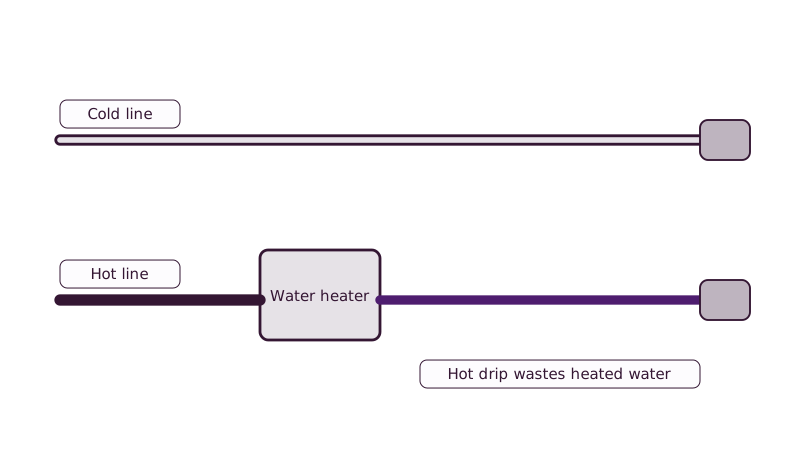
Slower drips waste less, and a thin continuous stream wastes far more, so stop the stream first. Hot-side drips carry a second cost, since the water was heated before it ran away.
What a bill displays depends on the utility. Riverside Public Utilities customer service answers at (951) 782-0330, Moreno Valley water comes from EMWD or Box Springs Mutual depending on the address, and Loma Linda utility billing is at (909) 799-2845. Ask any of them how usage is measured and whether past readings are available.
Is a hot-side drip worse than a cold one?
Slightly, yes. A drip from the hot handle wastes water you already paid to warm, so the cost shows up on both the water bill and the gas or power bill. A water heater that keeps refilling to replace the lost hot water cycles more often, which is a small but constant drain.
To locate the culprit, note whether the drip comes from one handle or both. A drip on only the hot side usually means a worn hot-side cartridge or seat. A drip on both sides, or one that continues no matter which handle moves, points at the faucet body, and replacing the whole faucet is often the better route.
A dripping tub or shower faucet is the same story with higher stakes, because tub spouts run longer and stain fixtures. The tub guide, fixing a leaky bathtub faucet, shows the cartridge route step by step.
When is a plumber worth calling?
Book one if the drip outlasts a new cartridge, if a stop valve will not close, if a cabinet floor is wet or a ceiling is stained, or if the meter keeps creeping with every fixture off. Plumbers can also pressure-test lines and locate leaks in walls.
For hidden leaks, ask about leak detection, and see leak detection pricing for guide numbers. Starting is simple: ask us for a written quote and we pass your request to a local plumbing business that visits. We cannot promise how fast.
Mention a suspected slab or in-wall leak on the request. Water soaking framing can lead to mold, so avoid a long wait.
The Rubidoux Ridge Plumbing home page lists everything else we handle.
What does fixing a dripping faucet involve?
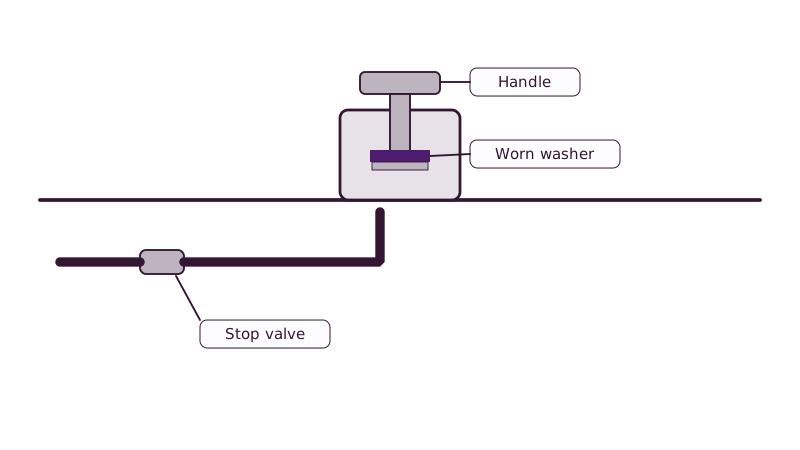
Shut the stops under the sink, block the drain so nothing gets lost, and take off the handle. Replace the worn washer, O-ring or cartridge with the exact match, put it back together, and turn the water on slowly. Compression faucets use rubber washers; cartridge, ball and ceramic disc designs each take their own parts.
Take the old part to the store to match it. A faucet that is old and pitted, or has a corroded seat, may be better replaced outright. Fuller walkthroughs: sink faucet leak repair and general faucet drip repair.
Mineral crust builds on parts. Riverside Public Utilities reports average hardness of 197 mg/L in 2025, near 12 grains per gallon, so scale on seats and aerators is plausible. A vinegar soak loosens it, though a worn seat still needs replacing.
How do I find out if the faucet is the cause?
Try the EPA's meter test. With everything off, write down the meter reading, stay away from the water for two hours, then check it once more. Any change, the EPA says, suggests a leak somewhere. A moving dial does not prove the faucet is guilty, so the checks below narrow the field.
Work through these in order. Toilet: add food dye to the tank, skip flushing for ten minutes, and treat any color in the bowl as a leak, per the EPA. Outdoors: hunt for soggy soil, a weeping hose bib or a sprinkler zone that never fully shuts. Cabinets: wipe supply lines and valves with dry paper towel and look for dampness.
A meter that moves with nothing visibly wet suggests a buried or in-wall line. Next steps appear in the guide to a high bill without a visible leak, and leak work in general shows how plumbers trace hidden ones.
Which other things push a water bill up?
Running toilets, irrigation timers, a pool top-up, fresh landscaping, extra people home and a rate change all show up regularly. The EPA suggests looking at a cold month: a four-person household past 12,000 gallons could have serious leaks. Summer lawn watering can also lift a bill.
Billing cycles vary in length, so a longer one can imitate a spike. Compare dates, units and the same period last year. A water softener can matter too, and softeners and bills covers how.
The wider list sits in reasons a bill runs high, and the page on a toilet that runs nonstop deals with the largest everyday leak source.
Common questions
How long does a drip repair visit last?
Which questions suit a plumber visiting a leak?
Do I need to be home during the repair?
Sources used
Page updated