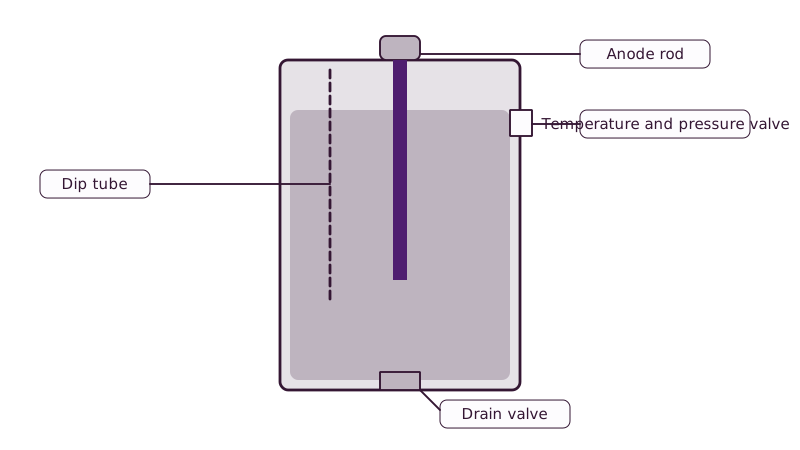
Inside a tank water heater hangs a metal anode rod that corrodes so the steel tank does not, and replacing it before it is used up keeps rust off the tank walls. Once it is gone, the tank itself begins to rust through. For the wider picture of tank care and repairs, see the Riverside water heater repair page. To have a plumber check yours, use the request form.
What is the anode rod for in a water heater?
The rod is a sacrificial metal, usually magnesium, aluminum or an aluminum-zinc mix, that is more reactive than the steel tank. Water attacks the rod first, so the tank lining and steel last longer. When the rod is consumed, corrosion moves to the tank itself, and a leak from the shell is the end of the heater.
Of all the parts in the system, the rod costs least, which makes it the one meant to fail. You will find it threaded into the tank's top or beneath the hot outlet fitting. Some heaters have two rods. Tankless units do not have one, so this applies to tank models only.
Corrosion speed depends on the water. In its 2025 water quality report Riverside Public Utilities gave average hardness as 197 mg/L, roughly 12 grains per gallon, whereas the Eastern Municipal Water District's 2025 table puts Mills-area hardness between 5.1 and 7.5 grains per gallon, varying by source. Water that is harder or more mineral-rich can use up a rod at a different rate, so check it by inspection and not by a calendar.
What is the right replacement interval for an anode rod?
There is no single interval. Many manufacturers suggest an inspection every few years, and replacement when the rod is thin, coated in scale or bent, with the steel core wire showing along much of its length. Heaters on harder water, or with softeners, may need a look sooner. Checking costs little compared with a tank.
A practical routine is to check it every few years and more often if it is wearing quickly. Some manufacturers say softened water can wear a rod faster, so households with a softener may want to check more often. Our overview of water heater lifespan shows where the rod fits among the signs of age.
Warning signs that the rod is spent include rust-colored hot water, popping or rumbling noises from sediment and a rotten-egg smell. That last one can also point to a reaction between the rod and bacteria in the tank, and a different rod material sometimes fixes it.
Which type of anode rod suits Riverside water?
Magnesium rods are the common default, aluminum or zinc-aluminum rods are the usual alternatives for some water conditions, and powered rods use a small electric current and are not consumed in the same way. A plumber picks by the tank, the water and the smell, with the heater's manual as the guide.
Local water is mixed. Riverside's supply comes from groundwater, while EMWD's blends imported and local sources, and your address may be served by Riverside Public Utilities, Western Municipal Water District or Eastern Municipal Water District, so check the bill. Magnesium is a reasonable first choice. Hot water that smells of sulfur may improve with a rod made of aluminum or a zinc-aluminum alloy, though aluminum leaves deposits some households dislike.
Tight headroom, such as in a closet or garage, calls for a segmented or flexible rod that bends to fit. Make sure the replacement matches the thread size and length, which is printed in the heater's literature.
What are the steps to swap the rod?
Switch off the gas control or the electric breaker, shut the cold supply valve, and open a hot tap. Draw off a few gallons at the drain valve so the water level falls beneath the rod. Back the old rod out using a 1-1/16 inch socket, install the new one, seal the threads, and refill the tank before you restore power.
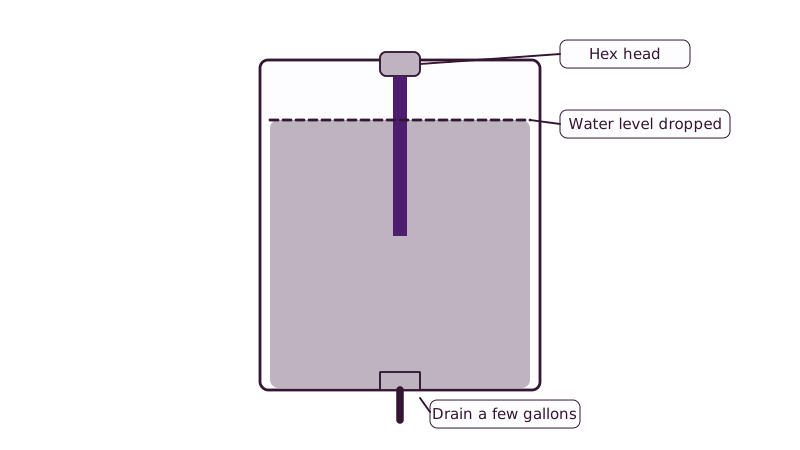
The rod is often stuck from years of scale, so a breaker bar or impact wrench helps. Check the hot water is flowing at the tap before turning the gas or power back on, because firing a dry tank damages elements and the tank. Open a nearby hot faucet until the air stops spitting.
The tank holds scalding water, and gas heaters have a vent and flame that should not be disturbed. Plumbers do this job often, and during the same visit they can also look over the drain valve and the relief valve. Ask Building and Safety, Riverside (951) 826-5800, whether a rod swap alone needs a permit, and always ask if the work will touch the gas or the connections.
Can I do this myself or should a plumber?
A handy owner with the right socket and a free hour can do it on an easy heater. The difficulty is a rod that will not break loose, low ceiling clearance and a drain valve that sticks or clogs with sediment. If any of those describe your situation, or the heater runs on gas and you are unsure, hire a plumber instead.
Leave gas piping, the burner assembly and venting alone. State rules call for bracing and strapping water heaters for earthquakes, so inspect the straps while you are there. A tank leaking through its shell gains nothing from a new rod, and the next step is replacement, which you can plan using water heater replacement costs.
Draining sediment first helps the rod pull out cleaner. A heater that is already corroded through at the base should be replaced and not repaired.
Does a new anode rod stop a heater from failing?
It slows the corrosion inside the tank but does not stop every failure. Elements burn out, thermostats fail and valves leak whether or not the rod is fresh. A rod swap helps most on a heater in decent shape that has simply used up its rod, and little on one with a tank already rusted through.
If the heater is old, spend the money on a replacement unit rather than a rod. Water escaping from the base of the tank means the steel has failed. To see what that looks like, read about water heater leaks and plumber help. A hissing relief valve or a rising pressure reading may point to an expansion tank, which is a different fix.
Common questions
What shows that an anode rod has worn out?
Does a water softener use up an anode rod faster?
Will replacing the rod change the smell of hot water?
Does a new rod void the warranty?
Sources used
Page updated