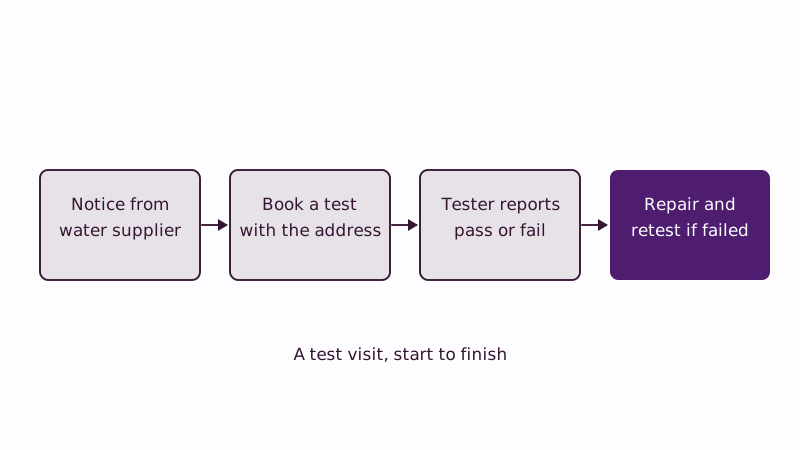
A backflow test inspects the valve assembly that keeps contamination out of the public water supply, and the supplier who sent your notice sets the due date. We pass your request to a local plumbing business that books and performs the test, so submit the details through our quote page. Work that involves gas lines falls to a gas-qualified plumber, described on gas work in Riverside.
What is examined during a backflow test?
A backflow preventer is a valve assembly that lets water flow one way. A gauge goes onto the test ports, the tester records pressures across the check valves and the relief valve, and each part is confirmed to close tight. If a part fails, it is repaired or rebuilt, then retested, and the result is reported to the water supplier.
Backflow happens when pressure drops in the main and water, along with whatever it touched, is pulled back, or when your side pushes against the supply. Irrigation systems, fire sprinklers, boilers, car washes and commercial kitchens are typical sources. Homes with sprinklers and some with pools or auto-fill ponds can have devices too.
A test takes less time than most people expect, and most of the visit is access and paperwork. The plumber has to reach the device, close the valves briefly and then reopen the water.
Who needs a backflow test in Riverside, Moreno Valley and Loma Linda?
The water supplier decides. Customers with a backflow assembly on an irrigation line, a fire line or a commercial service commonly get an annual test notice, and the supplier tracks the result. Riverside addresses may be served by Riverside Public Utilities or Western Municipal Water District, Moreno Valley by Eastern Municipal Water District, and Loma Linda by the city.
Check the notice or call the supplier on your bill. Riverside Public Utilities lists its customer service at (951) 782-0330. California's cross-connection rules lean on suppliers to require testing, and annual testing is the common pattern, though the rule that applies to a given device is the supplier's call. Most single-family homes without irrigation devices have no assembly to test.
If you received a notice, read the due date and the list of accepted testers. Many suppliers accept only testers who hold the qualification the supplier recognizes, so ask before booking.
How do I schedule a test, and is next-day service possible?
Call or request through us with the address, the notice, the device location and size, and the due date. Next-day testing is sometimes possible when a plumber has an opening, but nobody can promise it, and last-minute rushes near the deadline cause most missed bookings. Book early.
We answer the request line and form on weekdays between 9am and 5pm, and we promise no response time. Photograph the device and its tag, because the serial number and model help the tester come prepared with parts. If the notice has a deadline, write it in the request.
Tell the plumber about access: a device in a locked yard, a gate code or a box under a bush slows the visit. Clearing space around the device helps.
What follows a failed test?
The tester reports the failure, then repairs or rebuilds the assembly, which often means replacing seals, springs or a check valve, and retests. If the device is damaged, the wrong type or installed wrongly, replacement is needed. The supplier is notified once it passes, and the passing report ends the notice.
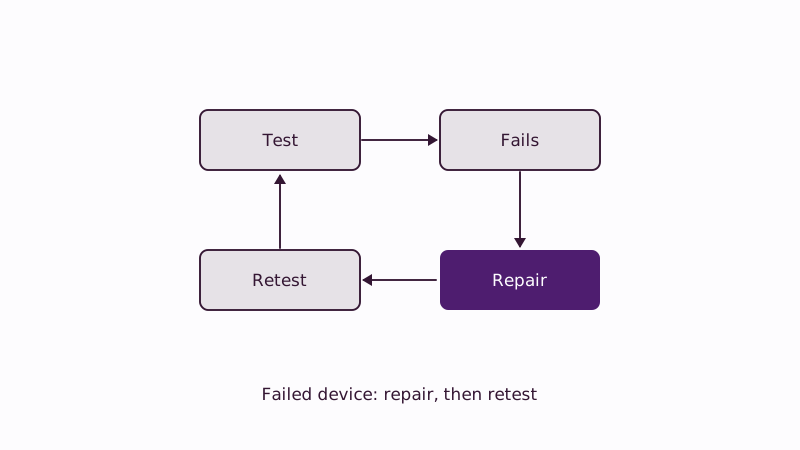
Plan for a second visit if parts are not on the truck. A leaking relief valve, a stuck check or debris in the seat are common causes. Water may be off for a short while. A failed device is not an emergency for most homes, but ignoring the notice can lead to the supplier acting, so follow the deadline in the notice.
Our guide on how backflow testing is done walks through the steps, and backflow prevention testing explains the devices.
Is there a quick reference for the test steps?
Yes, a short checklist helps an owner understand what the plumber is doing during the visit. It is not a procedure for doing the test yourself, since the work uses calibrated gauges and the result must come from a tester the supplier accepts.
| Step | What happens |
|---|---|
| 1 | Notice read, device located, access cleared |
| 2 | Water shut off briefly, test kit attached to the ports |
| 3 | Check valves and relief valve pressures read |
| 4 | Pass, or repair and retest |
| 5 | Result form sent to the water supplier |
Keep a copy of the report. A new device installed on the property is tested at installation as well.
Is a plumbing permit needed for backflow work or repair?
Replacing a backflow assembly is plumbing work and generally involves the building division, though a simple repair of the same device may not. Rules differ by city, so ask the permit office: Riverside Building and Safety at (951) 826-5800. Moreno Valley and Loma Linda each have their own offices, and unincorporated addresses go to the county.
Owners often ask if they can take out a plumbing permit themselves. Some cities let an owner do so for work on their own home, but each city sets its own rules and inspections, and some work, such as gas piping, is handled by contractors. Ask the building division what it accepts before you plan to do the work yourself.
How does gas line work differ from backflow testing?
Gas piping is a separate, regulated matter: the work follows the California codes and the local building division, and a contractor carries it out. Our page on residential gas piping codes gives the starting points. SoCalGas serves Riverside, Moreno Valley and Loma Linda.
Anyone who smells gas should exit the building and phone SoCalGas on 1-800-427-2200 once outside. The testing and gas topics overlap only in that the same building division handles the permits and inspections.
Does a business need a different test?
Commercial sites often have more devices, fire sprinkler lines and kitchen equipment, and the supplier may require testing at set intervals. A restaurant, a car wash or a building with a fire line is likely on a list. Our page on commercial backflow testing covers those sites.
Common questions
How often is a backflow test needed?
How long does the test take?
What does the test report include?
Can I test my own device?
Sources used
Page updated