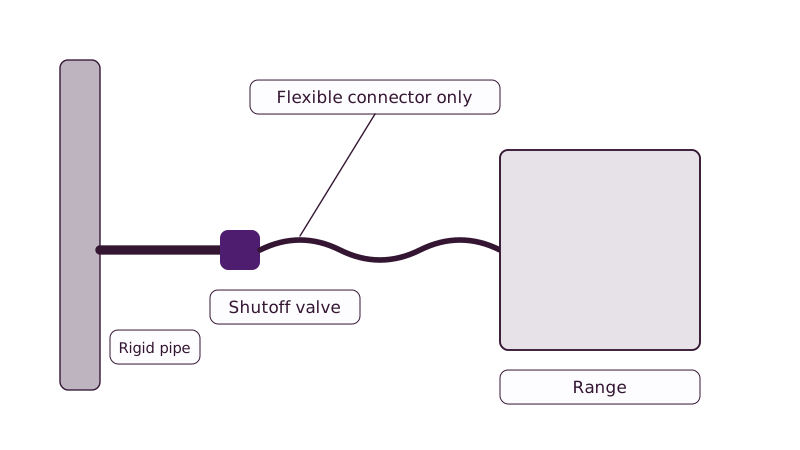
Think of the half-inch flexible natural gas line as a corrugated metal or coated connector built for a single appliance, whether a range, a dryer or a water heater. It is the short bendable link joining the appliance to a rigid pipe or shutoff. Its gas capacity depends on the connector's length and rating, and a plumber matches it to the appliance. Gas work needs a contractor; the broader guide is gas line work.
Smell gas? Exit the building, phone SoCalGas at 1-800-427-2200 once you are outdoors, and dial 911 if you are in danger.
What does a half-inch flexible gas connector serve?
It links one appliance to the gas supply by way of a shutoff valve. Typical uses include a kitchen range, a clothes dryer, a water heater, and an outdoor grill or fire feature through a quick-connect. The 1/2 inch refers to the nominal size, and the length and the appliance's burner rating decide whether it is enough.
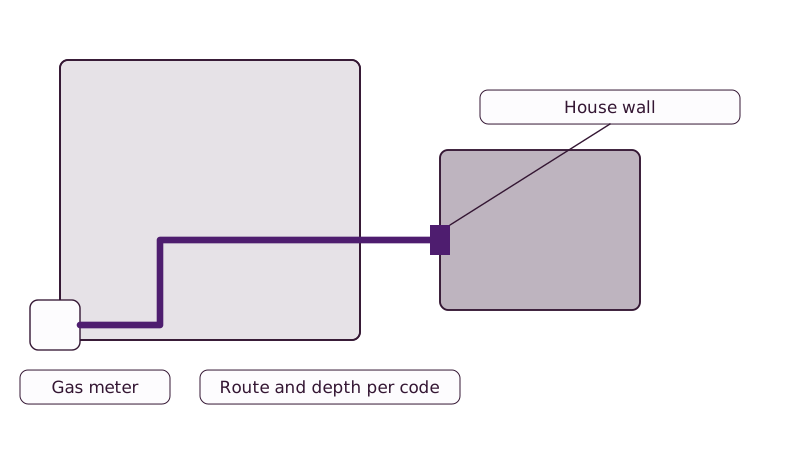
Flexible connectors are made for appliance connections, not for running gas through walls or underground. The house line inside the wall is rigid pipe or a manufacturer-approved flexible tubing system, put in following the maker's instructions and the local code. A common mistake is using a long appliance connector as a house line, and a plumber will not do that.
Which pipe materials carry natural gas?
Common materials are black iron or steel pipe, corrugated stainless steel tubing, and appliance connectors at the ends. What is permitted at a given spot is set by the California Plumbing Code, the local building division, and the maker's instructions for tubing systems.
Sizes and depths are left out here, since they hinge on the code edition and the local office. The page on residential gas piping codes shows how to ask. Pipe sizing is a calculation using the total load, pipe length and gas pressure, and an inspector checks it.
What do the rules say on outdoor gas piping and burial depth?
No Riverside, Moreno Valley or Loma Linda page we could read states the depth or the exterior rule, and so none is quoted. The answer lies in the California Plumbing Code as the city has adopted it, plus the gas utility's rules. Put it to the building division: which edition applies, and what will the inspector look for.
Riverside Building and Safety is (951) 826-5800. The Moreno Valley Building and Safety Division can be reached at (951) 413-3350, and its bulletin says the 2025 California codes took effect January 1, 2026. Loma Linda's permit questions go to (909) 799-2836. Unincorporated addresses use the County of Riverside Building and Safety, (951) 955-1800. SoCalGas serves all three cities according to its cities-served list.
Is it all right to put in a gas line on my own?
We advise against it. In California any job needing a permit, and any job reaching $1,000 in labor and materials, calls for a contractor license, and gas piping is generally permit work. Homeowners should leave gas lines to a plumber. A leak, a bad flare or a wrong size can cause fire, an explosion or carbon monoxide.
Even swapping a flexible connector at an appliance is gas work. The safe approach is to have a plumber do it, and never test for leaks with a flame. A leak test uses soapy water or a gauge. Look up the license number on cslb.ca.gov ahead of signing.
What is the price of installing a gas line?
Fixr's "Gas Line Installation Cost" guide, updated August 29, 2025, lists $500 to $2,000, average about $800, and per foot $10 to $20 to extend a line, $15 to $25 for a new installation and $23 to $35 for a replacement. These are national guide figures, not Riverside rates and not what we charge. The written quote sets the price.
See gas line costs for the breakdown. The figures do not price a single connector swap, because the guide does not list one. A flexible connector is a small part, and the labor and permit matter more.
Are mobile homes handled differently for gas lines?
Gas connection and equipment rules for mobile and manufactured homes are their own category, and no local source let us confirm them, so none are stated. If you have one, ask the building division or the park management who handles the gas connection, and ask the plumber if they have done that type.
Ask whether the work is a permit job in your jurisdiction and who files it. Also ask SoCalGas whether the meter, the line from the meter or the house piping needs work, because responsibility differs by segment.
When should I contact a plumbing business?
Reach out when an appliance is being added or moved, a connector is corroded, kinked or old, you smell gas, or you want a pressure check following a remodel or an earthquake. We pass your request to a local plumbing business, and a written quote comes before any work starts.
Related: earthquake gas shut-off valves, the gas plumber page and Rubidoux Ridge Plumbing.
Common questions
What is the typical duration of a connector replacement?
What should I raise with a contractor about a gas line?
Who needs to be home during gas work?
Is a flexible gas connector safe to reuse?
Could a half-inch connector feed an entire house?
Sources used
Page updated