You prevent most burst pipes by doing four things: learning the location of the main water shutoff, checking that household pressure is not too high, replacing pipe that is corroding, and protecting exposed lines on the rare cold night. Each takes an afternoon or less. For a pipe that has burst already, start with the leaks and burst pipes page. The rest of the site starts at the home page.
What actually makes a pipe burst in Riverside?
Pressure spikes and weakened metal cause many bursts, not only deep freezes. Water pressure that sits too high strains joints and fittings. Corrosion thins old steel and copper until a normal pressure splits the wall. Water hammer, the bang when a valve snaps shut, adds sudden jolts. Tree roots and ground movement damage underground lines.
Cold can matter on a rare chilly night, and an exposed line in an attic, garage wall or outdoor spigot can crack. Each cause gets fuller treatment in what causes a pipe to burst.
How can I measure the pressure in my pipes?
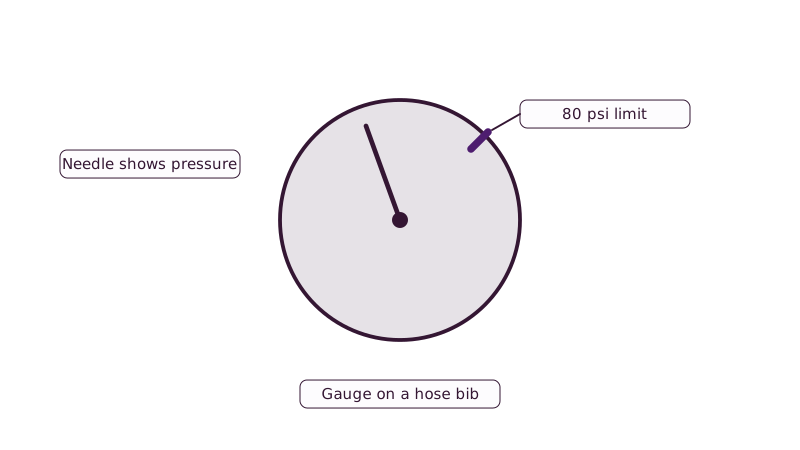
Attach a pressure gauge from a hardware store to an outdoor hose bib, open the tap all the way, and note the reading. Section 608.2 of the California Plumbing Code caps building supply pressure at 80 psi, and anything higher requires a pressure-reducing valve.
A reading above 80, or a needle that jumps, means the pressure regulator needs attention. You will typically find that valve at the point the main line comes into the house, commonly close to the water heater or the front hose bib. Read where a water pressure regulator is located and how to adjust the regulator valve before you touch anything. A failed regulator is a plumber's replacement. The 3/4 inch regulator valve page covers the common size.
How do I find the main shutoff and test it?
It is usually a valve on the pipe where water enters the house, in a front-yard box near the meter, on the side of the house, or in the garage. Turn it fully, then open a faucet to confirm the flow stops. A valve that sticks, drips at the stem or refuses to close fully should be replaced before an emergency strikes.
Do this test once a year. Gate valves in older homes seize from mineral buildup, a process hard water accelerates: Riverside Public Utilities' 2025 report lists hardness averaging 197 mg/L, about 12 grains per gallon. Everyone in the house should know where the valve is. If the valve at the meter belongs to the water utility, call the utility rather than turning it yourself, and use the house valve for your own shutoff.
Which pipes are most likely to fail?
Galvanized steel from older Riverside neighborhoods is the first suspect, since rust forms inside it and the opening shrinks year after year. Polybutylene pipe, used in some homes built in roughly the late 1970s through the mid 1990s, is a known problem material at its fittings. Copper develops pinhole leaks. Newer PEX can fail at a fitting or from sun damage.
Ask a plumber to identify what is in your walls and crawl space. If the answer is steel or polybutylene, price a replacement before the first leak, and read galvanized pipe replacement and how often you should repipe a house. What begins as a minor drip can become water damage within a wall before anyone sees it.
What cures a banging water hammer?
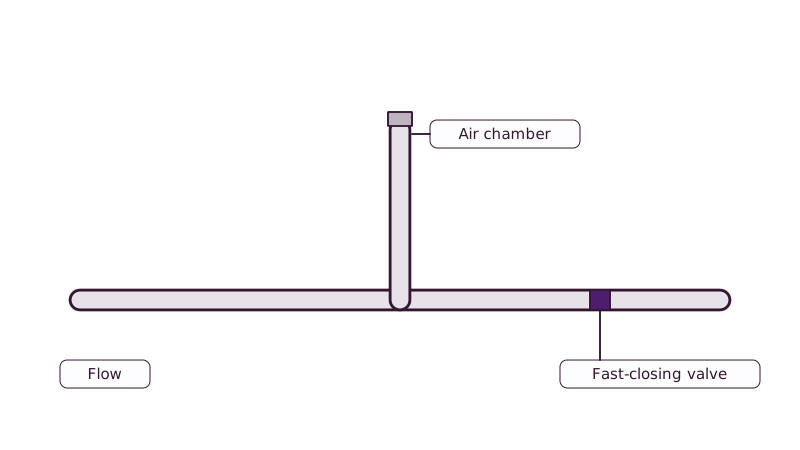
Water hammer is the thump you hear when a fast-closing valve, such as a washing machine or dishwasher, halts moving water. Over years it loosens joints and fatigues pipe. Common fixes are lower pressure, secured and cushioned pipe runs, and a small arrestor device at the offending fixture. Ask a plumber to fit one.
If you hear banging, check pressure first, because high pressure makes it worse. Our page on water hammer sounds explains what the noise tells you. Loose pipes in an open stud bay or attic can rattle on their own without being a leak.
How do I prepare for a freezing night?
Unhook garden hoses and wrap outdoor spigots. Leave cabinet doors on exterior walls open so room heat reaches the pipes, keep one faucet dripping slowly through the coldest night, and insulate every pipe in an unheated attic, garage or crawl space. Know that a frozen pipe can burst when it thaws, not only when it freezes.
Insulation on exposed pipe is cheap insurance. Pipes on the north side of a house or in a detached garage are most exposed. If a pipe does freeze and the water slows to a trickle, close the main and phone a plumber instead of reaching for a torch.
How do I find a leak before it turns into a burst?
Start at the meter. The EPA suggests recording the reading, using no water for two hours, then reading again; any change points to a probable leak. It also notes that leaks in an average home can waste over 9,300 gallons yearly, and that a family of four going through more than 12,000 gallons monthly in winter may have serious leaks.
Inspect the cabinets under sinks, the space behind the toilet and the area by the water heater for damp spots and green corrosion. Early leak detection is cheaper than a burst. A step-by-step version is in how to tell whether a pipe burst, and once water covers the floor, the sequence to follow is in emergency help for a burst pipe.
Will my homeowners policy pay for pipe damage?
Sometimes. Many homeowners policies pay for sudden, accidental water damage yet exclude repairing a worn pipe or harm caused by a long, slow leak. Policies vary, so read yours before any loss. The page on whether insurance covers a burst pipe lists questions for your insurer.
Common questions
How long does burst pipe prevention take?
What should I check with a contractor before prevention work?
Is someone required at home for prevention work?
Can high water pressure really burst a pipe?
Sources used
- California Plumbing Code, section 608.2 (80 psi limit)
- EPA WaterSense, Fix a Leak Week
- Riverside Public Utilities, 2025 Water Quality Report
Page updated