The "3/4" in the name refers to the pipe size the valve connects to, measured in inches. Many houses have a regulator on the line just after the main shutoff, where it trims street pressure before it reaches the fixtures. When pressure runs high, low or jumpy, this is among the first parts a plumber inspects. This page narrows our water pressure guide to that specific valve.
What does a 3/4 inch pressure regulator do?
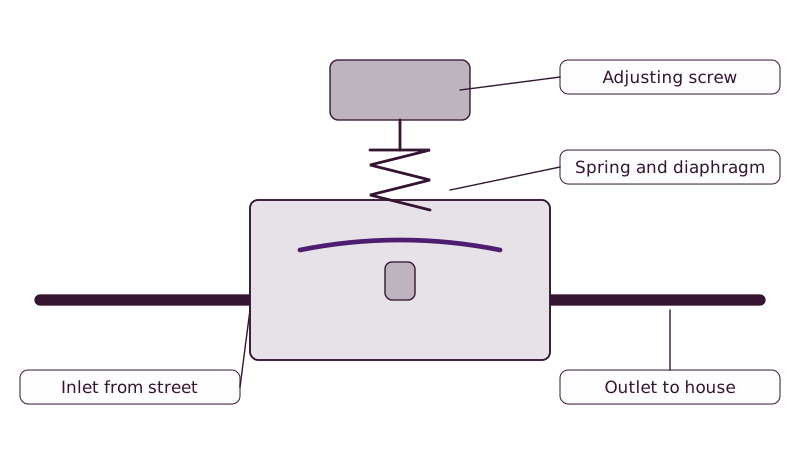
Its job is to take street pressure and hand the house a calmer, safer level. Inside, a spring and diaphragm push against a valve seat: when incoming pressure rises, the diaphragm closes the opening a little, and when it falls, the spring opens it. An adjusting screw sets the spring tension and so the outlet pressure.
The reason it matters: under California Plumbing Code 608.2, a building should not see pressure above 80 psi, and anything higher wears fixtures, supply hoses and appliance valves. A regulator keeps the house within limits. Not every home needs one, since some streets deliver moderate pressure, but many do. The regulator location guide shows where to look.
How do I know the 3/4 size is the right one?
Check the pipe, not the valve alone. Read the markings on the existing regulator body, which often show the size, or measure across the pipe where it enters: nominal 3/4 inch copper tube is 7/8 inch across on the outside, and other materials differ. Compare the old valve's connection style as well, since sizes in older homes vary.
If the service line is 1 inch and you fit a 3/4 inch valve, flow suffers, and if the valve is oversized, regulation can be unsteady. Sizing follows the pipe, the fixture count and the flow required. Long runs, several bathrooms or irrigation may call for a larger valve than a small bungalow needs. Unsure? Photograph the old valve and its label and show the plumber.
What connection types should I match?
Common 3/4 inch regulators connect with threaded fittings, compression fittings, soldered ends or unions. The connection must match the pipe in the wall, or the plumber must add adapters. A union-style regulator is easier to replace later because it lifts out without cutting pipe. Threaded valves need tape or compound and careful tightening.
Orientation and flow direction matter. The body has an arrow showing the way water flows, and installing it backward ruins the regulation. Leave room above the bell to adjust the screw, and fit a pressure gauge port if you want to check the reading. A plumber handles this routinely. The regulator replacement page covers the sequence for a swap.
What pressure should I set it to?
Most household systems run in a moderate band, and the code cap is 80 psi. Many plumbers set the regulator below the cap, and the exact setting depends on the fixtures and the household's preference. Start by measuring with a gauge threaded onto an outside spigot. A reading over 80 psi means the regulator is failing, or the house has none.
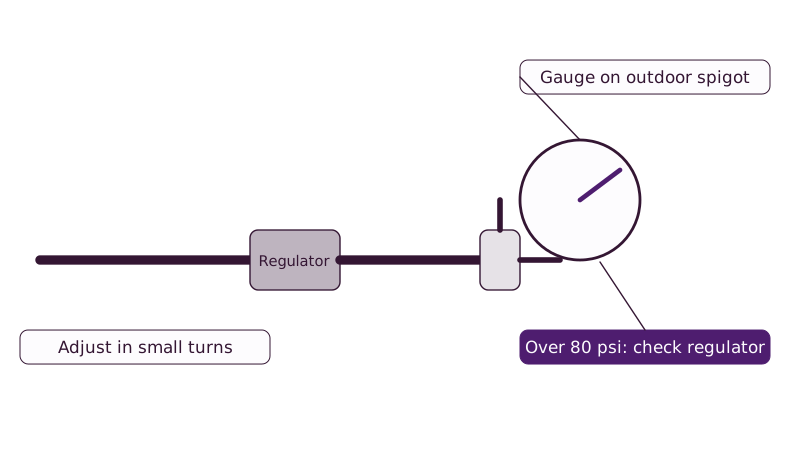
To adjust, free the lock nut, give the screw small turns and recheck the gauge each time, with a fixture running to hold a steady reading. Our adjusting guide shows the steps. Take care with turn direction, which varies by model, and read the label. If the gauge does not respond to adjustment, the valve is failing.
When is replacement better than adjustment?
Swap out a regulator that cannot hold steady pressure, drifts upward after fixtures close, weeps at the bell or buzzes. Water hammer, a bang after a tap shuts, can come from high pressure. Scale and grit can foul the seat, and since Riverside's 2025 utility report shows average hardness of 197 mg/L (roughly 12 grains per gallon), mineral buildup is a plausible culprit.
A new valve is a good moment to consider an expansion tank. With a regulator or check valve in line, the plumbing becomes a sealed loop, so heated water cannot expand, and a tank is often needed. The plumber can say whether yours is advisable. For the hot side specifically, see hot water pressure regulators.
How much does a pressure regulator replacement cost?
Fixr's water main repair guide, updated January 31, 2025, says replacing a water pressure regulator costs between $250 and $1,000, labor included. The number is national, so it is neither a local rate nor our charge. The written quote sets the price. An exposed valve beside the meter lands low, and a buried unit or added pipe work raises the total.
Have the quote state valve size and brand, the pressure setting, and whether adapters, a gauge or an expansion tank are in the price. For more detail, see regulator installation cost.
Does this need a permit?
Whether a regulator swap needs a permit varies, and no published rule for Riverside, Moreno Valley or Loma Linda turned up that we could verify, so ask the building office; Riverside's is at (951) 826-5800. The state's contractor-license threshold is $1,000 in labor and materials, and it also applies to any permit job.
Even a small swap on the main line means the house loses water briefly, so plan for a short outage. Older homes may have old galvanized fittings at the main, which can complicate a swap. The quote form books a visit and brings back a written price.
Common questions
How long does this valve usually last?
Can I install a 3/4 inch regulator myself?
How do 3/4 inch and 1/2 inch regulators differ?
Why is my pressure still low with a new regulator?
Where is the regulator on my house?
This guide is one of many on plumber riverside.
Sources used
- Water Main Repair Cost, Fixr, updated January 31, 2025
- California Plumbing Code section 608.2, water pressure limit of 80 psi
- City of Riverside Building and Safety
- Riverside Public Utilities 2025 Water Quality Report
- Contractors State License Board
Page updated