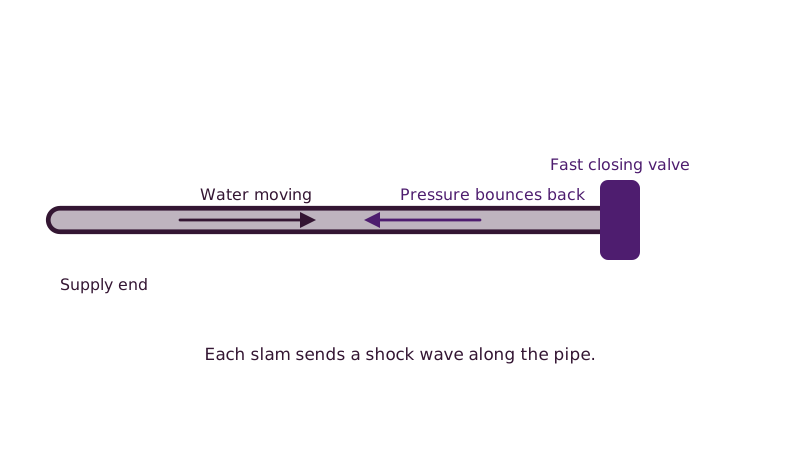
Water hammer is a loud knock, thump or shudder in the pipes just after the water halts abruptly, for instance when a dishwasher valve, washing machine or quick-closing faucet shuts. Flowing water carries momentum, and a sudden stop sends a pressure wave back along the line. The usual causes are high pressure, loose pipes and missing air chambers. The full list of services in Riverside is on the Rubidoux Ridge Plumbing home page.
What causes the water hammer noise?
A quickly closing valve makes flowing water slam against it, producing a shock wave that rattles the pipes and bangs them against framing. The noise appears most with fast-closing valves in washers, dishwashers, ice makers and single-lever faucets. Older houses often depend on air chambers that have filled with water, which takes away the cushion.
The knock can sound far from where the water stopped, because pipes carry the shock through the house. A repeating tick like an expanding pipe is a different noise, usually thermal movement as hot water flows. One heavy bang after a tap closes is the classic hammer. A rhythmic chatter inside a fixture often means a loose washer or valve seat.
How can I restore the air in an air chamber?
An air chamber is a capped stretch of vertical pipe beside a fixture. With time, water absorbs the air and the cushion disappears. To bring it back, close the main water, drain the system through the highest and lowest taps, shut them, and open the main slowly. Air refills the chamber.
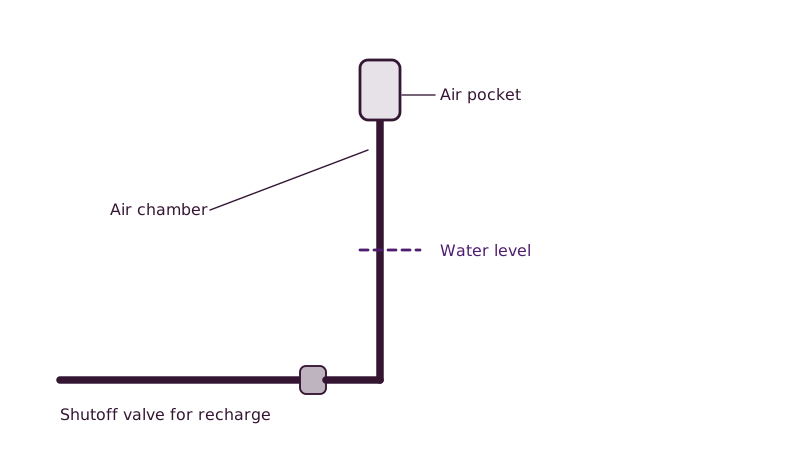
Knocking that returns within weeks means the chamber is likely waterlogged or too small, and a sealed arrestor is the lasting fix. Do not cut into pipes unless you know how, and note that pipe changes behind a wall or under a floor generally need a permit in Riverside, per the city's handout.
Is the noise water hammer or something different?
Each sound points to its own issue. Banging at a shutoff is hammer. A shrill whistle or squeal is flow past a partly closed valve or worn washer. Rhythmic ticking while hot water runs is expansion. A gurgle suggests a drain vent problem. Rumbling or popping from the water heater tank is sediment boiling.
Gas appliances can produce knocks unrelated to water, such as a tankless unit or burner ignition. A gas smell at any moment means leaving the building, phoning SoCalGas at 1-800-427-2200 from outside, and dialing 911 if there is danger. SoCalGas provides service in Riverside, Moreno Valley and Loma Linda. A plumber can listen and trace the sound.
What can I do about water hammer at home?
First secure exposed pipes with straps or foam insulation so they cannot slam into wood. Next check the pressure, and have a regulator replaced if the reading is high. To add or recharge air chambers, shut off the water, open the highest and lowest taps, let the lines drain, then close the taps and turn the water back on.
Put a water hammer arrestor on the fixture causing the noise, usually the washing machine or dishwasher, choosing the threaded type that screws onto the supply stop. Mechanical arrestors contain a sealed piston or bladder, so unlike old air chambers they cannot fill with water. A persisting sound may come from a valve, a loose pipe or a supply issue the plumber must trace.
Is water hammer harmful to pipes?
Over time, yes. Repeated shocks loosen fittings, stress soldered joints, wear valves and supply lines, and can start leaks at connections. One bang rarely does harm, but years of them can shorten the life of appliance hoses and shutoff valves. Hammer that appears after a plumbing job is a warning sign.
Deal with it before it causes a leak behind a wall. Look for stains near a pipe run and for a drop in pressure. If the knocking got louder lately, check the pressure and ask about any recent work on the water supply. The burst pipe signs guide describes how a developing leak looks.
Why does high water pressure lead to water hammer?
Higher pressure means faster flow and a harder stop. Section 608.2 of the California Plumbing Code sets 80 psi as the limit for building supply pressure, so a house above it is outside the code and more prone to hammer. A failed pressure regulator is a common reason pressure creeps up, and a gauge on a hose bib shows the reading.
A reading near or over 80 psi justifies a regulator check. Replacing a regulator is plumber work, and the water pressure regulator cost guide shows what it involves. If pressure seems too weak instead, read the low water pressure plumber page.
When is it time to call a plumber?
Make the call if the hammer began after other plumbing work, pressure is high, the sound is violent, wet spots show on walls or ceilings, or arrestors do not help. A plumber can test the pressure, replace a regulator, add arrestors and secure pipes you cannot reach.
Unsure where the noise originates? Request a visit and describe what you hear and when. Requests go through the quote form Monday to Friday, 9am to 5pm. The kinds of work local plumbing businesses take on are listed on the plumber services page.
Common questions
Can water hammer be dangerous?
Why does my washing machine cause water hammer?
Will a water softener or heater cause water hammer?
Can I fix water hammer without a plumber?
Sources used
- California Plumbing Code, section 608.2 (80 psi limit)
- SoCalGas, cities served
- City of Riverside, Work exempt from building permits
Page updated