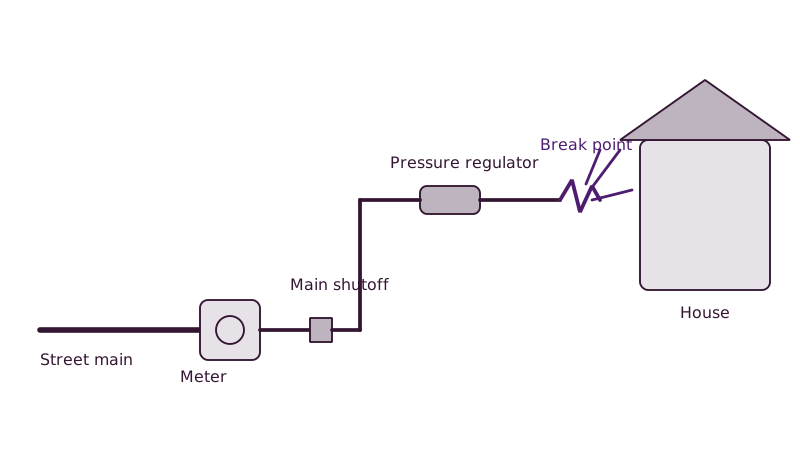
A burst pipe rarely stays hidden for long. Watch for water you cannot account for: a hiss or rushing noise while every tap is closed, a meter that keeps turning, soaked or blistering drywall, a musty odor, or pressure that suddenly falls. Any single one justifies closing the main valve and phoning a plumber. This page lists the signs, the quick tests and the safe first steps. If you need a leak specialist now, the leaks and burst pipe plumbers page explains how a visit works.
Which symptoms point to a burst pipe?
The most obvious symptoms are running water noise with everything off, a wet spot on a wall, ceiling or floor, a pressure drop, brown or cloudy water from the tap, and a higher bill than usual. Sound and the meter are the fastest checks. A pipe that has fully split floods quickly, while a pinhole or joint failure can sit damp for weeks before anyone notices.
Walk the house with your eyes and nose before you touch a valve. Look for:
- Stains that grow or darken on ceilings and drywall
- Paint that bubbles or peels along a wall
- Warped baseboards or floors that feel soft or cold underfoot
- An earthy, musty odor inside a closet, cabinet or crawl space
- Puddles under the water heater or in the garage
Cabinets under sinks and the wall behind a washing machine are common spots, because the supply lines there are thin and under constant pressure.
Is it possible to repair a dripping pipe joint instead of replacing it?
A weeping joint can sometimes be tightened, re-seated or resealed. Threaded joints may need thread sealant after cleaning, compression fittings can be snugged a quarter turn, and soldered copper joints that drip usually need to be drained, dried, reheated and re-soldered, or swapped for a push-fit coupling. Overtightening cracks fittings, so go slowly.
A joint that keeps dripping after a gentle tightening is telling you something is wrong with the seat, the pipe end or the pressure. High pressure makes fittings fail early. A gauge reading above 80 psi, the maximum set in section 608.2 of the California Plumbing Code, suggests a failing regulator, and the low and high water pressure plumbers page covers that.
How do you test the water meter to confirm a leak?
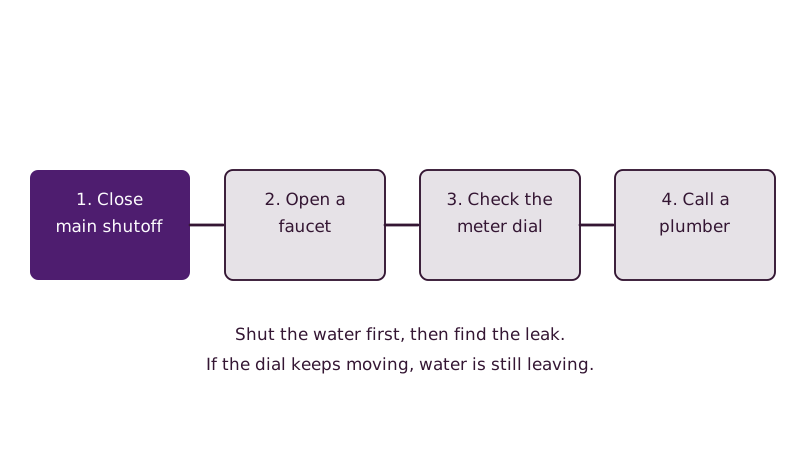
Close all taps and shut down appliances, open the meter box near the curb, then observe the tiny leak indicator or the dial for two minutes. Movement while nothing is running means water is getting out somewhere on the house side of the meter. Note the reading, leave everything idle for an hour and look again; a different number confirms a leak.
If the meter holds still but you still see damp spots, the water may be coming from a drain line, a roof or an air conditioning condensate line rather than a supply pipe. Most meter boxes in the area belong to your water utility, and Riverside Public Utilities, Eastern Municipal Water District and Western Municipal Water District each serve parts of this region, so check your bill for which one reads yours. The shutoff at the meter is theirs to operate, so use the valve at the house when you can.
Will my homeowners policy pay for a burst pipe?
Coverage varies, so check your own policy or phone the insurer. Plenty of homeowner policies pay for sudden, accidental water damage caused by a burst pipe, while damage from a slow leak, long-term corrosion or lack of maintenance is often excluded. Insurers typically ask for photos, a plumber's invoice or report, and prompt steps to limit further damage.
Document the scene before you clean up: photos of the pipe, the water line on walls, damaged belongings and the shutoff valve. Keep receipts for emergency repairs and drying. Ask the insurer whether the cost of finding and opening up the leak is included, since access repairs are treated differently from policy to policy. We cannot say what your policy will pay.
What are the signs of a pipe bursting beneath the house?
With a raised foundation, the leak appears as a soggy or muddy crawl space, springy flooring, an abrupt moldy odor, or running water audible below you. A slab home behaves differently: you may find a floor patch that feels warm, a meter spinning with taps off, and a hot water bill that climbs without any change in habits.
A hot area on tile or laminate suggests a break in a hot-water line beneath the slab. Damp carpet near an exterior wall, or water seeping from the edge of the slab, are other hints. Do not dig or cut into the floor yourself. Locating a slab leak takes acoustic or thermal equipment, and the slab leak detection and repair page explains what that visit involves. The cost side is covered in what slab leak repair costs.
Can a leaking copper pipe be repaired rather than replaced?
A short split or pinhole in an exposed copper pipe can sometimes be sealed using a repair clamp or a push-fit fitting that wraps the damage, instead of cutting out the whole run. Copper that is thin, green with corrosion or pitted along its length will keep failing, so one repair often leads to the next. A plumber decides whether a patch or a replacement section makes sense.
Look at the pipe around the leak. If the metal is firm and smooth, a sleeve repair can last. If it looks flaky or the pipe has several weeping spots, the problem is the pipe itself. Older homes may have decades-old copper or galvanized lines, and repeated pinhole leaks are often the point where homeowners ask about repiping, which the repipe options page lays out.
Which steps come first in the opening ten minutes?
Shut the main valve, then drain the lines through one low and one high faucet. Turn the water heater off at the thermostat or gas control, which stops it firing with an empty tank. Carry belongings out of the soaked area, photograph the damage, and cut power to any room where water is close to outlets or light fixtures.
If water is close to electrical outlets, panels or a ceiling fixture, stay out of that room and flip the breaker off only when the panel is reachable while you stay on dry ground. Never mix water and electricity. Whenever you smell gas, get out of the house, phone SoCalGas on 1-800-427-2200 from a safe distance, and dial 911 if anyone is at risk. For a pipe that is actively flooding, the emergency burst pipe plumber page is where to start.
How do you temporarily stop a water pipe leak?
Shutting off the water is the real fix for the next hour. After that, a rubber patch with a hose clamp, a repair sleeve or self-fusing silicone tape may slow a minor leak on a straight, reachable stretch of pipe before the plumber arrives. These are stopgaps, not repairs, and they fail under pressure or heat if left in place for long.
Dry the pipe first, because tape and epoxy do not stick to wet metal. Bucket and towels handle the rest while the line stays off. Do not wrap a break hidden in a wall or close to a gas line, and do not hold a flame near a copper pipe to dry it. Repairs to pipe inside a wall or under a floor generally need a permit in Riverside, per the city's exempt-work handout, so temporary measures should stay temporary.
What does a burst pipe cost and how much water does a leak waste?
The EPA estimates that an average household leak loses over 9,300 gallons annually, and a split line running freely wastes much more than a slow drip does. Repair cost depends on the pipe, how deep it is and how much wall or floor must be opened, so the written quote sets the price. Check the plumber cost guide for how rates and call-out fees work.
According to the state licensing board, a license is required once a job costs $1,000 or more, and for any job requiring a permit. Ask any business sent to your home about permits for work behind walls or under floors.
Common questions
Can a burst pipe happen with no water showing?
Does a burst pipe count as an emergency?
Do I need to switch off the water heater once a pipe bursts?
Where is the main shutoff valve located?
For the wider picture, start with Riverside plumber.
Sources used
Page updated