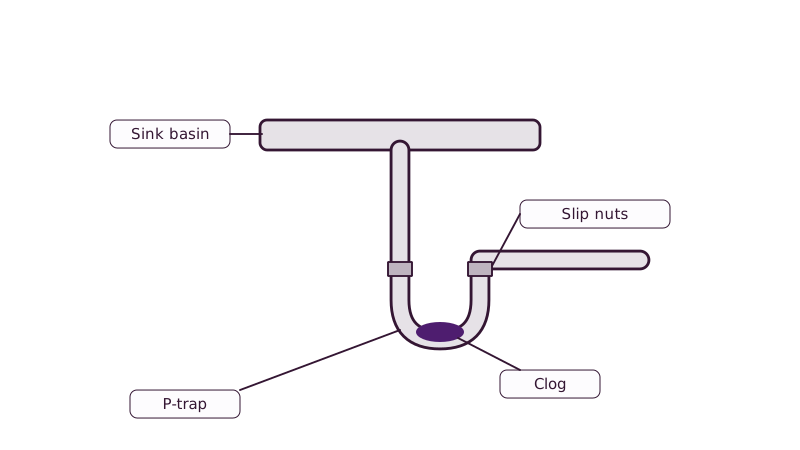
A kitchen sink clog sits within reach almost every time: a plug of grease and food lodged in the trap or just past it in the first length of pipe. Many yield to a plunger, and the trap comes apart with a bucket and pliers. Drains and toilets that back up more widely are covered under clogged drains and toilets in Riverside. If none of this works, send a request.
How do I clear a clogged kitchen sink fastest?
Start with a cup plunger. Cover the drain, add water until the rubber cup is submerged, and pump firmly 15 to 20 times without breaking the seal. If the sink has two basins, block the other drain with a wet rag or stopper, or the force escapes. When the water drops quickly, run hot water to flush.
Remove standing food from the strainer first, and clear the disposal if you have one. A flat-bottom sink plunger does the job better than a flanged toilet plunger. If plunging brings back grey grease or small food bits, keep going until the water runs freely, then run the tap for a few minutes.
Water rising on the other side of a double sink means the clog sits beyond the junction, so the trap tailpiece or the wall line comes next. Anything that smells of sewage and shows in a shower or tub too points to a main line problem.
Do baking soda, vinegar and boiling water actually work?
Boiling water melts a fresh grease film, and baking soda with vinegar can loosen light residue, but neither is strong enough for a packed clog. Pour the water slowly, in two or three steps, and avoid it on PVC pipe in a fully blocked sink, since standing hot water can soften joints. Treat them as maintenance, not a cure.
Skip commercial drain chemicals when you can. They can burn skin, damage some pipes and finishes, and make the job dangerous for the next person, whether a plumber or you. Should you have poured some in already, say so to the plumber, put on gloves with eye protection, and never mix cleaners, since the fumes are toxic.
For a slow drain that has not fully stopped, our guide to why a sink drains slowly lists the early signs and the likely causes.
What is the method for cleaning a sink P-trap?
Set a bucket below the trap, back off the two slip nuts with your hand or pliers, then drop the U-shaped trap and empty it. Rinse off the grease and food, inspect the arm running into the wall for more debris, and reassemble with the washers seated properly. Snug the nuts by hand, add a quarter turn using pliers, and run water as a test.
Take care with the rubber washers, which must face the right way, and with plastic nuts, which crack if overtightened. Metal traps may be stuck with age and corrosion. If water is already flowing into the bucket, it will include dirty, smelly liquid, so wear gloves.
Dripping at the nuts after reassembly typically points to a misaligned washer or a cross-threaded nut. Dry the joints, tighten a little further and hold tissue under the joint to check. If a nut is frozen or the pipe is corroded, quit and phone a plumber instead of snapping the pipe in the wall.
When is a hand auger or drain snake the right tool?
Reach for a hand auger if the plunger and trap have not fixed it and the sink still stands full or drains slowly. Feed the cable through the trap arm or the open pipe, turn the handle to push through the clog and then pull it back. Flush with hot water. Do not force it, and stop if the cable stops against a hard turn.
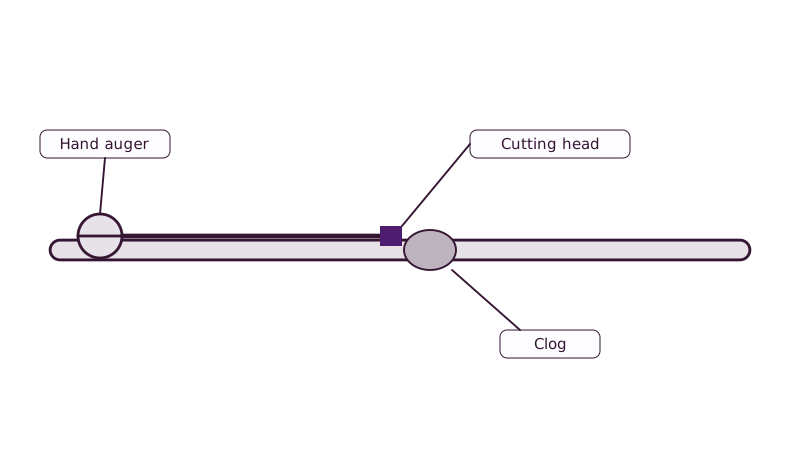
A small kitchen auger reaches a clog in the branch line. A longer machine is for the main drain. Keep the cable moving in the same direction and clean it as it comes out. Grease clogs often reappear, since the cable pokes a hole through the plug without removing it.
If the cable goes in a long way and the problem remains, or if the water backs up in a bathroom as well, the clog is deeper, and the plumber needs a camera or a larger machine. Options outside the kitchen appear in how to unclog a drain.
Why do kitchen drains clog, and how can I avoid it?
Grease, coffee grounds, rice, pasta, eggshells and fibrous peels build up in the pipe, above all when grease cools and clings to the inside of the pipe. A garbage disposal grinds food but does not make grease flow. Scrape plates into the trash, wipe pans with a paper towel, and let hot water run once the dishes are washed.
Strainers catch the rest. A mesh basket in each drain is cheap prevention. Do not pour cooking fat down the drain, and wait for it to cool and put it in a container for the trash. Run the disposal with a stream of cold water, since it moves the waste farther down before the grease sets.
Older homes in Downtown Riverside, the Wood Streets and the Eastside may have drain pipe that has roughened with age, which catches debris faster, so a small clog can return sooner. Disposal trouble is covered in clearing a garbage disposal drain.
Should I call a plumber, and is hydro jetting an option?
Call a plumber when the clog returns within weeks, when other fixtures back up, when the pipe is cracked or when a sewage smell shows up. Hydro jetting blasts water through the pipe to cut grease and scale, and a camera shows why it keeps clogging. It is a professional job that needs the right equipment.
If water comes up in a tub or a floor drain when you run the kitchen sink, the main line is the likely culprit, and in Riverside the public sewer is maintained by the City's Public Works Sewerage Systems Division, (951) 826-5311, while the line from your house to the street may be the owner's responsibility, so confirm the boundary with the city. Do not run water in a house with a backing-up sewer.
Replacing pipe behind the face of a wall or below the floor requires a permit in Riverside, according to the City's handout, so a pipe replacement should be quoted with the permit. Pricing for sink clearing sits on the page about what it costs to unclog a sink.
Common questions
How can the disposal run while the sink stays blocked?
Is it safe to use drain cleaner?
How long should a plunger take to work?
What if the sink drains but gurgles?
Sources used
Page updated