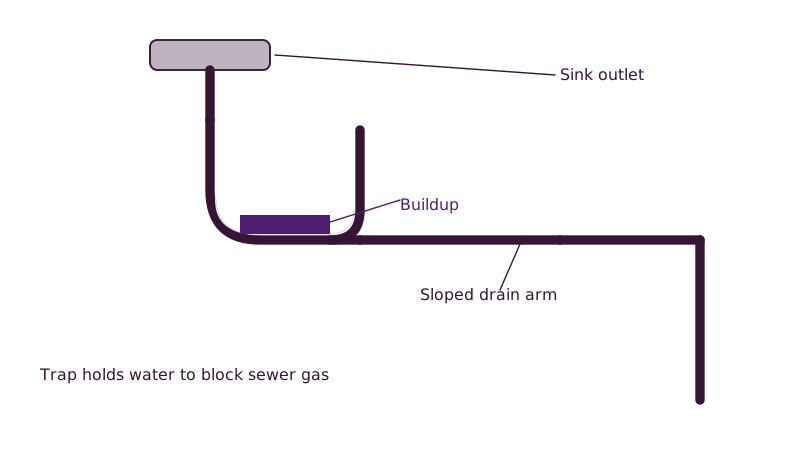
Slow drainage means something has narrowed the pipe: grease and food scraps in a kitchen sink, hair and a toothpaste film in a bathroom sink, or, at worst, a clog further along the line. Most of the time the trouble sits in the trap right below the sink. When the trouble spreads past a single fixture, the wider picture is on the drain and clog page.
What causes a slow draining kitchen sink?
Grease is the usual culprit. Cooking fat cools inside the pipe and sticks as a waxy layer, then catches coffee grounds, rice and food scraps. Over weeks the opening shrinks until water crawls. A trap shared by a double sink, or a connected dishwasher drain, adds to the problem.
Check these in order. First, look at the strainer basket for debris. Second, let hot water run for about a minute and note the speed. Third, empty the trap beneath the sink: set a bucket underneath, turn the two slip nuts loose by hand, tip out what is inside and rinse it. Most of the time you will find the blockage right there.
If the sink has a garbage disposal, scraps and eggshells coat the blades and the outlet. Read about clearing a garbage disposal drain before running it again.
Is a sink drain stopper part of the problem?
It can be. A stopper that does not lift fully, a bent pivot rod or a missing clip all reduce the opening, and a bathroom stopper is a hair magnet. A kitchen sink with a basket strainer rarely has this trouble, but a sink with a pop-up plug can.
If the stopper looks fine and the drain still crawls, replace it only if it is cracked or the rod is bent. New stoppers are a cheap part, but the clog is usually the actual issue. Look at the rod and the clip before you buy anything.
Why is my bathroom sink draining slow?
Hair, soap scum and toothpaste combine into a gray paste that coats the pivot rod and stopper, the part that sits right in the drain opening. That, not the pipe, is where most bathroom sink slowdowns start. Pull the stopper, clean it, and the water usually speeds up at once.
The pop-up stopper in most bathroom sinks is held by a horizontal rod behind the drain tailpiece. Look under the sink for a nut on the back of the pipe, loosen it, and the stopper slides out. Clean it with an old toothbrush. Reinstall and tighten snugly, since overtightening cracks a plastic nut.
Unclogging a bathroom sink is our full walkthrough, which uses a plunger plus a compact hand tool. When a sink is slow but there is no standing water, a clean stopper alone often solves it.
What to do next when nothing works
If the trap is clean, the stopper is clear and a hand auger does not help, the clog sits beyond what a household tool can reach. At that point a plumber can bring a power auger or a camera and report what is lodged in the pipe. Ask for the method and the price in writing.
According to the state's contractor licensing board, a California contractor license is required once a job reaches $1,000 including labor and materials, and for any job needing a permit. A simple drain clearing usually falls below that, but a main line repair does not. For a repeat problem, send a request and we will pass it to a local plumber who visits. Other services are listed on the home page.
How can I clear a sluggish sink on my own?
Start with the least invasive step: clean the stopper or strainer, then clear the trap, then plunge with the overflow blocked. A cup plunger on a flat sink drain, with a wet rag in the overflow hole, builds pressure in the line and breaks up soft buildup. Do not use chemical openers in a sink that has standing water.
Here is a sensible order, from easiest to hardest:
- Remove and clean the stopper or basket.
- Let hot tap water run for a minute.
- Plunge, with the overflow hole sealed.
- Remove and clean the P-trap.
- Feed a compact hand auger into the pipe in the wall.
A "plunger for a slow draining sink" is a cup plunger, not the flanged one made for toilets. On a double kitchen sink, seal one side with a stopper before plunging the other, so the pressure goes down and not across.
Why does my shower back up when nothing seems stuck?
When a shower backs up and nothing seems stuck, the blockage is probably downstream, in a branch or the main line that serves several fixtures. Flush the toilet or run the sink, and if water rises in the shower, the problem is shared. That points to a deeper clog or a vent fault.
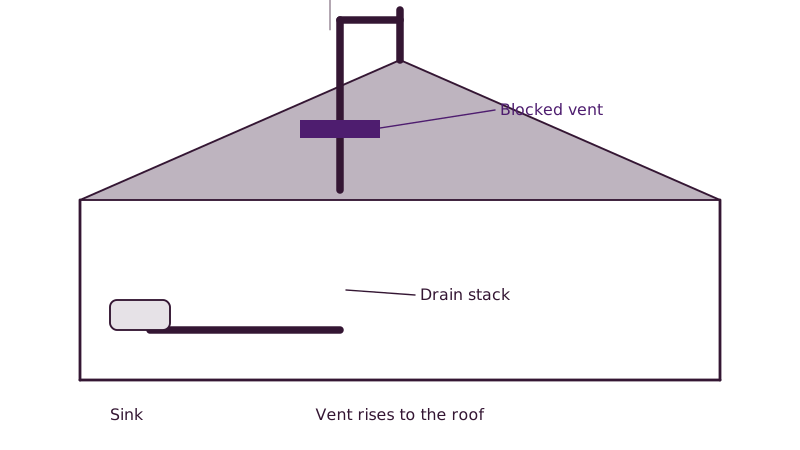
Try a simple test. Run the bathroom sink, then check whether the tub or shower gurgles. Then try the laundry or kitchen. When two or more fixtures are affected, call a plumber who brings a drain machine or camera equipment. A hand plunger cannot reach a main line blockage.
In older homes with clay sewer lines, root intrusion is one common cause of main line backups. The City of Riverside Public Works sewer division maintains the public sewer, and its non-emergency number is (951) 826-5311. Whether the blockage sits on the public side or your private lateral, a plumber can say after looking.
What if the sink is slow yet still draining?
A partial clog lets water through, only more slowly, because the bore is narrowed but not shut. You can have a slow drain for months before it closes. It is a sign to clean now, while it is a small task, rather than later when it turns into a backup.
Other possible reasons a sink is slow but not blocked:
- A partly closed shutoff or a bent trap arm that traps a small pool of water.
- A vent problem, so air cannot follow water down. Gurgling after the sink empties is the clue.
- Mineral scale inside older pipes. Water here can be hard. For example, Riverside Public Utilities' 2025 water quality report lists hardness averaging 197 mg/L, about 12 grains per gallon, and scale can build up on pipe walls over many years.
- A branch line shared with other fixtures, where the slowdown starts farther down.
If you see the same slow pattern in the shower and the toilet, stop treating the sink alone. The main drain may be restricted.
Common questions
How much time does unblocking a slow sink drain take?
Which questions should I raise with a plumber about a slow drain?
Should I be home when the drain visit happens?
Will a chemical drain cleaner fix a slow sink?
Sources used
Page updated