If the disposal hums without spinning, or the sink fills and refuses to empty, there are two possible causes: the grinder is jammed, or the pipe beyond it is blocked. Each needs its own fix, yet both begin the same way. Cut the power. Among drain cleaning and clogs, this is a very frequent kitchen call, and a flashlight plus a few basic tools handle most of it.
What is the way to clear a jammed garbage disposal?
Before anything else, turn the disposal off and unplug it, or flip its breaker. Keep your hand out of the opening. Aim a light into the drain and lift out any visible objects with tongs. When the motor hums while the blades stay still, free them from below using the hex wrench supplied with many units, then push the red reset button.
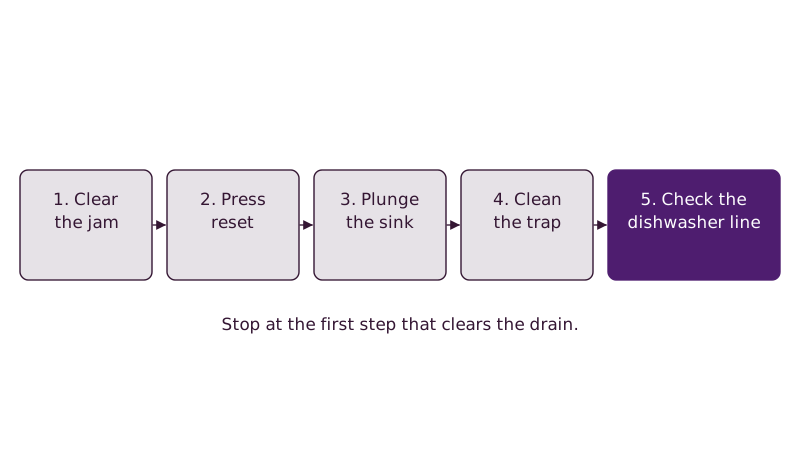
Work in this order and stop at the first fix that works:
- Clear the jam. If the unit has a socket in the center of its underside, fit a hex key there and work it side to side until the shaft spins freely. A broom handle pushed down from above can also release a stuck blade.
- Press reset. The red button at the bottom pops out when the motor overheats. Wait a few minutes, press it in, and try the switch.
- Plunge. Add a few inches of water to the sink, stop up the dishwasher line and the second sink drain with a wet rag, and then use a flat cup plunger.
- Clean the trap. Place a bucket beneath the bent pipe, unscrew the slip nuts by hand, tip the trap's contents into the bucket and wipe the pipe out.
- Check the dishwasher connection. A clogged inlet on the disposal can stop the dishwasher from draining too.
Keep chemical drain cleaners out of it. They sit in a blocked pipe, can splash back when you open it and can damage fittings, and a plumber later has to work around them.
Why does a disposal drain clog in the first place?
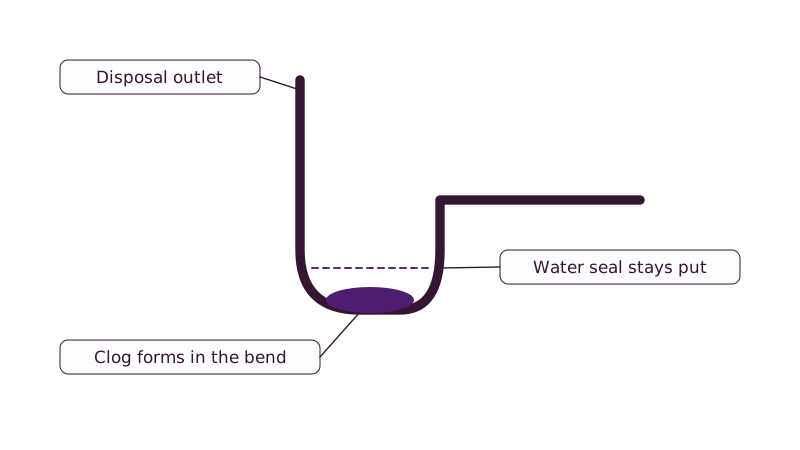
Typical causes are grease that cools and lines the pipe, stringy scraps like celery, corn husks and onion skins that wind around the blades, and coffee grounds or eggshell bits that settle into a paste. Water alone cannot carry a paste through the P-trap bend, so it collects there and slowly closes the pipe.
Running cold water for several seconds before and after you grind helps, because cold water keeps grease solid enough to be chopped and flushed. Small loads work better than a full sink of scraps. A disposal is not a trash can, and bones, pits, pasta and rice swell or tangle. If this keeps happening, the line downstream may have a rough or sagging spot that a plumber can find with a camera.
What if the bathroom or shower drain is slow too?
When the kitchen disposal clogs and a shower or bathroom sink on the same line is also slow, the blockage likely sits in a shared branch or the main drain rather than at the disposal. Look for gurgling in other fixtures, or water rising in a tub while the dishwasher runs.
A trap cleaning will not reach that. A plumber equipped with a drain machine or a camera can clear a branch, and stubborn grease or roots may call for hydro jetting, a method that scours the pipe with pressurized water. What follows is explained in the guides on how to unclog a kitchen sink and how to unclog a drain.
Sewage backing up through floor drains or the lowest fixtures in the house is an emergency. The City of Riverside Public Works Sewerage Systems Division handles the public sewer line, and its non-emergency line is (951) 826-5311, so ask whether the blockage is on the city side of your property line before paying for private work.
At what point should I phone a plumber?
Make the call if the plunger and trap fail to clear it, water backs up into the second sink, the disposal leaks from its body or seals, the motor keeps tripping, or you smell sewage. Slow drainage at more than one fixture is another trigger, since that points to the main line.
Leaks under the sink are worth a plumber's eyes since the cause is often the disposal's flange or mounting rather than the drain. If the disposal is old, a replacement may be wiser than a repair, and our page on garbage disposal installation and the overview of garbage disposal repair cover that path.
In California a contractor license is required once labor and materials reach $1,000, and for any job needing a permit. Clearing a drain normally costs less than that, though you can still look up a plumber's license at cslb.ca.gov.
What should I expect to pay for sink drain clearing?
The Fixr guide to the cost of unclogging a kitchen sink, updated August 29, 2025, shows $250 to $400 and a national average of $300. The This Old House Plumbing Cost Guide, updated June 6, 2026, puts clog clearing and drain snaking at $100 to $500. Both are national guide numbers, not Riverside rates or what we charge.
The written quote sets the price. Snaking a line over a short distance costs less than a job that needs a camera or a jet, so ask which method the quote assumes and what follows if the first try fails. The page on the cost to unclog a sink shows what moves the price in either direction.
Common questions
What is the time needed to clear a disposal drain?
Which questions should I raise before hiring?
Is someone required to be at home?
Can I use baking soda and vinegar?
This guide is one of many on the plumber guide for Riverside.
Sources used
Page updated