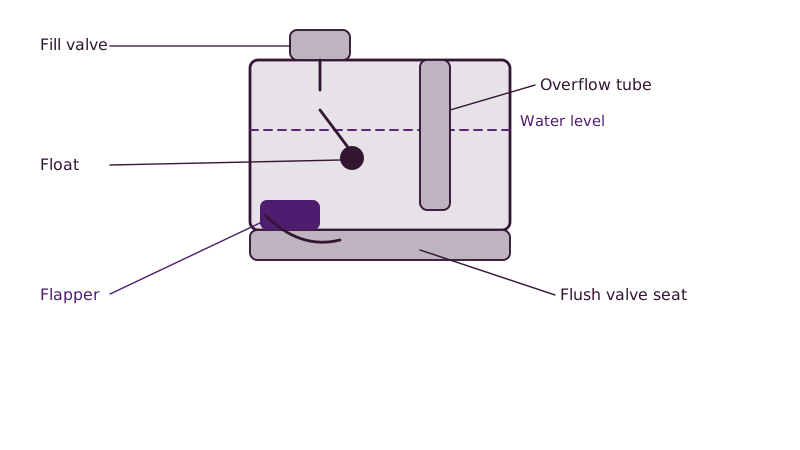
When a toilet runs endlessly, its tank either cannot hold water or cannot stop the refill. Four things cause most cases: a tired flapper letting water into the bowl, a chain set too tight or too loose, a fill valve stuck open, and a float riding too high. Ten minutes is enough to look at all four. Should it keep running, or if water collects at the base, the toilet repair plumbers page explains how a visit works.
What keeps a toilet running once the flush is over?
Usually the flapper sitting at the base of the tank is not sealing. Minerals stiffen the rubber, the seat gets coated, or the chain snags, and water seeps into the bowl while the fill valve tops the tank up again and again. If the tank refills on its own every few minutes, or hisses after a flush, water is leaking from tank to bowl.
Try the dye test. Drop some food coloring into the tank, leave it ten minutes with no flushing, then check the bowl. A colored bowl means the flapper or its seat leaks. A clear bowl with a running sound points at the fill valve or the float. Hard water speeds mineral buildup, and the 2025 report from Riverside Public Utilities gives average hardness as 197 mg/L, roughly 12 grains per gallon.
How can I check whether the flapper has failed?
Close the stop valve behind the toilet, flush to empty the tank, and push the flapper with a fingertip. Stiff, warped, sticky or slimy rubber needs replacing. Make sure the chain has about half an inch of play so it cannot prop the flapper open. Any hardware store sells a universal flapper for a few dollars at most.
Match the flapper to the flush valve size, two inch or three inch, and to the type of tank. Clean the seat with a soft pad before installing the new one, because grit stops the rubber from seating. If the chain tangles, trim it so it hangs straight down. Water in the bowl that stops falling after you replace the flapper tells you the diagnosis was right.
What if the toilet runs only now and then?
A toilet that cycles briefly by itself, called a phantom flush, usually has a slow flapper leak that lets the tank level sink until the fill valve starts up. The cycles come more often as the part wears. The dye test reveals it. Do not ignore it, since the cycle can start at night and run for hours before it triggers.
Mineral scale on the flush valve seat, a worn seal on a flushometer or an old tank with cracks inside can all cause the same pattern. In older houses in Downtown Riverside and the Eastside the toilets may be decades old, and parts for old models can be hard to find. When a flapper kit will not fit, the toilet may need a whole new flush valve or replacement.
Is a running toilet really wasting water?
Yes. The EPA says an average household leak wastes over 9,300 gallons yearly, and a running toilet is a frequent source. A toilet that runs unnoticed can add a visible amount to the water bill without any other change in use. Silent leaks are worst because nobody hears them.
Riverside Public Utilities lists rebates for premium high-efficiency toilets that start at $140 per eligible model, according to its residential rebate page, which has no last-updated date and says funds are limited. Confirm current amounts at socalwatersmart.com or (888) 376-3314 before relying on that figure. An old toilet that runs often and uses more water per flush can be worth replacing, as the toilet replacement cost page explains.
What should I do when the tank fills past its proper level?
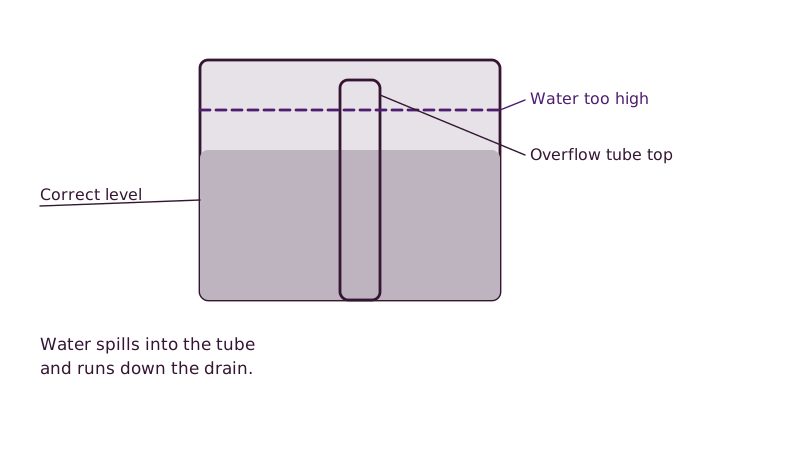
Water spilling down the overflow tube means the fill valve is not closing or the float sits too high. Lower the float with the adjustment screw, or slide the clip further down the rod. The target water level comes from the maker's instructions and is usually marked on the fill valve or the tank. Once adjusted, a valve that still leaks is worn out and ought to be replaced.
Fill valves are inexpensive and install without soldering. Shut off the water, empty the tank, detach the supply line, take out the old valve, install the new one to the height stated in its instructions, and hook everything back up. Sediment can stop a valve from closing, so briefly flushing the supply line before reconnecting helps. A hissing noise from the tank with no running water points to the fill valve even when the level looks normal.
Which problems need a plumber?
Make the call if new parts fail to cure it, if water leaks at the base or from the supply line, if the stop valve refuses to close, if the tank is cracked, or if the right parts are impossible to find. A plumber can also diagnose recurring clogs, which sometimes show up as an odd running sound, and replace corroded stop valves.
Repairs to faucets and toilets are exempt from permits in Riverside according to the city's handout, so a simple repair needs none, but work on piping behind the wall or under the floor does. A separate running toilet fix guide covers the repair in a different order, while booking a visit is quickest through the quote form.
Common questions
Is it possible to repair a running toilet with the water still on?
What makes a toilet start running when nobody touched it?
Do I need a new toilet if mine keeps running?
How long does a toilet repair take?
This guide is one of many on plumber in Riverside.
Sources used
Page updated