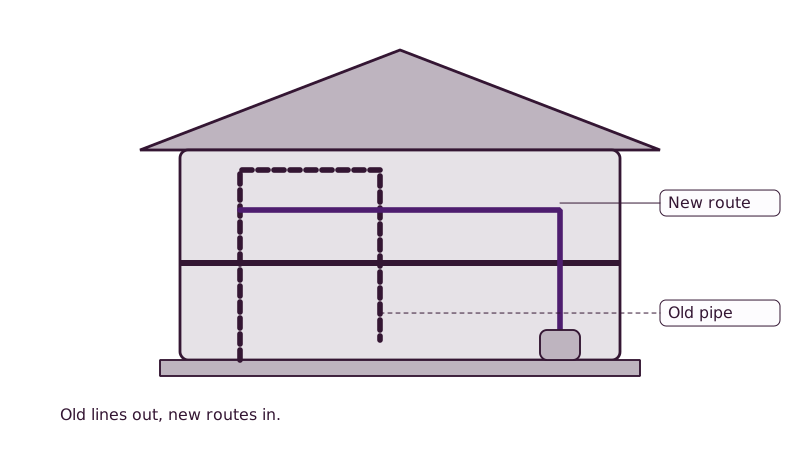
Re-plumbing an older home is a big job, yet the figures are not a mystery. Bob Vila's 2023 guide lists a typical repipe between $1,500 and $15,000, averaging $7,500 nationally, and its 2025 comparison prices a two-bath, 1,500 square foot home at $4,000 to $6,000 in PEX or $8,000 to $10,000 in copper. Start from the home page or see repiping for the job itself.
What does it cost to re-plumb an older house?
A repipe runs from $1,500 up to $15,000 in national guide figures, with a $7,500 average (Bob Vila, updated April 24, 2023). Bob Vila's July 23, 2025 guide prices a two-bath, 1,500 square foot home at $4,000 to $6,000 using PEX and $8,000 to $10,000 using copper. These are not Riverside quotes, and the written quote sets the price.
| Scenario | Guide figure | Source and date |
|---|---|---|
| Whole-house repipe, typical | $1,500 to $15,000 (average $7,500) | Bob Vila, April 24, 2023 |
| Two-bath, 1,500 sq ft home, PEX | $4,000 to $6,000 | Bob Vila, July 23, 2025 |
| Two-bath, 1,500 sq ft home, copper | $8,000 to $10,000 | Bob Vila, July 23, 2025 |
| Copper pipe, material cost per foot of pipe | $2 to $8 | Bob Vila, April 24, 2023 |
| PEX pipe, material cost per foot of pipe | $0.40 to $2 | Bob Vila, April 24, 2023 |
The wide spread is real. A single-story slab house with open attic access is a different job from a two-story home with plaster walls and a crawl space. The 2023 figures are the oldest in the table, so read them as a floor, not a forecast.
What drives the cost up in an older Riverside house?
Access, material, wall type and permits do most of the work. In older homes the pipes may run behind plaster, under slab foundations, or through tight crawl spaces, so more of the budget goes to opening and closing walls than to pipe. In materials copper is pricier than PEX, and the guides give higher whole-house totals for it.
Older neighborhoods such as Downtown Riverside, the Wood Streets, Arlington and the Eastside have mixed plumbing from many decades of repairs: galvanized steel, old copper, newer patches in PEX. A plumber who looks at a house often prices by fixture count and floors. Expect more fixtures to mean more cost.
Other budget items to ask about:
- Drywall and plaster repair, including who handles patching and paint.
- Water shutoff duration, since the house has no water while work is open.
- Permit and inspection fees.
- Removal of old pipe, and whether any contains lead solder or other hazards.
- Upgrades done at the same time, such as new shutoff valves or a pressure regulator.
Riverside has about 107,868 housing units and a median owner-occupied value of $616,400 in the Census Bureau's ACS 2024 one-year estimate. Those are citywide numbers; they say nothing about the age of your pipes, so look at the pipes themselves.
Is a permit required to replace the plumbing?
The City of Riverside's work-exempt-from-permits handout says a permit is needed in Riverside to replace piping inside a wall or under the floor. A contractor license is also required in California for every job that calls for a permit. Confirm the details with City Building and Safety at (951) 826-5800.
For Moreno Valley addresses, Building and Safety is at (951) 413-3350, and Loma Linda's permit questions go to (909) 799-2836. Unincorporated addresses answer to the County of Riverside Building and Safety at (951) 955-1800. Ask the plumber who obtains the permit and whether its fee is included in the quote.
Is repiping the whole house or fixing leaks cheaper?
Spot repairs cost less at first. But if you have had two or three leaks in a short time, a failing material, or low pressure from corroded galvanized pipe, repeated repairs add up and the house is still at risk. Repiping swaps out the full run, which ends the failure pattern.
One test is to compare the cost of the next three or four repairs against a repipe quote. Another is to have the plumber describe the pipe's interior where it was cut: heavy scale or thin walls say the rest is near the end. See how frequently a house needs repiping and galvanized pipe replacement.
To weigh materials against each other, the PEX versus copper page sets out the tradeoffs. A related cost page is repipe cost.
What about a slab leak or polybutylene pipe?
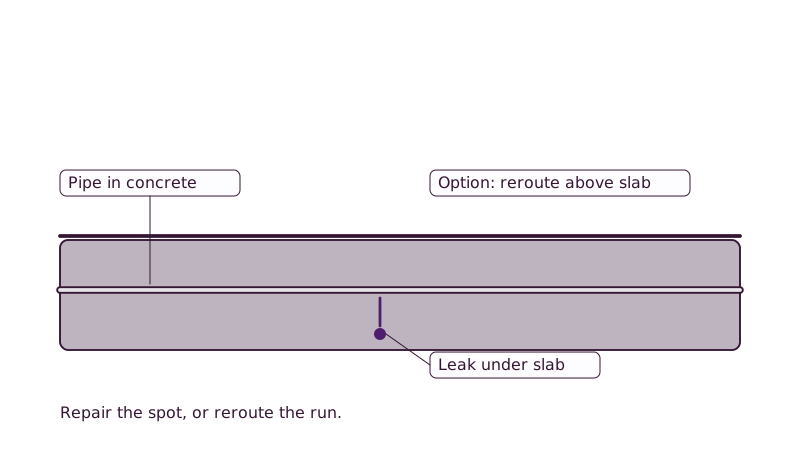
If the leak is under a concrete slab, the choice is between repairing the one spot and running new lines up through the walls and attic so the slab stays untouched. A leak detection visit comes first, because it tells you whether one repair or a full reroute fits the situation. For slab cases, read slab leak repair or repipe.
Polybutylene is a gray plastic pipe used widely in the 1970s to 1990s in some regions, and homes with it are often repiped. Check any exposed pipe for the printed code. Polybutylene pipe replacement has more on how to tell.
What to do next
Walk the house and note what you can see: pipe color, shutoff valves, any green corrosion, and water stains. Find the main shutoff. Count bathrooms, kitchens and laundry lines. Photograph the water meter area. With that list a plumber can give a better first estimate.
Get two or three written quotes, ask each to say copper or PEX and why, and compare scope. Then send a request and we will pass it to a local plumber who visits. A repipe is a good time to ask about a water pressure regulator and a shutoff valve at each fixture.
When should I contact a plumbing business?
Call before the next leak, not after. Call when you see pinholes, rusty water, falling pressure, or a repair that has failed twice. Call when you are buying an older house and want to know what is behind the walls. A camera, a pressure test and a visual check give a plumber a real basis for a number.
Do not cut into walls to look yourself unless you are ready to repair them. Hire a plumber and make sure the quote lists materials, access repair and the permit.
Common questions
How many days does re-plumbing an older house take?
Which questions should I put to a plumber before a repipe?
Should I stay home, or move out, while a repipe is under way?
Which suits an older house better, PEX or copper?
Sources used
Page updated