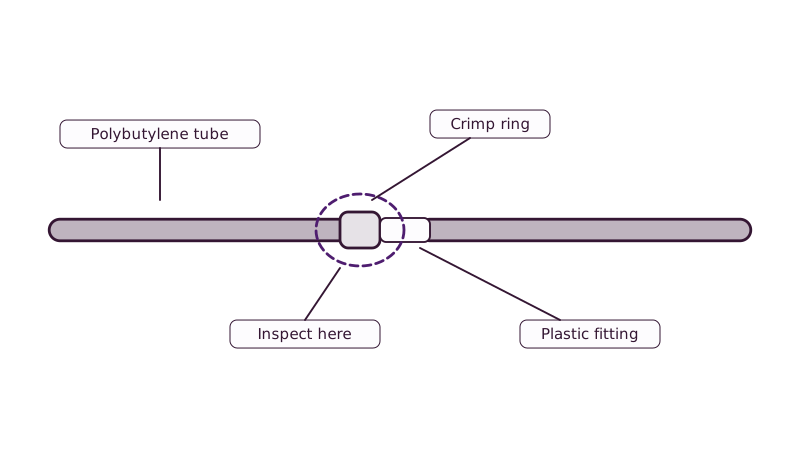
Poly-B, the short name for polybutylene, is a plastic supply pipe installed in several million North American homes between roughly 1978 and 1997, according to the encyclopedia entry for the material. It earned a bad reputation for leaking. A house from that window deserves an afternoon's inspection. Replacing it means a repipe, which our repiping and pipe replacement page outlines.
Read on for identification, the failure mechanism, the replacement work and who should do it.
What does polybutylene look like in a house?
Inspect whatever supply lines are visible: beside the water heater, in sink cabinets, around the main shutoff, along the garage wall. The pipe is flexible plastic tubing, commonly described as gray and occasionally blue or black, joined with plastic or metal crimp fittings. A plumber can settle any doubt in minutes.
Start with the build year. The suspects are houses finished from the late seventies through the mid nineties, and locally that window can cover tract homes in Moreno Valley, La Sierra and other areas developed then. Older houses in Downtown Riverside and the Wood Streets lean toward copper or galvanized pipe, although remodels can introduce any material.
Hidden runs complicate things. Much of the pipe sits inside walls, so a plumber may inspect exposed ends and access panels. A house that has been repiped has usually lost the old material, and permit or seller records can confirm it.
Why does polybutylene fail?
Per the reference article, the leaks were tied to the pipe degrading under chlorinated water. Chlorine and chloramine, the disinfectants in city water, are reported to attack fittings and the pipe itself from the inside, and strain at fittings, bends and kinks accelerates the damage. As the harm is internal, failure can show up as a slow drip or a sudden burst with little warning.
That is the catch: a pipe can look fine. Disinfected city water is not something an owner controls. The same article says the Cox v. Shell Oil class action ended in a $1 billion settlement. Do not count on compensation still being open; a lawyer or the settlement administrator can tell you the current status.
The article also says current U.S. building codes do not accept polybutylene water pipe, so do not plan on repair parts.
When should I replace it?
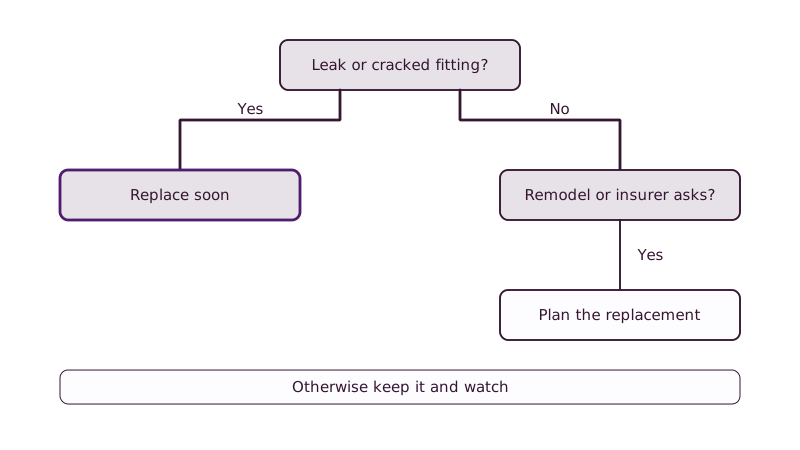
Act sooner after a leak, once a plumber spots cracked or stained fittings, while a remodel already has walls open, or if an insurer raises it. With nothing failed yet, a planned replacement on your own schedule beats an emergency one.
Combining the two jobs spares you from opening the walls a second time. For timing, read the repiping interval for a house, and for motives, why repipe at all.
Plenty of plastic pipe is not polybutylene. PEX, CPVC and PVC are all common and have different track records, and a plumber can distinguish them by sight, which is why the first step is a look rather than a guess.
What does polybutylene replacement involve?
New supply lines go in, in PEX or copper, with a fresh run to every fixture, a reconnected heater and main, a pressure test and patched openings. The job amounts to a whole-house repipe, usually staged zone by zone, which means the water is shut off for a portion of each day.
The City of Riverside's exempt-work handout puts piping replaced behind the wall face or under the floor on the permit side, so expect to need both a permit and an inspection. Building and Safety answers at (951) 826-5800. Moreno Valley's division is at (951) 413-3350, and Loma Linda permit questions go to (909) 799-2836.
PEX versus copper compares materials, the repipe sequence walks through the job, and repipe pricing handles the budget. No dollar figure appears here because the guides we could read had none specific to polybutylene.
Who confirms the material and quotes the job?
Before you decide on anything, have a plumber inspect the house. They check the lines, note the material and where it runs, and describe the options, including whether a partial replacement makes sense. Have the build year and any record of past leaks to hand.
A local plumbing business carries out the work, not us. Send a quote request and we arrange for one to visit. A contractor license is required by the state board from $1,000 in labor and materials, so get the license number from the business and verify it at cslb.ca.gov before you agree to anything. More of our services are listed at the Rubidoux Ridge Plumbing home page.
Do I have to replace polybutylene pipe?
We found no rule forcing an owner to replace it, yet plumbers commonly recommend it, since failures are hard to predict. Keeping it is a risk decision, because a burst inside a wall can do serious water damage. Some owners replace it at a sale, during a remodel or after a first leak.
Insurance is worth a look. Policies differ, and an insurer may ask about the pipe or restrict cover, so read yours and ask your agent. Burst pipes and insurance raises the usual questions, while a burst in progress tells you what to do right away.
If water is escaping now, shut the main valve and ring a plumber. One leak in this pipe suggests the entire system is wearing out.
Common questions
How many days does a replacement last?
What should the plumber answer before I sign?
Must I stay home during the work?
Sources used
Page updated