Water from a burst pipe soaks drywall, flooring, insulation and cabinets within hours, and the damage grows with time, so work in this sequence: stop the water, make the area safe, dry it, then repair. We pass your request to a local plumber through the request form. Other leak problems are collected under plumber for leaks in Riverside.
What damage does a burst pipe cause, and how fast?
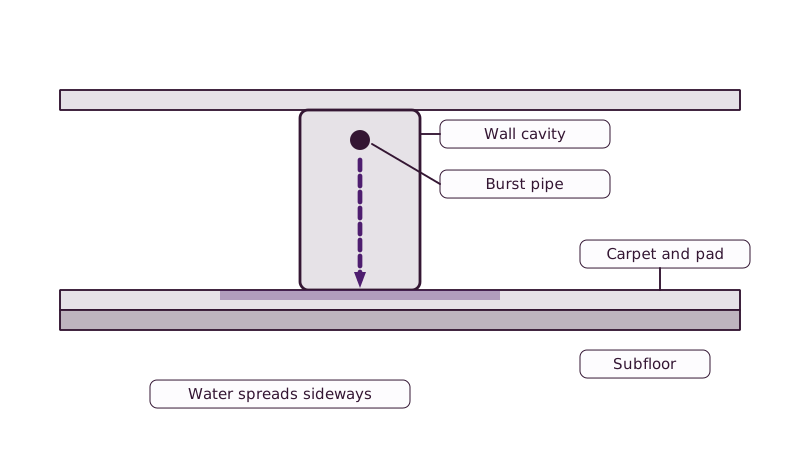
Water spreads along floors, down through ceilings and into wall cavities, soaking drywall, insulation, carpet pads, cabinet bases and wood subfloors. A large leak can ruin flooring quickly, and if materials stay wet it can breed mold. Electrical outlets, fixtures and appliances in its path are also at risk.
How bad it gets depends on flow and time. A pipe in an attic can drop water through every floor below. A pipe in a slab raises floors and damages flooring from below. Hot-water lines add steam and heat damage. Fresh water from a supply pipe is the mildest scenario, whereas sewage is another kind of hazard that requires professional cleanup.
The EPA estimates a typical home leak wastes over 9,300 gallons annually, and a burst is a sudden form of that, which makes the main valve the first thing to close.
Which steps matter during the first hour?
Shut the main water valve, cut electricity to the wet areas provided the panel is reachable without wading through water, and keep everyone out of flooded rooms. Lift valuables to higher ground, photograph and film everything, then drain the line through the lowest tap. Use towels and a wet vacuum to contain the water.
Never touch an outlet or appliance in standing water. Should water come through a light fixture, switch that circuit off. Lift rugs and furniture legs off wet floors. Take photos before cleanup and keep every receipt. For the same steps alongside a plumber visit, see what to do when a pipe bursts and the emergency help page.
A gas odor inside the building changes everything: get out and phone SoCalGas at 1-800-427-2200 from a safe distance.
How quickly can mold take hold in a wet building?
The EPA advises getting wet materials dry inside 24 to 48 hours to head off mold. Past that point, mold can begin on drywall, wood and carpet, and warm conditions can speed it up. Porous materials that stayed wet longer, such as ceiling tiles, insulation and carpet, often must be thrown out and not dried.
Open the wet cavities, run fans and dehumidifiers and monitor with a moisture meter. Dry heat helps, but closed wall cavities hold moisture for days. Water-damage restoration companies do drying and testing, which is separate from plumbing. The plumber handles stopping and repairing the leak while a restorer dries and rebuilds, so many homeowners end up needing both.
Check closets and cabinet backs for a musty smell in the days after.
Who pays for the water damage?
Home insurance often covers sudden, accidental water damage but may exclude the pipe repair, gradual leaks and flood from outside. Renters insurance may cover belongings, and the landlord's policy the building. Read the policy for deductibles and time limits, and call the insurer promptly, since early notice usually matters.
The usual lines are explained in insurance and burst pipes. Keep the photos, a list of damaged items with approximate value, plumber invoices and drying reports. Do not throw away damaged items until the insurer has seen them or approved disposal, unless they are a health hazard.
If the break was on a shared line or at a rental, tell the landlord or property manager, in writing, that same day.
In what order should repairs happen?
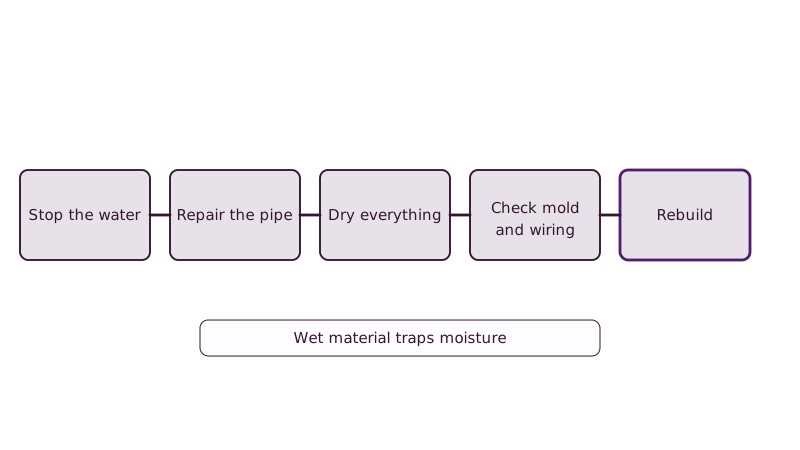
Stop the water and repair the pipe first, then dry, then check for mold and electrical safety, then rebuild. Rebuilding over wet materials traps moisture, and rebuilding before drying is complete leads to repeat damage. Each trade waits for the one before.
A plumber needs access to the pipe, so drywall may have to be cut. Permits are part of it: Riverside counts pipe replacement within a wall or beneath a floor as permitted work, so ask Building and Safety, (951) 826-5800. Moreno Valley and Loma Linda have their own divisions, and unincorporated areas deal with the county.
Ask the plumber and the restorer how far the wet area runs, and do not paint over a damp surface. Electrical inspection before closing the wall protects against problems later.
Can a burst pipe be prevented?
Many can. Learn where the main shutoff sits and test it once a year, replace old washing machine hoses, watch for pressure above 80 psi, deal with pinhole leaks quickly and think about replacing old galvanized or polybutylene pipe. A sudden break most often comes from age and corrosion.
A checklist is in our burst pipe prevention guide. Water pressure that runs high strains fittings, and a regulator holds it down. Leak sensors under sinks and by the water heater alert you early, and some shut the water off automatically.
Is it safe to remain in the house?
Frequently so, as long as the water is off, power in wet areas is safe and no sewage is involved. A house with no water has no toilets, so many families stay elsewhere during a big job. If wiring is wet, the ceiling is sagging or mold is widespread, leave until a professional says it is safe.
Check with the insurer about extra living costs, which some policies cover.
Common questions
How long is the cleanup after a burst pipe?
Should I turn off the electricity?
Do I need a plumber if the pipe stopped leaking?
Can I fix the pipe myself?
Sources used
Page updated