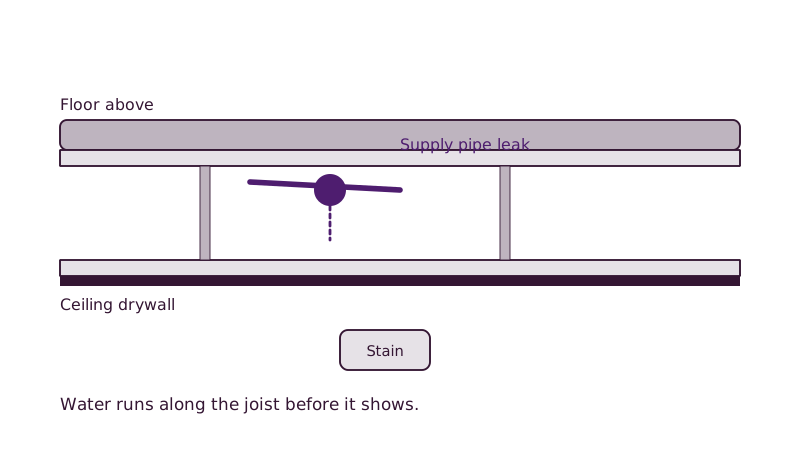
Water dripping or pouring from the ceiling calls for the main water valve to be closed first, followed by the breaker for any room with a wet ceiling or dripping light fixtures. Get people and valuables out of the way, set a bucket under the drip, and take photos. A pipe, a roof or an air conditioner could be the cause, and the page on leaks and burst pipes helps sort that out.
What are the immediate steps when a ceiling is leaking?
Close the main water valve, typically found at the front of the house by the meter or on a garage wall. At the breaker panel, cut power to the wet area. Position a bucket beneath the drip, and if the ceiling bulges with trapped water, puncture a small hole at the lowest point so it empties into the bucket.
Stay out from under a sagging ceiling, because soaked drywall is heavy and may fall unannounced. Water running through a light fixture or outlet means keep clear and leave the breaker off until an electrician or plumber confirms it is safe. If the main is out of reach or the flow is heavy, ask for emergency plumbing.
Record the damage in photos and video prior to cleanup, since insurance claims need dates and visible evidence. Before you pull out any materials, read whether insurance covers a burst pipe.
Is it mold, and what about a small stain?
A minor ceiling leak that dries out leaves a stain, and a recurring one leaves a stain that spreads. Mold may begin in a day or two in damp material, so dry the space fast with fans and a dehumidifier. Painting over a wet ceiling backfires, because the stain returns and the mold stays hidden.
A stain that has stopped growing is covered in water spots on a ceiling with no leak, and signs of a water leak in a ceiling helps catch one early. If the leak was long-term or you see black growth over a large area, call a remediation business before opening the wall.
What if a pipe leaks beneath the house, and does that affect the ceiling?
A pipe leaking under a floor or in a crawl space soaks soil and wood framing, feeds mold and can undermine a slab. Your ceiling will not show it, yet similar clues turn up in the floor: warm spots, a hissing sound, a spinning water meter. Riverside homes sit on either a raised foundation or a slab, and each conceals leaks in its own way.
A leak below the house takes longer to locate than one overhead, because the water travels. Clues include a climbing water bill, a meter that keeps moving with everything off, and damp spots in the yard. The meter test is described on the page about a high water bill with no visible leak, and leak detection cost covers pricing.
A leak under a slab is a case of its own, discussed in slab leak detection and repair.
What if I rent, or the leak comes from a neighbor above?
Tell your landlord in writing right away and keep a copy. In an apartment, the leak may come from the unit above, and the landlord or building manager arranges the plumber. Ask for the date of the repair in writing. Photograph the damage and any items affected for your records.
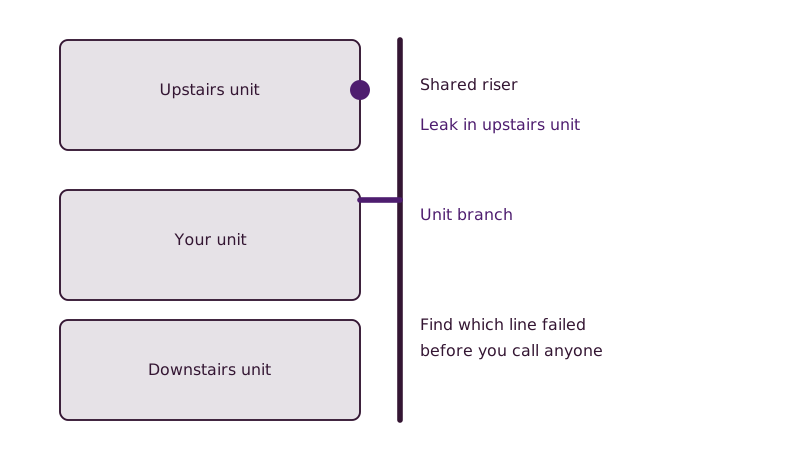
California tenants have repair rights, but the details depend on the case, so check the state tenant resources or ask a tenant-rights group. For a house you own, the same photos and dates help an insurance claim.
What if the leak is from a water heater, AC or light fixture?
A leaking water heater in the attic or an upstairs closet will stain the ceiling below, and its drain pan line may be blocked. A clogged air conditioner condensate drain overflows into the ceiling, especially in summer. Water at a light fixture is dangerous, so keep that circuit off.
Shut off whichever unit is leaking and call the right trade: a plumber for a water heater, an air conditioning business for the condensate line. When unsure, send a request and we pass it to a local plumbing business. The other jobs we cover are listed on the home page. We take requests Monday to Friday, 9am to 5pm.
Which leaks are most frequent in homes, and where do ceiling leaks begin?
Likely sources are a supply or drain line serving an upstairs bathroom or kitchen, a failed shower pan or tub drain, and a leaking water heater or air conditioner drain pan. One-story homes more often have a roof leak or a rooftop air conditioner. Where the stain sits hints at the source.
A stain right below a bathroom implicates a toilet seal, tub drain or supply line. A ring-shaped stain in a hallway can mean a pipe crossing the attic. A mark near an exterior wall or under a roof valley suggests the roof. A brown stain that spreads with rainfall but not with water use blames the roof, and one that spreads with use blames plumbing.
Close the main for an hour and observe. A drip that stops was a pressurized water line. A drip that continues comes from a drain line or the roof. This test spares you a lot of guessing.
What is the time frame for repairing a burst pipe or ceiling leak?
Once the plumber finds it, a burst or leaking pipe in an easy-to-reach spot is a quick repair. Tracking a leak behind drywall takes longer. Afterward the drywall has to dry before patching, which adds time. Ceiling repair and paint form a separate step from the plumbing.
Get two numbers from the plumber: the time until the leak stops, and what else is needed to dry and rebuild. Plumbers fix the pipe, while drywall and paint often belong to another trade. Many plumbing businesses will cut an access opening and explain what comes next.
Has a pipe burst if the ceiling is soaked?
Possibly, if a large volume arrives at once. A burst floods quickly and keeps flowing until the water is shut off. A small stain or slow drip more often means a failed joint, a pinhole or a drain leak. Bursts in a ceiling can stem from age, corrosion or a fitting that gave way.
Water that keeps coming with the main closed may originate in a drain line or the roof. Burst symptoms and the steps afterward appear in how to know if a pipe burst and emergency burst pipe plumbers. Flood cleanup is handled on water damage from a burst pipe.
Common questions
What is the usual time for a ceiling leak repair?
Which questions are best before hiring for a ceiling leak?
Is an adult needed at home during the repair?
Is the insurance company the first call?
Sources used
Page updated