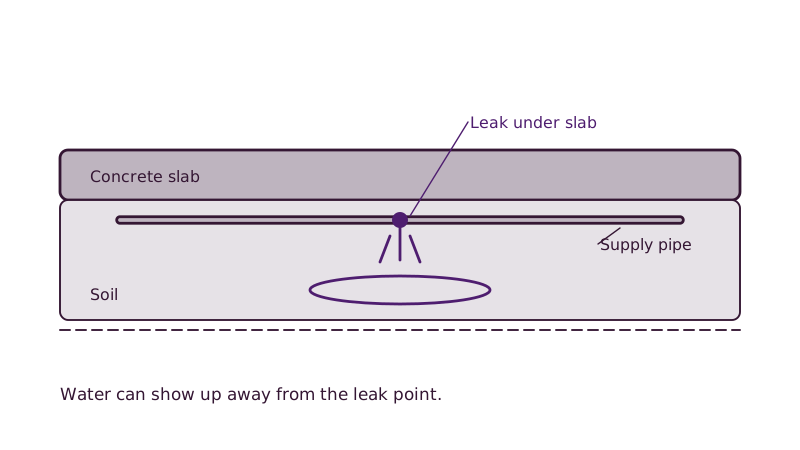
A slab leak is a break in a water line running beneath or inside a concrete foundation. The steps are the same everywhere: confirm a leak exists, pinpoint it without breaking up the whole floor, then decide among a spot repair, rerouting the line up through the walls or ceiling, or repiping. This page walks through detection and repair. For the broader service, see the leaks and burst pipe plumbers page.
How do I tell whether a slab is leaking?
Typical symptoms include a meter that keeps moving while everything is off, running-water noise with every tap closed, warm or hot patches on the floor, damp carpet or baseboards, new cracks in tile, and a bill that suddenly climbs or pressure that drops. A leaking hot line beneath the slab often announces itself through a warm floor.
Not every sign means a slab leak. Water can also come from a drain, a roof or an irrigation line. A meter test separates supply leaks from the rest. Shut off all water in the house and watch the leak indicator or dial. Movement means a supply line is leaking somewhere on the stretch from the meter to the house. The burst pipe signs guide lists more clues.
What does fixing a slab leak typically run?
For slab leak repair, This Old House's 2026 guide, updated 04/07/2026, lists a $2,300 average and a span from $630 to $4,400, in addition to the $150 to $600 detection figure above. These are national guide figures. A leak that needs concrete cut, a deep line, or multiple spots will land higher, so the written quote sets the price.
| Item | Guide figure | Source and date |
|---|---|---|
| Repair, average | $2,300 | This Old House, 04/07/2026 |
| Repair, range | $630 to $4,400 | This Old House, 04/07/2026 |
| Leak detection | $150 to $600 | This Old House, 04/07/2026 |
For more on what changes the bill, including floor coverings, access and the cost of patching, see what slab leak repair costs.
Which homes are most likely to have slab leaks around Riverside?
Many homes built in the 1970s to 1990s tract era in Moreno Valley and La Sierra may sit on slabs, with supply lines that run under the concrete, though we have no verified year-built counts. Older raised-foundation homes in Downtown Riverside, the Wood Streets and Arlington may have crawl spaces instead, where leaks are easier to see.
Copper under a slab can pit and fail over decades, and hard water adds to wear. Riverside Public Utilities' 2025 report lists hardness averaging 197 mg/L, about 12 grains per gallon, and other area suppliers report their own figures. Pinholes in one place often come before pinholes elsewhere, which is why a second leak a few years later is not unusual.
Does slab leak work require a permit?
Often, yes. According to the City of Riverside's exempt-work handout, a permit is required to replace piping behind a wall's face or under the floor, and slab work falls under that. Moreno Valley, Loma Linda and the county have rules of their own; check with the building division that covers your address.
California requires a contractor license for any job of $1,000 or above, and for any job needing a permit. Usually the plumber obtains the permit and schedules the inspection. Find out whether permit and patching are in the quote, as together they can make up a big part of the total.
How is a slab leak detected without breaking the floor?
Plumbers use electronic listening devices that pick up the sound of escaping water, thermal cameras that show a hot line, pressure tests that isolate each branch, and tracer gas in some cases. The goal is a mark on the floor close to the break, so any opening is small.
This Old House's 2026 slab leak guide, updated 04/07/2026, puts leak detection at $150 to $600 as a national guide figure, not a local rate or what we charge. Detection is often a separate line from repair. Ask the business whether the detection charge is credited toward the repair should you proceed with it.
What are the repair options?
There are three main options. A spot repair opens the slab at the leak and replaces or sleeves the damaged section. A reroute retires the leaking line and routes fresh pipe through the walls or attic. Repiping replaces all supply lines in the house. The choice depends on the pipe, the number of leaks and your budget.
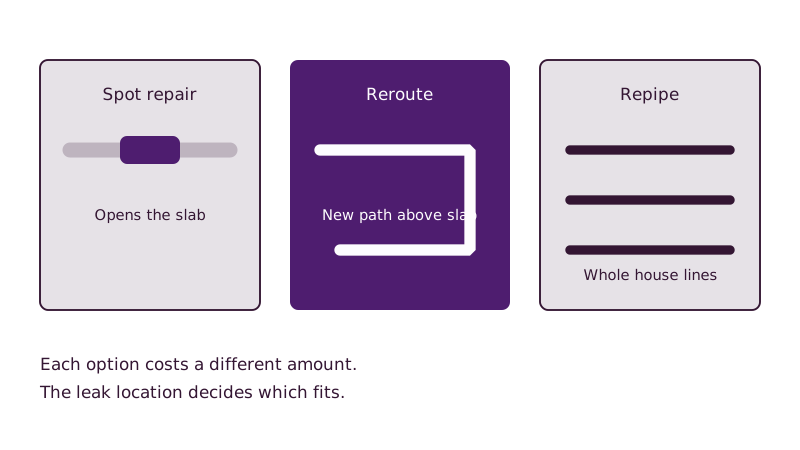
Spot repairs cost least and fit a single leak in sound pipe. Reroutes avoid cutting the slab and are often chosen when the line is hard to reach. When pinholes keep returning, repiping can be the cheaper long-term path, as the repair versus repipe guide explains. Material choices are compared in the PEX vs copper page.
How can I limit the damage before the plumber comes?
A large or flooding leak calls for closing the main shutoff valve and phoning right away. With a slow leak, shut the water off whenever you leave, track it on the meter, and keep bills, photos and notes on any damage. The EPA estimates a typical household leak loses over 9,300 gallons yearly, so even a slow one is worth chasing.
Check your insurance policy, since coverage for slab leaks and the access work varies. Take photos before anything is opened. A quote form request starts a written quote, and the emergency burst pipe plumber page covers a leak that cannot wait.
Common questions
Can a slab leak fix itself?
Does a slab leak mean I need to repipe?
How much time does a slab leak repair take?
What happens at the house during detection?
For the wider picture, start with the plumber guide for Riverside.
Sources used
Page updated