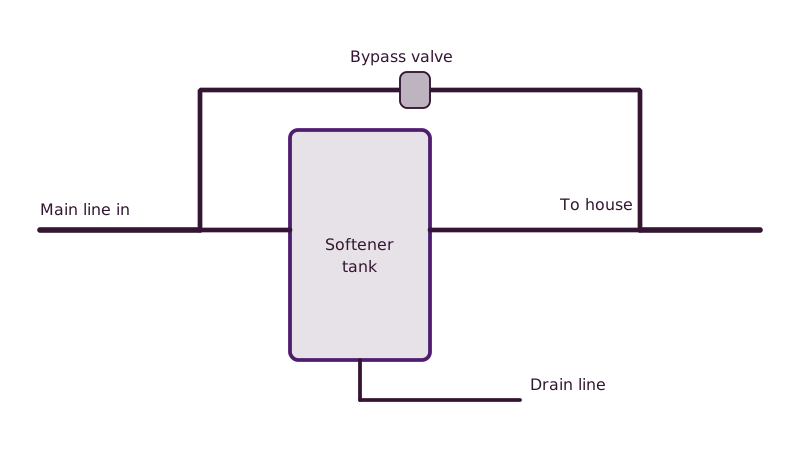
Installing a softener follows a short sequence: close the main water, tap into the supply line downstream of any hose bibs you want to keep hard, add a bypass valve, join the in and out ports, route a drain line to an approved drain with an air gap, plug in the controller and load salt. Plenty of homeowners can handle the easy version, while cramped plumbing, old pipe or no drain nearby is a case for a pro. The complete service is described on the water softener installation page.
What are the steps to install a water softener?
Most homes follow the same order. Choose a spot close to the main line, a drain and an outlet. Turn off the water and empty the lines. Cut into the supply, fit the bypass, attach the inlet and outlet to the correct ports, lead the drain hose to a standpipe or floor drain with an air gap, then add salt, enter the hardness and start a regeneration.
Common sticking points:
- Ports are labeled for in and out, and swapping them keeps the unit from working properly.
- To keep outdoor hose bibs and the kitchen drinking tap on hard water, tie the softener in downstream of those branches.
- Leave space above and around the tank for adding salt and servicing the valve.
- Let the unit flush before opening faucets, or loose resin and air will sputter from the lines.
Work from the manufacturer's manual for your model, because valve heads, drain lengths and electrical needs differ.
Is it realistic to install a water softener yourself?
Yes, provided you are at ease cutting and joining your type of pipe, your shutoff valves close all the way, and a drain and outlet sit within easy reach. Push-fit and flexible connectors simplify copper and PEX for a careful homeowner. Old galvanized pipe, a failing main shutoff, or a garage layout far from the drain make the job harder than the box suggests.
A diy water softener installation saves labor, yet a mistake can cost more than the labor saved. Without an air gap, dirty drain water can back up, and a bad cut or poorly seated joint can flood a garage. Ask whether you could fix a leak at the main line without help, and hire the work out if the honest answer is no. The city's exempt-work handout says Riverside generally requires a permit to replace piping behind the wall or below the floor, so check changes beyond the visible lines with the building division.
How should the softener be sized and set?
Base the size on household water use and your water's hardness, since more people, more bathrooms and harder water need more capacity. Enter the hardness from your utility's report, in grains per gallon, and the number of people at home into the controller. Many controllers want a measured value rather than a guess, so test strips or a drop test come in handy.
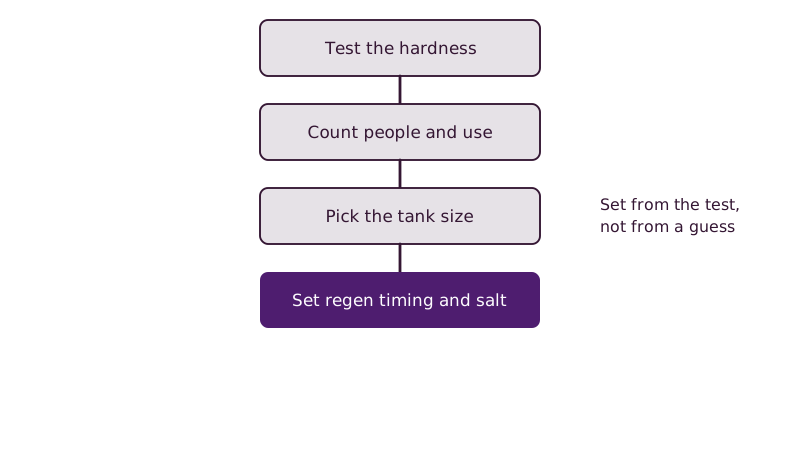
Buy the salt your model calls for, usually pellets or crystals, and look into the brine tank roughly monthly. Regeneration is best run overnight while nobody uses water. An oversized unit that rarely runs can let salt bridge and cake, so break it up. Replacing a unit often means fitting a new head on the old tank, but check with the installer before assuming it fits.
How can hard water scale be removed?
Scale on fixtures dissolves in vinegar or a descaling product left to sit, and showerheads can soak in a bag. A softener prevents new buildup rather than removing old buildup, and it may loosen scale already inside pipes only gradually. Heavy scale inside a water heater calls for a flush, and some fixtures need replacing.
Each method has limits. Vinegar harms some finishes, natural stone among them, so test a corner first. Descaling a tankless water heater is a separate maintenance step described in the tankless repair article. Salt-free conditioners alter how scale forms without removing the minerals, so read what a product claims before buying.
What makes the water hard in Riverside, Moreno Valley and Loma Linda?
Hard water holds dissolved calcium and magnesium collected from rock and soil. The 2025 Riverside Public Utilities report gives average hardness of 197 mg/L, around 12 grains per gallon, across a range of 180 to 210. The EMWD 2025 report gives Mills-area hardness averaging 5.1 to 7.5 grains per gallon, roughly 87 to 128 ppm, depending on the source.
For its Riverside service area, Western Municipal Water District's 2025 report shows an average of 155 mg/L for local groundwater and 88 mg/L for surface water. Loma Linda's 2015 city report listed average hardness of 93.4 ppm, ranging from 6.3 to 220, and no newer readable one turned up. The source reaching your tap depends on your address and the season, so find your utility on the bill and request its current report.
When does hiring a plumber make more sense?
Bring someone in if the shutoff valves will not close, the pipe is old galvanized steel, drain access means cutting into a wall or slab, a permit is needed, or you doubt the work suits your skill. A plumbing business can also size the unit, set up a bypass and verify that nothing else, such as a recirculation line, is affected.
Look at cost before deciding. Sourced national figures are in the water softener installation cost guide, and the quote form begins a written quote. California requires a contractor license for jobs at $1,000 or more and for any permit job, so verify the status of whoever bids.
Common questions
Is softened water safe to drink?
What is the best spot for a softener in a Riverside house?
Does a softener require upkeep?
How much time does an installation need?
This guide is one of many on the plumber guide for Riverside.
Sources used
Page updated