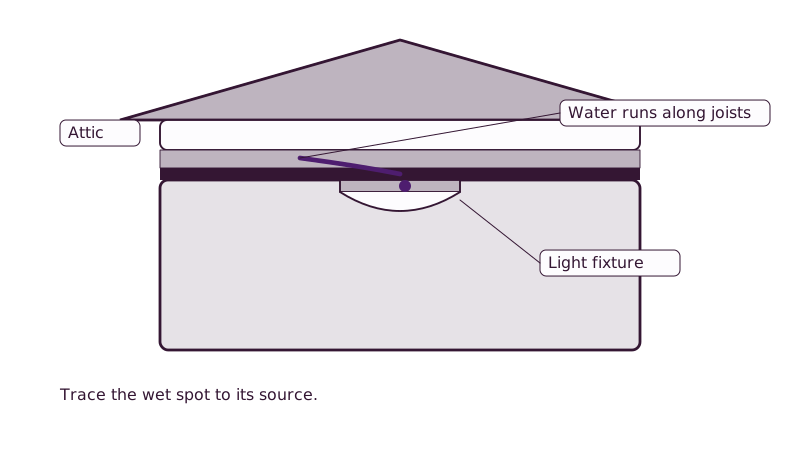
Treat a dripping ceiling light as a shock risk. Do not stand beneath the fixture, flip the light off at the wall only when that can be done dry, and switch off that circuit's breaker at the panel if the panel is safe to reach. After that, work out the source of the water: a plumbing leak above, a roof leak, or condensation. The leaks and burst pipe plumbers page explains how we arrange a visit.
What are the first steps if a ceiling light is leaking water?
Keep people and pets away from the area. Switch off the circuit breaker, provided the panel is reachable without walking across wet floor. If it is not, leave the light switch alone and call for help. Set a bucket beneath the drip, and close the water supply to the house when a pipe above looks like the cause.
Never touch a wet fixture, and never use a ladder under a dripping light. Water and wiring together can cause shock or fire. Move furniture and valuables and take photos for insurance. If the ceiling is sagging or bulging, the drywall is holding water and can fall, so stay out of the room. A small hole made carefully by a professional can relieve trapped water, but do not do it near the fixture.
How can I distinguish a plumbing leak from a roof leak?
Plumbing leaks tend to appear when water is used, and they continue in dry weather. Roof leaks follow rain, and they often stop shortly after. Look at the water meter. If it moves while every fixture is off, plumbing is the cause. Stains with a brown ring and a musty smell suggest a slow leak that has been going a while.
A ceiling leak that appears during a dry spell points toward plumbing or an air conditioner rather than the roof. A pipe leak hides longer than a roof leak, so staining may be older than it looks. The burst pipe signs guide lists other clues, and a plumber can bring a moisture meter and thermal camera.
Could the air conditioner be the cause?
Yes. A clogged condensate drain line on an attic or closet air handler can overflow into the ceiling below, especially in the warm months when the system runs for hours. A cracked drain pan does the same. The water often appears near the unit, though it can travel along joists to a light fixture elsewhere.
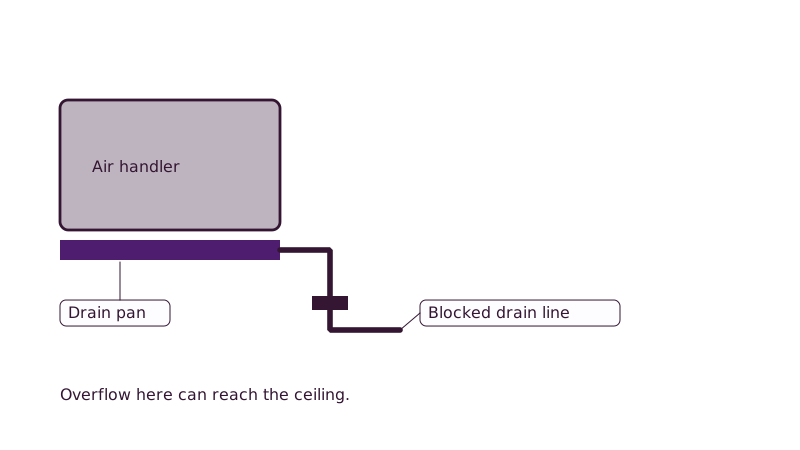
Turn off the air conditioner at the thermostat and the unit if you think this is the source, because it keeps making water. Clearing a condensate line is a task for an HVAC technician. A plumber can confirm that the water is not coming from the supply or drain pipes, and rule plumbing in or out.
How is the leak found and repaired?
A plumber starts by shutting off water to confirm the source, then uses a moisture meter, listening gear or thermal imaging to trace the water. Small access holes in drywall let the plumber see pipes. The leaking part, such as a supply line, drain joint, shower pan or valve, is repaired or replaced, and the area is dried.
Ceiling repair, mold remediation and electrical inspection are separate steps. Wet insulation, drywall and the light fixture usually need to be replaced, and wiring that got wet should be checked by an electrician before it is energized. Water damage cost depends on how long water ran. Water that runs for weeks adds up, and finding a leak early limits both the damage and the bill.
Why is water coming through a ceiling light?
Water follows gravity along framing and wiring until it finds a hole, and a light fixture is a hole. The source is above, though not necessarily directly above. Common causes are a leaking supply or drain pipe in the floor above, a toilet or tub overflow, a roof leak, or an air conditioner condensate line.
On a second floor, a bathroom above is the first suspect: shower pan, tub drain, toilet seal or a supply line. On a single story, think about the attic, roof flashing, a plumbing vent boot and a furnace or air handler drain. The timing is a clue. Leaks that start after a shower point to plumbing, and leaks that start with rain point to the roof.
Is a permit required for the repair?
Riverside's exempt-work handout covers faucet and toilet repair, yet piping replaced behind a wall face or below a floor needs a permit. Electrical and some structural repairs follow separate rules. In California, a job that hits $1,000 or needs a permit calls for a contractor license.
Ask any business that quotes the work about permits and who handles the electrical check. For work in Moreno Valley or Loma Linda, the local building division sets the rules. The plumber cost guide shows how plumbing rates are usually built.
Should I call my insurance company?
Usually it is worth a call. Many homeowner policies cover sudden water damage, and many exclude slow leaks or long-term wear, so details matter. Take photos, keep damaged items, save receipts for emergency work and ask what the insurer needs from the plumber, such as an invoice or report.
Stop the leak first and settle the claim later. An insurer will want to see that you limited the damage, and we cannot say what your policy covers. If a line is flooding, begin with the emergency burst pipe plumber page; the quote form opens a written quote for the repair.
Common questions
Is it safe to turn on a light that has had water in it?
Can a ceiling light leak start a fire?
How soon can mold appear following a ceiling leak?
What should be ready when the plumber arrives?
The rest of our guides start from plumber across Riverside.
Sources used
Page updated