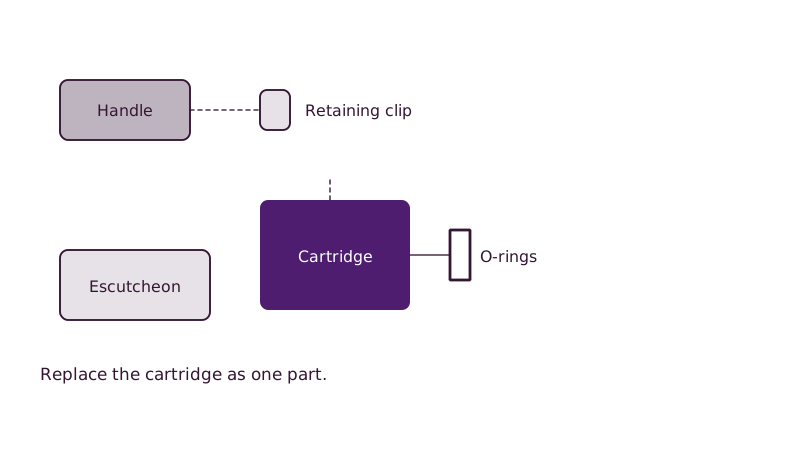
When a Delta shower keeps dripping once it is shut off, the cartridge is worn or fouled with minerals, or on some older designs the seats and springs are. The repair follows one pattern: shut the water, remove the handle and trim, pull the old part, install a matching new one, then test. The hard part is picking the right replacement, because Delta uses several valve designs. Related fixture work is covered on the garbage disposal and fixture plumbers page.
How do I tell which Delta shower valve I have?
Take off the handle and trim plate, then look at what sits behind them. A plastic or brass cartridge held by a clip or a bonnet nut is a cartridge valve. A ball inside a cap with rubber seats and springs is a ball-type valve. Delta has listed its valve series by name, such as the 13/14 and 17 series, and a model number on the trim or valve helps.
Photograph the valve before you take anything apart, and note the handle shape. Delta's own parts pages let you match the handle style to the valve behind it, and a supply store can match the old cartridge by eye. A wrong cartridge will not seat and will leak at the stem or give reversed hot and cold.
What causes a Delta shower faucet to drip?
Mineral scale and worn seals are the main causes. Rubber O-rings harden, cartridge faces wear, and on older ball-type valves the seats and springs pit or stick. Hard water speeds it. Riverside Public Utilities' 2025 report lists hardness averaging 197 mg/L, about 12 grains per gallon, so scale is a regular cause across the area.
A drip from the spout only, with the handle off, usually means the cartridge or seats. Water seeping around the handle while the shower runs suggests a worn stem O-ring or a loose bonnet. A leak inside the wall, shown by stains on the nearby ceiling or drywall, means a supply connection and needs a plumber.
What are the steps to swap a Delta cartridge?
Close the water to the shower, loosen the set screw to remove the handle, then take off the trim plate and the stop tube or bonnet. Pull the retaining clip, then pull the cartridge straight out, using a cartridge puller if it is stuck. Insert the new cartridge in the same position, replace the clip and reassemble.
Match the cartridge orientation so hot and cold are not reversed, usually with a notch or marks on the stem that line up with the valve body. Light plumber's silicone grease on the O-rings makes insertion easier. Bring the water back gradually, look for leaks at the trim, and test hot and cold before you call the job done. Keep the old cartridge to compare with the new one.
How do I repair an old Delta ball-type valve?
Some older Delta single-handle valves use a rotating ball with two rubber inlet seats and springs, plus O-rings and a cam. Repair kits replace the seats, springs, O-rings and cam together, and a fresh set often cures drips and sluggish handles. Use the kit made for that valve, since seat size differs by model.
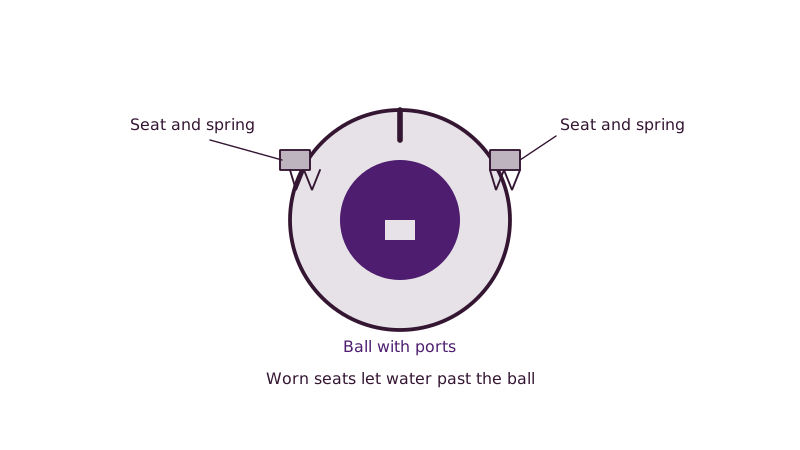
Remove the cap, lift out the ball and cam, take out the old seats and springs with a small screwdriver, drop in new ones and reassemble. Corroded or scored valve bodies are a different matter, and a body that is pitted inside will leak even with new parts. That is the point to ask a plumber, since replacing a valve usually means opening the wall.
What if the Delta faucet still leaks after the repair?
Check that you used the exact part, seated it fully and tightened the retaining clip or bonnet properly. A scored valve body, a damaged seat inside the valve or a leaking stop will keep the faucet dripping. If it drips only with hot water running, the hot-side seat may be worn.
Try a second cartridge from a reliable source before blaming the valve, since some off-brand parts fit loosely. Should the leak continue, close the water and phone a plumber. A hidden wall leak can stain finishes and do damage, and the EPA puts an average household's leaks at over 9,300 gallons yearly.
Is a permit or a plumber required for fixing a Delta shower?
A cartridge swap is a repair, and faucet repair is on the City of Riverside list of work exempt from permits. Replacing piping behind the face of a wall requires a permit, according to the same handout, so replacing the valve itself or the pipes behind it is a different matter. Other cities, and the county, set rules of their own.
When the valve body must be replaced, request a visit with the quote form. Visits are arranged from 9am to 5pm on weekdays. The more general shower faucet repair guide covers other brands, and the faucet installation cost page helps with replacement planning.
Common questions
Can I use any Delta cartridge for my shower?
What is the time needed for a Delta shower repair?
Why is my Delta shower hard to turn after repair?
Is it normal for a Delta shower to drip a little after use?
For the wider picture, start with plumber in Riverside.
Sources used
Page updated