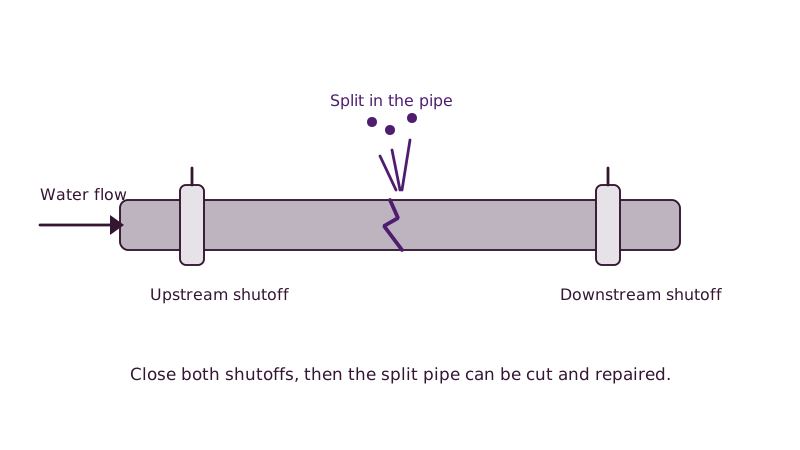
A leaking plastic pipe can be stopped by shutting the closest shutoff valve or the main, running a faucet to empty the line, drying the pipe, and then applying a repair clamp, a rubber-and-clamp patch or epoxy putty rated for that pipe type. The fix lasts only a short while. A cracked section needs proper replacement, and the plumber home page shows which plumbers we can arrange for the job.
What can I do immediately about a plastic pipe that is leaking?
Close the shutoff nearest the leak, or the main valve if you cannot find it, then run the lowest faucet until the pipe empties. Dry the area, wrap it with self-fusing silicone tape or fit a clamp over a rubber sleeve, then turn water on slowly and watch for drips. Treat it as temporary.
Know your pipe first. White or cream pipe is often PVC or CPVC, gray pipe can be older polybutylene, and flexible colored tubing is PEX. Each handles temporary repairs a little differently. Epoxy putty bonds poorly on a wet surface, so dry carefully. Silicone tape sticks only to itself, so wind it tight and overlap each wrap by half.
A hairline crack in a pressurized line will keep growing. Do not trust a patch for more than a few days. When the water cannot be shut off at all, or the leak is spraying, call right away and leave the main closed.
How to fix a broken pipe without replacing it?
A repair coupling, or slip coupling, lets you cut out the damaged inch or two and bridge the gap. Cut the pipe square on both sides, slide the coupling over, and tighten or glue per the manufacturer's instruction. PEX gets a crimp or clamp ring connector. Push-to-connect fittings do the same job in tight spaces.
Whether it counts as a DIY fix depends on where the pipe runs. An exposed pipe in a garage is a good candidate. A line that runs in a wall, under a slab or ahead of a pressure regulator is another matter, because replacing piping behind the face of a wall or below the floor requires a permit in Riverside, according to the city's permit exemption handout. Work that needs a permit also requires a California contractor license.
See leaking water pipe repair for the next step up, and repairing a leaking pipe under the sink for faults near a cabinet.
What stops an outdoor plastic pipe from leaking?
Outdoor plastic pipe, usually the irrigation line or a hose bib supply, cracks from sun, impacts and the odd freeze. Close the valve upstream, remove the damaged piece with a cut, and join the ends with a coupling made for outdoor use. Sun-faded pipe turns brittle, so cut back to firm material before you fit anything.
Shut off the irrigation controller too, so it does not run into a broken line. If the pipe is the main supply running between the meter and the house, do not dig or cut it yourself; call the plumber and tell them where the shutoff and the meter are. A cold snap can crack an exposed line that has no insulation.
Wet ground near a hose bib or a lawn sprinkler line is easy to mistake for a pipe leak. Turn off water use inside and watch the meter dial for a minute. A dial in motion shows water escaping from the system.
What fixes a tap that leaks?
A dripping tap leaks because an internal O-ring, washer or cartridge has worn, not because of the pipe. Close the small valve under the sink, take the handle off, replace the worn part with an exact match, and reassemble. Leaking around the foot of the tap is usually an O-ring, while spout drips come from the washer or cartridge.
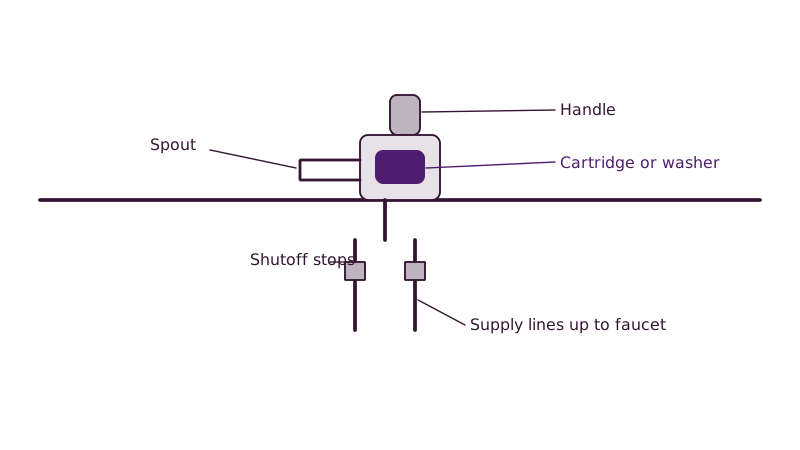
Each handle style is covered on the leaky faucet page. A dripping faucet can waste real water; the EPA reports that the average household loses over 9,300 gallons a year to leaks, and a steady drip adds to that total.
When the leak originates at the supply line or the pipe beneath the sink, see leaks under the sink.
How does plumbing work in a mobile home, and who fixes it?
Mobile home plumbing is a supply system, usually PEX or older polybutylene, running under the floor, and a drain system of ABS or PVC that drops into a waste connection. The pipes sit in the belly or crawl space, so a leak is hidden until the floor is soft.
Plumbing work beneath a mobile home is not a weekend project. Access is tight, a permit is often needed for the work, and the supply must be connected correctly at the pad. If you see a puddle under the unit, close the main, locate the dripping pipe from beneath, and ask a plumber to repair that section.
Site-built homes in newer communities such as Orangecrest and east Moreno Valley often have PEX, but manufactured homes exist across the area. To identify an unfamiliar pipe, check the color and the printed stamp on the tubing.
How frequently should a house's water pipes be replaced?
There is no single date. Copper often lasts for decades, galvanized steel rusts internally and usually needs replacing sooner, and PEX is newer with a shorter track record. Replace when you see repeat leaks, rusty water, falling pressure or pinholes, not at a calendar age.
For a house built in the orange-grove era, pipes may be galvanized or old copper, and a repipe can be reasonable once a second or third leak appears. To compare options, read replacing plumbing in an old house and repiping a house. For plastic specifically, check whether your home has polybutylene, a gray pipe that went into many homes built in the late twentieth century and is often replaced; see polybutylene pipe replacement.
What are the signs a plumber is overcharging you?
Warning signs include an unwillingness to give a written quote, pressure to pay in full upfront, a very low phone price that grows once they arrive, and refusal to show a contractor license number. A fair plumber explains the problem, shows the part, and lists parts and labor.
California limits home improvement deposits and requires a written contract above a set amount, so ask what the contract says. Compare against guide ranges, and see what a plumber costs for hourly figures. Get a second quote for any big job.
How to find a good plumber and tell if they are good?
A good plumber answers questions plainly, puts the quote in writing, has a contractor license number that the CSLB website lets you verify, and explains the permit. They leave the area clean and tell you what they replaced. Judge by those habits, not by a slogan.
You can also send us a request, and we pass it to a local plumber who visits. We answer Monday to Friday, 9am to 5pm.
Common questions
How can I avoid being overcharged by a plumber?
What marks out a reliable plumber?
Where do I find an honest plumber?
How can I find a good plumber near Riverside?
Sources used
Page updated