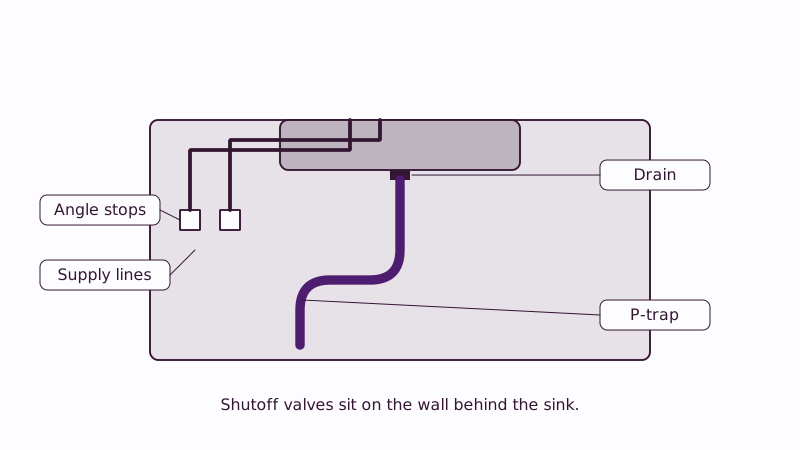
Water on the cabinet floor below a sink nearly always comes from one of four sources: a loose slip nut on the drain, a worn washer, a cracked supply line, or a leak from the faucet or disposal overhead. A wrench and a fresh washer often cure it. The page sits within the section on faucets, sinks, showers and disposals and explains tracing the leak before parts get bought.
How can I trace the source of a sink leak?
Clear out the cabinet and towel every pipe dry, then run the water and go joint by joint with a dry paper towel, starting at the top and moving down. The first place the towel gets wet is the source. Check the supply lines while the tap runs and the drain after filling and emptying the basin, because each leaks under different conditions.
The pattern is revealing. Drips that appear only as the sink drains implicate the drain side: the basket strainer, slip nuts, trap or disposal. Drips only with the tap on implicate the supply lines, valves or faucet base. A drip that never stops, even with nothing running, usually means a failing shutoff valve or a pinhole in a pipe. Set a small bowl under the spot and look again in an hour.
Remember that the leak may not start under the sink at all. Water can travel down from a faucet base, a dishwasher hose or a disposal flange and pool beneath. Take photos before you begin so a plumber or insurer sees what you saw.
How do I shut the water off before repairing it?
Turn the small oval valves on the hot and cold lines beneath the sink clockwise to close them. If they will not budge or still drip, close the house's main valve. Open the tap to drain what remains, set a bucket under the trap and dry the area before touching any fitting.
Look for the main valve near the front hose bib or at the meter. When neither valve works, treat the leak as an emergency, because it will not stop by itself. EPA states that leaks in a typical home waste over 9,300 gallons yearly, so a steady drip deserves a quick fix.
What can I repair myself?
A loose slip nut, a worn washer and a crusty supply line are sensible do-it-yourself repairs. Snug up the nut on a drain joint a little further and test. If it drips still, separate the joint, look for flat spots or cracks on the washer, replace it and put things back. Braided supply lines are inexpensive and thread on finger tight with another quarter turn.
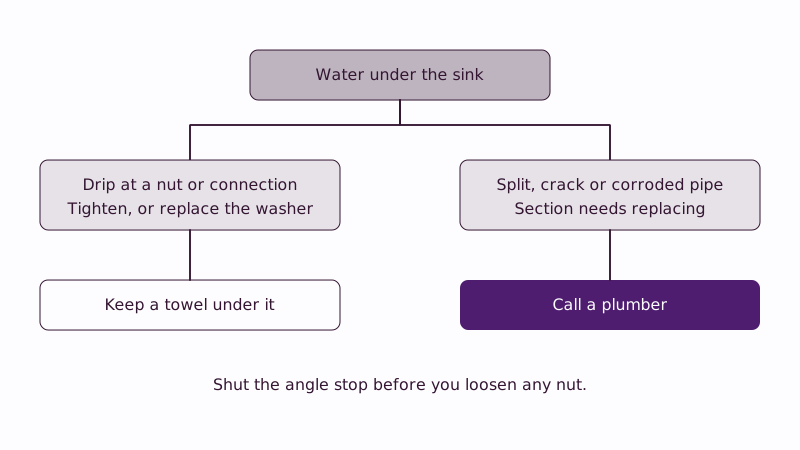
Plastic drain parts crack under too much force, so stop tightening once the dripping stops. A cracked trap should be replaced whole, since patched plastic seldom holds. For a pinhole in copper or galvanized pipe, a repair clamp or epoxy putty can slow it temporarily while you arrange a lasting fix. More on those is in the guides to pinhole leaks in copper pipe and leaks in plastic pipe.
Homes in Downtown Riverside and the Wood Streets may still have aged shutoff valves that seize or leak when turned. Swapping a stiff valve belongs to a plumber, since the main may have to be closed first. The City of Riverside's handout lists faucet or toilet repair or replacement as exempt from permits, but replacing piping behind the face of a wall or below the floor requires one, so a leak in the wall is not a weekend fix.
When should a plumber take over?
Bring in a plumber if the leak originates inside the wall, the shutoff valves will not close, a pipe is corroded or split along its length, the disposal body leaks, or the cabinet floor is soft or moldy. The same goes if you repaired it and it returned.
Long-standing moisture causes damage you cannot see: swollen particleboard, mold, rotted subfloor. If the cabinet base crumbles under a finger, the job is bigger than the pipe. A plumber can also judge whether the leak accounts for a high water bill, and high water bill with no visible leak describes the meter test.
Water can also reach electrical items. If a leak touches an outlet or an appliance cord, switch off the breaker before going near it. A contractor license is required in California once labor and materials reach $1,000, which covers larger repairs, and cslb.ca.gov lets you look one up.
On a sink with a disposal, a leak at the flange often means the unit must come out and get a fresh seal, and the page on leaking water pipe repair outlines what a plumber would then do.
Common questions
How much time does the repair need?
What do I need to ask before hiring?
Does somebody need to be at home?
Can a leaking pipe under the sink raise my water bill?
This guide is one of many on Rubidoux Ridge Plumbing plumber.
Sources used
Page updated