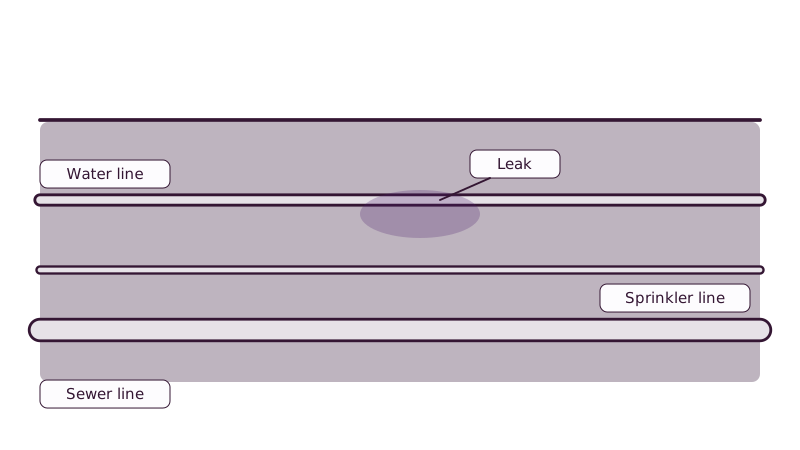
Signs of an underground burst include wet ground without rain, pressure dropping in the house, a water meter still moving with every fixture off, and a bill that rises although use has not changed. Check the meter, close the main, and then send the request through the quote page. The wider group of repairs is gathered under plumber for leaks in Riverside.
Which signs suggest a burst pipe beneath the yard?
Watch for soft, soggy or sunken ground, a patch of grass greener or taller than its surroundings, water seeping up, a dip or sinkhole in the driveway, mud at the foot of a wall and running water you can hear outside. Indoors, pressure falls, taps sputter and the bill climbs for no good reason.
No single sign proves it. A broken sprinkler line looks just like a broken water main, and a sewer break smells and drains slowly. Hissing near the meter box or the front hose bib, a meter box full of water, and a sudden pressure loss at every fixture all point toward the supply line.
An unexplained wet patch is easiest to spot in dry summer weather, and after rain it hides in the mud. Examine spots where the pipe turns, joins or crosses a driveway, since stress concentrates there.
How do I use the water meter to confirm it?
Shut every tap and appliance, ice maker and sprinklers included, and watch the meter. Locate the flow indicator, a small triangle or wheel that turns with any flow. If it spins, note the reading, leave the water unused for two hours as EPA suggests, and check once more. Any movement means water is escaping somewhere.
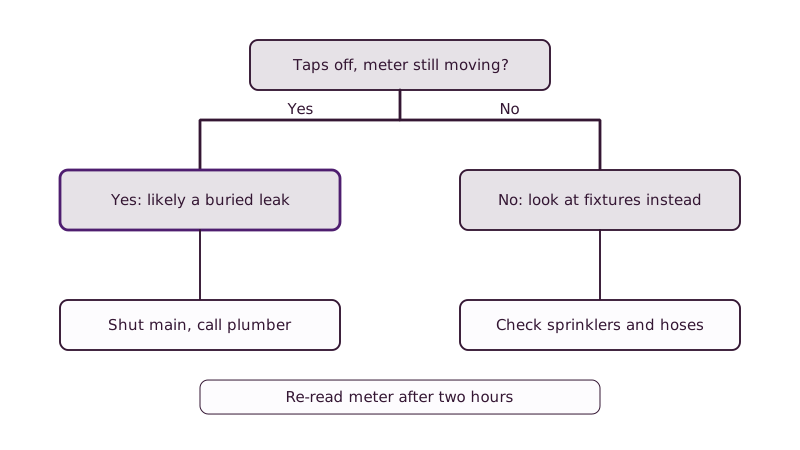
Next, close the house's main valve and read the meter again. A stopped meter puts the leak inside the building. A meter that keeps turning puts it outside, between the meter and the house, a stretch commonly owned by the homeowner. The line ahead of the meter belongs to the utility, so tell the supplier if water shows near the meter box.
Meters use different units, so read the dial label carefully and compare gallons with gallons. A photo of each reading helps a plumber and the supplier afterward. The version covering hidden leaks anywhere in the house is a high water bill with no visible leak.
Which is it: a water line, sprinkler line or sewer line?
Clean water that goes on flowing once the sprinklers are off may be the supply line, whereas water that shows only while the timer runs is the sprinkler line. A sewage smell, gurgling drains and slow flow in several fixtures indicate the sewer, which has different owners and rules.
Close the sprinkler system at its valve and test the meter. A meter that stops puts the break in the irrigation system. Water with a smell, or a lawn stained dark, makes the sewer a suspect. In Riverside the City's Public Works Sewerage Systems Division maintains the public sewer, with the 311 non-emergency line at (951) 826-5311, and the line from your house to the street typically belongs to the owner. When several drains slow together, the answer is a plumbing visit with a camera.
A buried gas line is a separate emergency: get away from the area and phone SoCalGas on 1-800-427-2200.
What is the first step when I suspect an underground burst?
Close the main valve at the house or at the meter, keep people and cars off soft ground, shut off the water heater supply and photograph the area. Record the meter reading, then ask for a leak detection visit. Hold off on digging until the lines are marked, since gas, power and communication lines also run underground.
Dial 811 ahead of any digging, the national call-before-you-dig number. It gets public utility lines marked at no charge, although private lines in your own yard may go unmarked. After that, have a plumber find the leak with listening and pressure tools. Guessing and digging costs a lot and can strike another line.
What follows is described on the page about what to do about a burst water pipe and in emergency help for a burst pipe.
What methods do plumbers use to find a buried leak?
Acoustic listening gear picks up the leak, pressure tests show which section loses pressure, tracer gas or a thermal camera helps in some cases, and a pipe locator maps the line. Together these shrink the excavation to a few feet, keeping the dig small and the yard repair cheaper.
A plumber may isolate sections by closing valves and test each part in turn. A camera can travel a sewer line to show cracks and roots. Detection pricing is on the leak detection cost page, and information specific to slabs is on slab leak detection and repair.
After the leak is located, the choices are a spot repair, a section replacement or a new line, and the plumber should explain the reasoning and put the choice in writing prior to the work.
Who covers the cost when a buried pipe bursts?
Usually the property owner pays for the line on their side of the meter, with the water utility responsible for the part ahead of it. The rule can vary by supplier and property type, so confirm with the supplier named on your bill. Home insurance may cover resulting damage yet often excludes the pipe repair itself, and policies differ.
Riverside addresses served by Riverside Public Utilities can reach customer service at (951) 782-0330. RPU does not serve all of Riverside, since Western Municipal Water District covers some Riverside addresses, and Eastern Municipal Water District serves most of Moreno Valley. Save photographs and the plumber's written findings for any claim or leak adjustment request.
Common questions
How much water can a buried leak lose?
Can a burst pipe underground flood the house?
Will the ground always look wet?
When is it safe to wait?
Sources used
Page updated