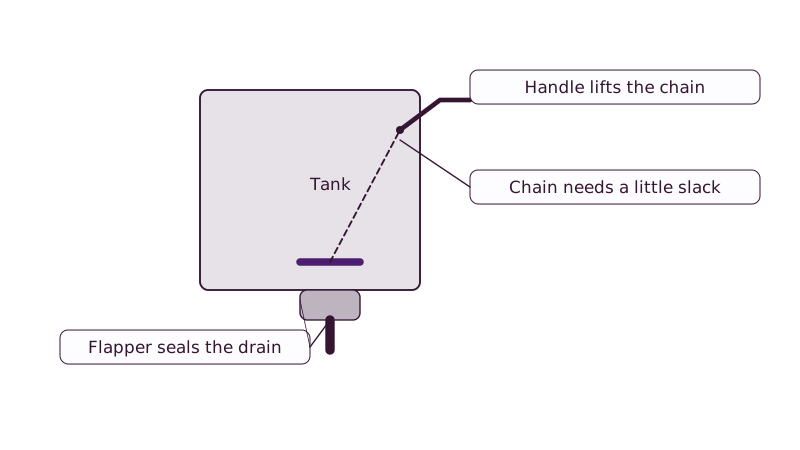
Push the lever and a healthy toilet empties its tank in a rush, refills, and goes silent. Anything else points at a short series of parts in the tank, running from lever to flush valve. This page follows that series in order and sits under the broader toilet repair guide. Many repairs need only a screwdriver and pliers.
Why is my toilet weak or slow to flush?
A feeble flush means either too little water leaves the tank or something partly blocks the bowl. Check where the water sits relative to the line cast into the tank, confirm the chain lets the flapper swing wide open, and feel under the bowl rim for crusty mineral deposits in the jets. Each check is quick.
Water here is hard. Riverside's utility reported 197 mg/L average hardness for 2025, close to 12 grains per gallon, and years of that leaves scale in the little rim holes. With the tank empty, clear each hole using a bent-straight paper clip or an old toothbrush. Still sluggish afterward? A blockage deeper in the trap is likelier, and clearing a blocked toilet is the better page.
How does the flush valve work, and what breaks?
A wide drain opening sits low in the tank, sealed by a rubber flapper or, on some models, a canister. The handle lifts the plug, the tank dumps into the bowl, and the plug falls back into place. When that seal goes bad, tank water creeps into the bowl while the fill valve refills it again and again, hence the trickle that never stops.
For the flapper type: close the wall valve, flush the tank dry, free the chain and pop the flapper off its pegs. Run a thumb across the seat it rests on. If it feels rough or pitted, even a new flapper may leak and the valve itself must be changed, which requires detaching the tank from the bowl; many people leave that to a plumber. Parts are shown on the flapper page.
What makes a toilet run on after flushing?
Running on after a flush is either a seal problem or a level problem. Likely suspects: a flapper that no longer seats, a chain snagged beneath it, a float set so high that water pours into the overflow pipe, or a fill valve stuck open. Lift the lid and watch which part is moving.
Put several drops of food dye into the tank and hold off flushing for a while. Color in the bowl confirms a leak. If water laps at the top of the overflow pipe, set the float so the level stays beneath it, at the water line marked in the tank, and see the overflow tube page. Waste adds up, and the EPA puts the average household's leaks at over 9,300 gallons yearly. More causes are listed under why a toilet keeps running.
What repairs a flush handle that sticks or wobbles?
A handle that wobbles, sticks or feels limp generally has a disconnected lever arm, a chain that slipped off, or a nut that backed out. Take the lid off and look. Re-hook a dropped chain so it hangs with a little give, since a chain pulled taut holds the flapper off its seat.
Corroded or broken? Replace the whole handle assembly; it is a few parts that drop into the standard tank hole. Hold the lever arm steady with one hand as you turn the nut with the other, and remember some side-mount nuts have a reverse thread. When parts keep failing, the replacement cost page helps you judge whether a new toilet is the smarter buy.
Could the supply line be the culprit?
Yes. Air trapped in the supply line makes the fill valve spit, and a half-shut wall valve slows refilling, so the next flush starts short. Gurgling from the bowl can signal a vent issue on the drain side. Open the wall valve fully and time the refill. Minutes of hissing or chattering suggest the fill valve is tired.
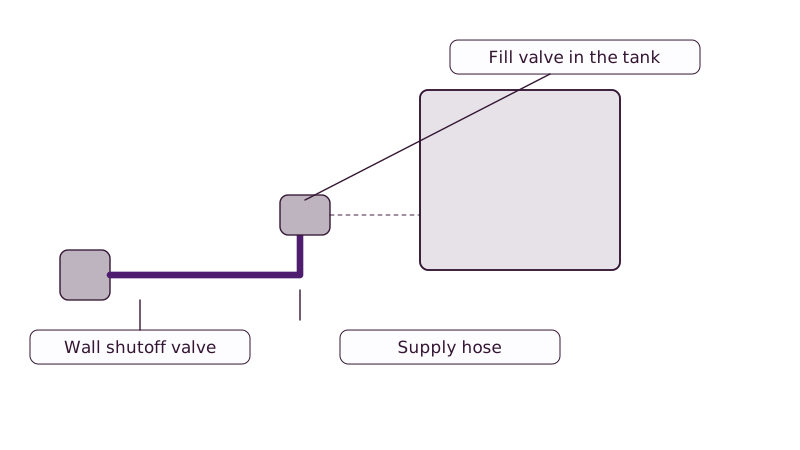
A stiff or dripping wall valve is covered on the shutoff valve page, and the fill valve page shows a swap. Fill valves are a popular DIY project. A wall valve that fails to close, or weeps at the stem, is a different matter, and replacing it is quick work for a plumber.
Where does DIY stop?
Phone a plumber for cracks in the tank or bowl, water seeping around the base, a stop valve that will not shut, a flush valve swap you would rather not tackle, or several fixtures draining slowly together. Each of those is bigger than a worn part.
The city's handout on permit-exempt work counts faucet or toilet repair or replacement as exempt, though moving pipe within a wall or beneath a floor needs a permit. For wall work, the plumber should call Building and Safety at (951) 826-5800. For help, use the quote form and expect a written price in return, or start with the toilet leak guide.
Common questions
Is it the flapper or the valve seat?
Can I do flush repairs on my own?
Why must I hold the handle to finish a flush?
How much time should a repair take?
Should I replace instead?
This guide is one of many on plumber across Riverside.
Sources used
Page updated