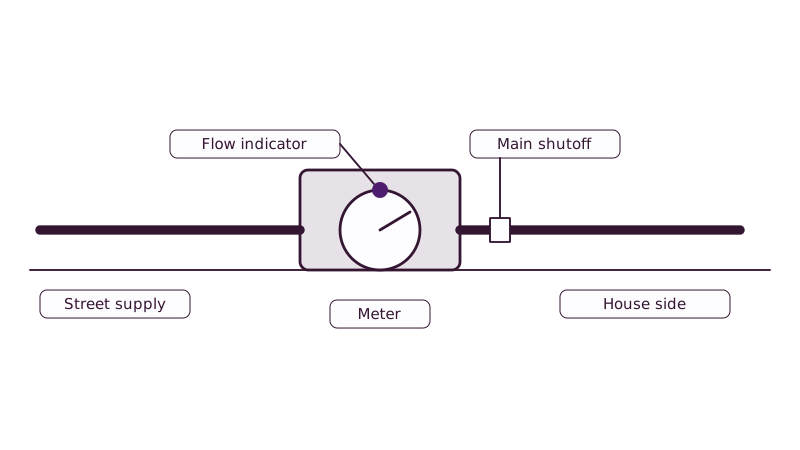
A bigger bill can come from everyday causes or from leaks, and the quickest way to tell which is to check the meter while every fixture is off. A dial that still moves means water is getting out somewhere. If it stays still, the cause is use: sprinklers, guests, a new habit or a bill that covered more days. Start on this page, then see the Rubidoux Ridge Plumbing home page for the other plumbing problems we cover.
How can I tell in five minutes whether I have a leak?
Shut every tap, appliance and sprinkler, and then locate the water meter in the box by the curb or at the front of the property. Look at the small flow indicator, a triangle or dial that spins when water moves. A flow indicator that turns while everything is off signals a leak. Write down the reading, wait 30 minutes without using water and look again.
Meters report in gallons or in cubic feet, so check the unit stamped on the dial and the one on your bill. A moving needle after the wait confirms the leak. If you see nothing, test again overnight, when no one flushes. A big bill with no visible leak picks up from there.
When the meter confirms a leak, close the house's main valve and keep an eye on the dial. A dial that stops puts the leak inside the house. One that keeps going puts it on the stretch from the meter to the house, which is often the owner's pipe and can run beneath the yard or slab.
Which toilet or fixture is the usual culprit?
The toilet is the most frequent hidden leak, since a worn flapper lets a trickle slip into the bowl silently. Stir a little food coloring into the tank, give it 15 minutes with no flush, and check the bowl. Any color means the flapper is leaking and wasting water around the clock.
A running toilet can waste plenty of water, usually from a worn part. The EPA estimates a typical household leak at over 9,300 gallons annually, with toilets high among the culprits. For the fix, read why a toilet keeps running.
Dripping faucets, a showerhead that never fully shuts, a leaking supply line under a sink or an ice maker hose also leak, as does a dribbling water heater relief valve. A faucet drip is worth fixing, and what a leaky faucet adds to the bill shows how much one can add.
Could sprinklers and the garden be the reason?
Yes, and in Riverside, Moreno Valley and Loma Linda irrigation can be a large controllable use in warm months. A timer set to run daily, a broken head spraying a sidewalk, a stuck valve or a sprinkler line that cracked underground can push a bill up without any sign inside the house.
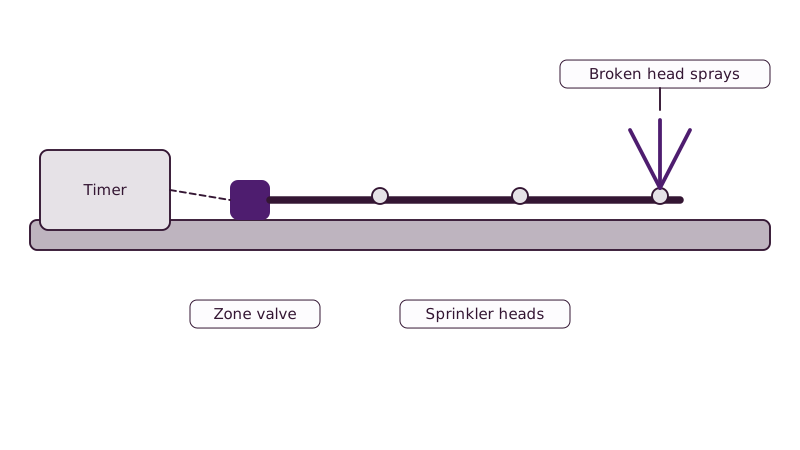
Check the valve boxes for standing water and the lawn for soggy patches. Run each zone by hand and watch for geysers and fogging. Smart controllers adjust watering to the weather. Riverside Public Utilities lists rebates for weather-based irrigation controllers, up to $200 each for lots under an acre, but funds are limited, so confirm at socalwatersmart.com or (888) 376-3314 first.
Winter bills can rise if a timer was never reduced after summer. Seasonal swings are normal, and a bill that lines up with the same month last year is probably not a leak.
Why would the bill go up with no leak at all?
A longer billing period, a rate change, a new household member, a guest stay, a pool top-up or a filled spa all raise use without any fault. A billing error or a misread meter is also possible, so compare the dates on the bill and the reading on the meter before assuming the worst.
Ask the water supplier for a usage history by day if it offers one. Riverside Public Utilities customer service is (951) 782-0330, Monday to Friday, 7am to 6pm, but not every Riverside address is served by RPU, because some addresses, such as parts of Orangecrest, may be served by Western Municipal Water District. Moreno Valley is mostly served by Eastern Municipal Water District, and Loma Linda by the city. The supplier on your bill is the one to call.
A failing or old water heater can also run longer and use more energy, which is a maintenance issue worth a look.
Does water hammer mean a high bill is coming?
Not by itself. Banging as a faucet or an appliance closes is water hammer, which comes from flow stopping abruptly in a pipe, and it signals high pressure or loose piping more than waste. High pressure can still stress fittings and cause leaks over time, so it is worth testing.
California limits household pressure to 80 psi under the plumbing code, and a regulator near the main valve usually keeps it there. If the sound appears with a new washing machine or after a repair, air chambers may need attention. The details are on what that sound means and on the water pressure regulator replacement page.
What if the leak is beneath the slab or out in the yard?
Close the main valve to limit the damage, write down the meter reading and schedule a leak detection visit. Underground leaks cannot be spotted by looking, and guesses about where to dig cost money. A plumber can find the leak using listening equipment and pressure tests, then provide a written quote for the repair.
If you can hear water running with everything off, feel warm spots on the floor or see wet patches in the yard, tell the plumber. Slab leak repair cost covers finding and fixing such a leak, while leak detection pricing is a separate page.
Ask the water supplier about a leak adjustment. Some suppliers offer one-time bill relief after a documented repair, and you can ask before you pay a large invoice.
Common questions
What explains this month's high water bill?
Will a water softener raise the bill?
Who handles a high water bill, a plumber or the utility?
How can I lower my water bill?
Sources used
Page updated