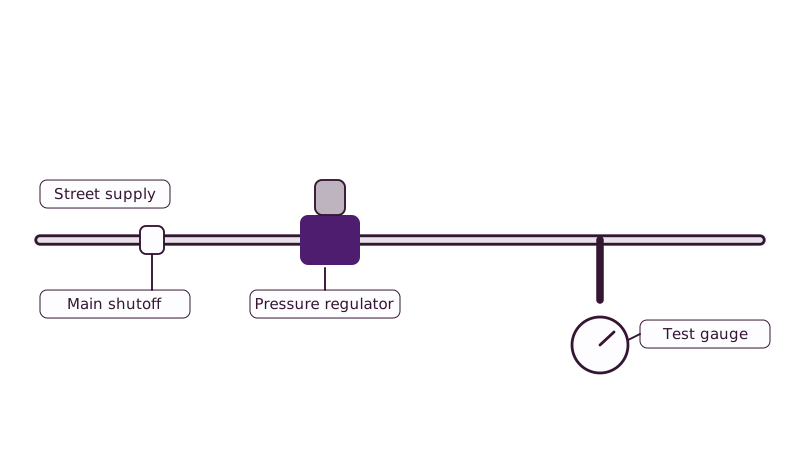
When the regulator at the main water line wears out, the house sees whatever the street supplies, or the pressure sags below what showers need. The swap is a plumbing task that goes more smoothly on an accessible line. All kinds of pressure trouble are gathered in the section on low water pressure in Riverside, and you can book a visit through the request form.
How do I know the regulator has failed?
Failure shows as banging pipes, a toilet that keeps running after a flush, dripping faucets, leaks at old fittings, a dribbling water heater relief valve, and flow that is either blasting or weak at every fixture. A gauge reading outside the normal band confirms it. One slow fixture alone points to something local, not the regulator.
Another clue is pressure that creeps up at night when demand is low. A failing regulator can let street pressure leak through, which pushes the reading above where it was set. Appliances such as washing machines and ice makers can wear out early in high pressure. The sound is often the first sign, and our page on water hammer explains the bang.
Some houses have no regulator and rely on the supplier's pressure. A plumber can say if one is installed and where it sits.
How do I test house pressure with a gauge?
Thread a hose-bib gauge on to the spigot outside, shut every other tap, open the spigot and read the dial. Static pressure is capped at 80 psi by the plumbing code, so a higher number means the regulator is failing, badly set or absent.
Test at a quiet time, since pressure dips when others are using water. Check again overnight. A gauge with a drag needle shows the highest reading. If the reading is high, close the main valve partly and see whether pressure drops, which tells you the supply is the source. Snap a picture of the dial to show the plumber.
If the reading is low and the regulator is fine, look to another cause, explained in why water pressure is low.
How do I spot the regulator and find its location?
Look along the main supply line, usually a little beyond the shutoff where water enters the house, in a garage, utility area, crawl space or outside wall. The device is a brass body shaped like a bell, with an adjustment screw or bolt on top. A few homes keep it near the meter box or in a below-grade box.
The usual spots are shown in where a water pressure regulator is located, and adjusting a pressure regulator valve describes the screw. Regulators come in different sizes, and one common size is covered on the 3/4 inch regulator page.
A hot-side valve of a similar type sometimes appears near the water heater, as covered in the hot water pressure regulator guide. That is a different part.
When is replacement better than adjustment?
Adjust first: loosening the lock nut and turning the screw can lower the setting. If the pressure will not hold the new setting, creeps up when no water is used, or the body leaks or is old and corroded, replacement is the right move. A diaphragm that has failed cannot be fixed by turning a screw.
Regulators wear out, and their life varies with water quality and use. Mineral deposits can stick the seat. A new unit sized to the pipe and set to a sensible pressure often cures the noise and leaks. A plumber can also check that a thermal expansion tank is working, since heated water in a closed system raises pressure, and an expansion tank is often needed in that case.
Replacing the regulator is a minor job compared with repairing flood damage from a burst supply hose.
How is the regulator replaced?
The plumber shuts the main, drains the line, cuts or unions out the old regulator and puts in a new one of equal size, often with unions so the next replacement is easy. The target pressure is set by reading a gauge, and then the line is refilled and checked for leaks.
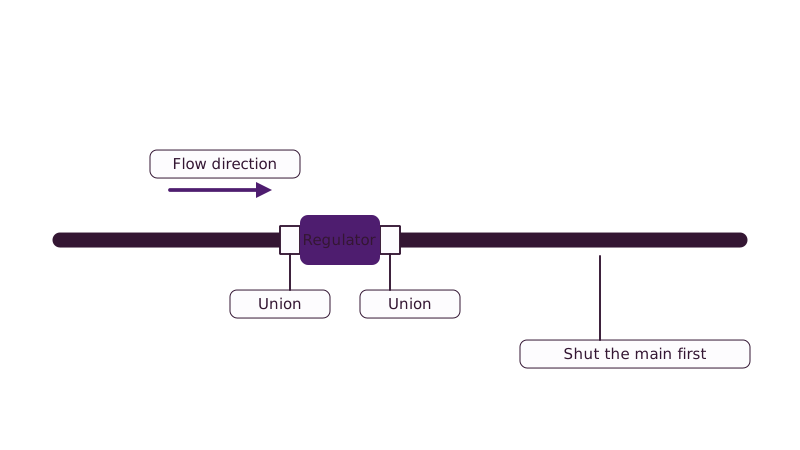
The work includes checking the shutoff valve upstream, since a stuck main valve makes the job harder and may need to be replaced at the same time. The plumber may add a pressure gauge and an expansion tank. How long the visit takes depends on access, fittings and any surprises in old pipe.
Some jurisdictions require a permit for this work and some do not. Check with the building division: Riverside Building and Safety at (951) 826-5800, or Moreno Valley at (951) 413-3350. This page did not confirm the Loma Linda rule, so put the question to the city.
Is replacing it a do-it-yourself job?
A handy owner with soldering or push-fit skills can do it, but the main line is the one place where a mistake floods the house. Sweating a joint near the main without full drainage or with a sticky shutoff is hard. If you are unsure, hire a plumber, and note the code limit: household pressure is capped at 80 psi.
For a do-it-yourself swap, buy the correct size, install unions and verify with a gauge. Turn the water on slowly to avoid hammer. Leaving the old regulator in place and adjusting it is a safer first step.
What is the likely price?
Prices depend on the type of regulator, the access, the fittings and the permit, and written quotes set the final number. Guide figures, and the factors that move them, are on the page about water pressure regulator installation cost, which cites its sources and dates.
Common questions
What is the lifespan of a regulator?
What pressure should I set it to?
Can a new regulator cure weak pressure?
Is an expansion tank needed as well?
Sources used
Page updated