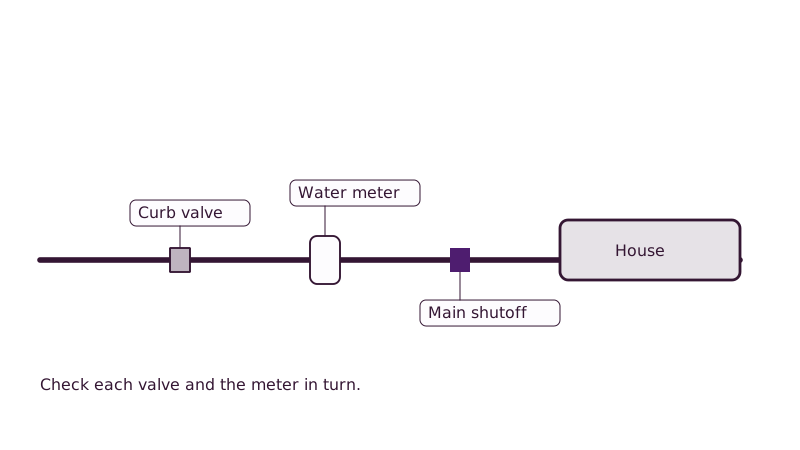
After a sudden pressure loss, find out first if the neighbors are having the same trouble. If they are, the fault lies with the street or the supplier, and a plumber cannot fix it. If only your house is hit, inspect the main valve, then the regulator, then the meter side. For the general picture, read about water pressure and valves.
What makes water pressure fall without warning?
Sudden drops come from a handful of causes: a main valve or meter valve that was partly closed, supplier work or a main break nearby, a failed pressure regulator, a large leak on your side, or a clogged filter or strainer. Ask neighbors and check the supplier's outage notices before you open any plumbing.
Think about what changed. Did someone work on the house, the yard or the street? Did a plumber close a valve and leave it partly open? Did the water go off and then come back with air and grit in the lines? Debris can lodge in aerators and valves after an interruption, and a screen at the meter can catch sediment.
Pressure that is weak at a single tap is a fixture problem, discussed in the guide to the kitchen sink. This page deals with the whole house.
Can a concealed leak drop the pressure suddenly?
A big leak in the line from the meter to the house, or inside a wall, can cut pressure suddenly because water escapes before reaching the fixtures. Watch for a soggy spot in the yard, running-water noise while everything is off, a meter dial that keeps turning, and a jump in the bill.
Do the meter test: turn off all water use and watch the leak indicator or the dial. If it moves, you have a leak on your side. The full test is in the guide to a high water bill with nothing visibly leaking. If water is flooding the home, close the main and call for emergency plumbing.
Could a closed or damaged valve be the cause?
Yes. Check the main shutoff valve, usually a wheel or lever near the meter or where the line enters the house. The valve should be opened all the way. A gate valve with a wheel handle can fail inside, so the wheel spins while the gate stays put. On a lever-type ball valve, the lever should sit parallel to the pipe.
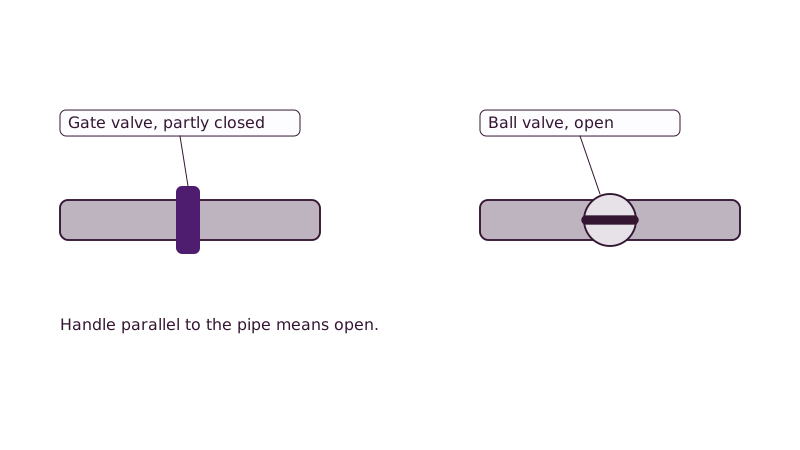
Also check the meter valve, a second valve at the supplier's meter. Do not operate the supplier's side of it unless the supplier says it is allowed; it may be locked or reserved for the utility. If the house valve looks wrong, turn it a quarter turn and see whether pressure comes back.
Older gate valves, which may be found in older Downtown Riverside and Wood Streets homes, can fail. Replacing one with a ball valve is a quick plumber job and removes the guesswork.
What if the pressure dropped after the water was off for a while?
After a shutoff, air and sediment can clog small openings. Open the lowest faucet and the highest faucet, run cold water for a few minutes to purge air, then clean the aerators and shower heads. If you have a whole-house filter or a softener, check that its bypass is not stuck and its filter is not blocked.
Hard water scale matters as well. Riverside Public Utilities' 2025 report lists hardness averaging 197 mg/L, about 12 grains per gallon, and scale restricts flow in small openings. Look at the water heater too, because a valve left partly shut or a blocked inlet can affect hot water alone.
What to do next
Walk through this order: ask a neighbor, check the supplier's notice, look at the main valve, test pressure at a hose bib, watch the meter, clean aerators. Write down what you find and photograph the valve and regulator. That information makes any plumber visit faster.
If the cause stays hidden, send a request and we pass it to a local plumbing business. Every service we cover is listed on the home page.
Is it the water supplier, or my house?
Call the supplier if neighbors are affected or you see water in the street. Riverside Public Utilities, for most of the city, answers at (951) 782-0330 from 7:00 am to 6:00 pm Monday to Friday, which is also the water emergency line. Western Water, for areas like Orangecrest, answers at 951.571.7104. Confirm the supplier on your bill.
In Moreno Valley, per the city's general plan environmental report, EMWD serves most of the city, and a small western area by Box Springs Mutual Water Company at (951) 653-6419. We did not find a verified EMWD customer service number for this page, so use the number on your bill. In Loma Linda the city runs water. Its Finance Department handles utility billing at (909) 799-2845, and the city's website lists the public works contact for water problems.
When the supplier reports normal conditions on the street, the cause is most likely past the meter, on the house side.
Signs it is time for a plumber
Call when the supplier says the street is normal, when the main valve or regulator is at fault, when the meter shows a leak, when pressure stays low after cleaning, or when the water is discolored. A drop that comes with banging pipes or a hissing sound also needs a visit.
A contractor license is required in California for jobs worth $1,000 or more in labor and materials and for any job that needs a permit. Swapping a regulator or a main valve is often modest work, while repiping is not. Request the license number along with a written quote.
Can a pressure regulator fail and cause low pressure?
Yes. A regulator brings street pressure down to a level the house can handle. When its inner parts fail or debris blocks its screen, pressure can fall to a trickle or spike instead. California Plumbing Code section 608.2 sets the limit at 80 psi, and many regulators are set well below that.
Screw a gauge onto an outdoor hose bib and you have the number within a minute. A reading far under what you remember, with the street fine, makes the regulator the likely suspect. Some models can be adjusted; see the guide on setting a regulator valve. If it is dead, a replacement is a plumber job.
Not every house has one. Some homes on a lower-pressure supply do without. If your home has a regulator, it sits downstream of the shutoff on the main line, a bell-shaped brass part. Hot water pressure alone is a separate matter on hot water pressure low.
Common questions
How quickly can a sudden pressure drop be fixed?
Which questions should I raise before hiring for low pressure?
Is an adult required at home for the visit?
Can low pressure damage anything?
Sources used
- Riverside Public Utilities, contact us
- Western Municipal Water District, About Us
- Box Springs Mutual Water Company
- Loma Linda utility billing and payment options
- Riverside Public Utilities 2025 Water Quality Report
- California Plumbing Code section 608.2 (80 psi limit)
- California Contractors State License Board
Page updated