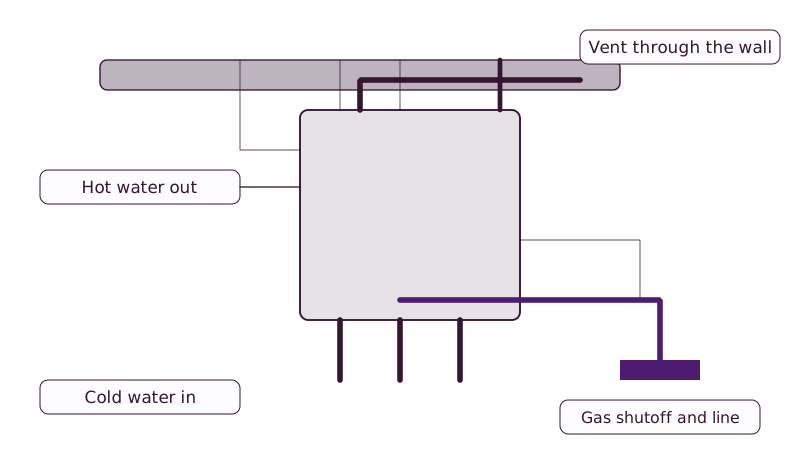
A gas tankless installation brings gas, water and a vent to a wall-mounted unit that heats water on demand. Because it burns more gas at one time than a tank does, the gas line is often upsized, and the vent has to match what the manufacturer requires. Guide prices land near $1,400 to $3,500 for gas units, and the final figure comes only from the written quote. The wider topic is covered in water heater repair and replacement.
What work goes into a gas tankless water heater installation?
First the old tank is taken out. The tankless unit goes up on a wall, hot and cold water are hooked up, a gas line sized to the unit is run, and the vent is installed along with a condensate drain if the model needs one. Power comes from a nearby outlet. After that come the pressure test, the combustion check, the permit inspection and the walk-through.
Most of the added work over a tank swap happens behind the wall. Tankless units generally carry a higher burner rating than tank heaters, so the line from the meter to the heater may need to be bigger. The plumber sizes it from the unit's rating and the length of the run. Read about gas line work and residential gas piping codes.
Other items that appear on the quote:
- A gas shutoff valve with a sediment trap in the line.
- Isolation valves that let the unit be flushed.
- A vent made from the material the manufacturer names. Using the wrong vent material is a safety issue.
- A condensate line and neutralizer for condensing models.
- Electrical for the control board, which may need an electrician.
- Earthquake strapping or wall bracing where the code calls for it.
What does a gas tankless installation cost?
The Fixr tankless installation guide, updated January 31, 2025, gives a typical $2,500 to $4,500, with gas units installed at $1,400 to $3,500 and labor at $900 to $1,500. The 2026 This Old House guide shows tankless installed at $2,100 to $4,000. Both are national guide figures, not Riverside rates and not what we charge. The written quote sets the price.
Several things move the number: unit size, a new or larger gas line, vent type and length, an indoor or outdoor location, the condensate drain, wall repair, the permit fee and electrical work. The cost page is tankless installation costs.
Will a gas tankless heater need a larger gas line?
Often it will, since the burner draws far more gas while running. The answer turns on the unit's rating, the length and diameter of the current line, and the other gas appliances sharing it. A plumber measures the run and consults the manufacturer's table. Sizes are not quoted here because they depend on the model and the code in force.
Flexible connectors are common at the appliance, and they come in set sizes matched to the load. What a half-inch size can and cannot carry is explained on the page about a 1/2 inch flexible gas line.
Where is the vent routed?
The vent passes through a wall or the roof to the outdoors, with the pipe type and clearances taken from the manufacturer's manual. Condensing models usually pair plastic vent pipe with a condensate drain, while non-condensing models use metal vent. Distance limits apply to venting, so where the heater sits matters.
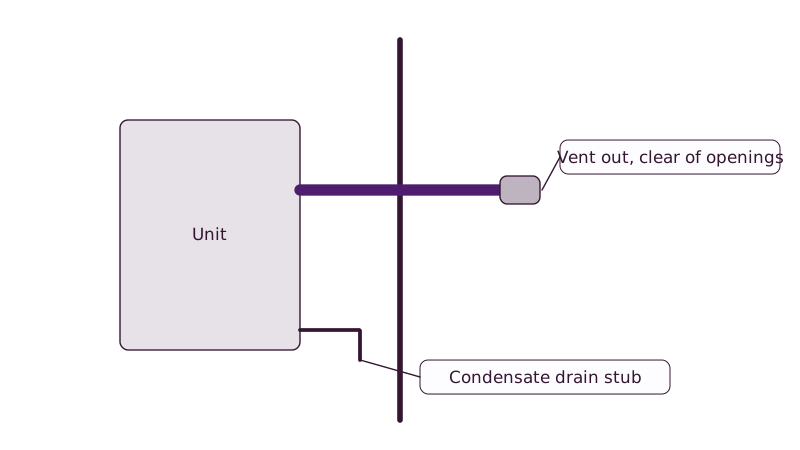
Outdoor models skip the interior vent but face the weather, and in older homes around Downtown, the Wood Streets and Arlington, an exterior wall spot may be easier than a new roof penetration. Tract homes from the 1970s to the 1990s often have a heater closet or garage corner with a vent already in place that may or may not be reusable. The plumber should check before quoting.
Is a permit required for the installation?
Generally yes. Water heaters are missing from Riverside's exempt-work handout, so confirm with Riverside Building and Safety at (951) 826-5800. The Moreno Valley and Loma Linda rules could not be confirmed from city pages, so ask their building divisions. Unincorporated areas go through the county office.
A California contractor license is needed for any job requiring a permit and for jobs reaching $1,000 in labor and materials. Look up the license at cslb.ca.gov. Gas piping normally calls for a contractor. The regional air board voted in June 2025 against amending Rules 1111 and 1121, so that rulemaking brings no zero-emission water heater requirement.
Does a gas tankless heater pay off in Riverside?
It turns on how you use hot water. Tankless delivers continuous hot water in less space, but needs gas capacity and a vent. A tank is simpler and cheaper to install. Hard water counts too: the 2025 Riverside Public Utilities report shows average hardness of 197 mg/L, roughly 12 grains per gallon, and scale accumulates in the heat exchanger.
Raise flushing schedules and a softener when you review the quote. The comparison is in tank vs tankless and tankless gas vs tank. Once you pick a brand, look at Rinnai installation or Navien installation.
When to call a plumber business
Reach out when you want a tankless quote, when a leaking tank has you ready to switch, or when a gas smell, soot or a pilot problem appears. We pass your request to a local plumbing business, and a written quote comes before work starts. Keep the current heater's model, its location, the gas meter location and any photos handy.
A gas smell means leave the building and phone SoCalGas on 1-800-427-2200 from outside.
Common questions
What is the timeline for a gas tankless installation?
Which questions come before hiring a tankless installer?
Who needs to be home during the installation?
Can I install a gas tankless heater myself?
Will tankless save me money?
This guide is one of many on plumber riverside.
Sources used
Page updated