In a repipe, the water supply lines hidden inside your walls are replaced with new tubing, typically PEX or copper, and the house itself stays untouched. A contractor does this, not a weekend warrior. For the general overview, see repiping and pipe replacement, while this page follows the job in order, so you know what the plumbers do and what falls to you.
Expect holes in drywall, a stretch with no water, and an inspection at the end. None of it is mysterious once you see the order.
How do you repipe your house?
A plumber shuts off the water, opens access points in walls and ceilings, removes or abandons the old pipe, lays fresh lines to each fixture, ties them into the main shutoff, pressure-tests the system and then patches the openings. Water is restored after the test passes. Permit and inspection fit around those stages.
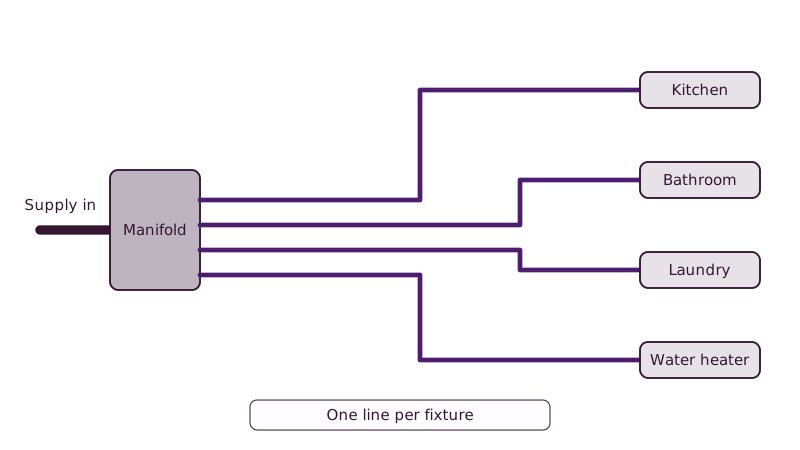
In practice the work starts at the point of entry into the house and moves outward. Most houses are tackled in zones: kitchen, bathrooms, laundry, water heater. PEX is flexible, so lines are fished through wall cavities with fewer cuts, often from a central manifold. Copper is rigid and needs soldered or pressed joints and more openings. Either way, the old lines are capped or removed and nothing should be left half-connected.
Fixtures come last. Faucets, toilets, shut-off valves and the water heater are reconnected, then every one is run and checked for drips ahead of any drywall going back.
How do I decide whether the whole house needs repiping?
Pinhole leaks that keep coming, rusty water, sinking pressure and crusted pipe in view all suggest a system nearing retirement. One leak in a copper line does not condemn the house. Several in a short time, or a known failure-prone material, often do. How often a repipe is worth it is covered in how often you should repipe a house.
Cost reasoning matters. A series of repairs can add up against a single planned repipe, and a planned job beats an emergency one that floods a floor. The reasons owners give are on why repipe a house. If you are weighing renovation of an older home overall, updating an old house's plumbing gives the broader view.
For a first conversation, request a written quote and mention the pipe material, bathroom count and any leaks you have spotted. The Rubidoux Ridge Plumbing home page covers the rest of the work we arrange.
Which permits and contractor rules apply?
For the City of Riverside, piping inside walls falls under a permit, according to the city's handout on work exempt from permits. Building and Safety answers at (951) 826-5800. The Moreno Valley division can be reached at (951) 413-3350. Unincorporated areas use County of Riverside Building and Safety, (951) 955-1800.
State rules, as the licensing board states them, require a contractor license once labor and materials reach $1,000, or whenever a permit is involved. A repipe clears that bar easily. Request the business's license number and verify it on cslb.ca.gov before signing. We do not do the plumbing ourselves: we arrange for a local plumbing business to quote the work.
The inspector wants to see the lines under test, so leave the openings accessible until sign-off.
How do I get ready for the work?
Decide whether you need a repipe at all, get written quotes, and clear the work areas. Move furniture away from walls, empty cabinets under sinks, and clear closets that share a wall with a bathroom. Work out where the household will spend the day, since taps go dry for stretches.
Check the pipe material first. Older houses in Downtown Riverside, Wood Streets and Eastside areas may have galvanized steel or older copper, and houses from the late twentieth century can contain polybutylene. If either rings a bell, read about galvanized lines and polybutylene replacement.
Pick the material with the plumber. PEX versus copper weighs the two, and budgeting is handled in repipe pricing. Ask also about the permit. In the City of Riverside's exempt-work handout, piping replaced behind the wall face or under the floor needs a permit, so plan for one.
What happens after the new pipes are in?
When the inspection and pressure test have passed, water returns and you open every tap in turn. Expect some sputtering and cloudy water at first from trapped air, which clears after a few minutes of running taps. Drywall patching follows, and then paint or texture if the quote covers it.
For about a week, glance at walls and ceilings now and then. A slow drip at a joint shows up as a damp spot, and any joint can be tightened under the plumber's workmanship terms, which you should have in writing. Check water pressure at each fixture; it may feel stronger with new lines, and a pressure regulator may need adjusting. See adjusting a pressure regulator.
Moisture left in a wall is a risk for mold, so dry any wet drywall quickly and watch for staining. Save the quote, the permit and the inspection card with your house papers; a future buyer or an insurer may ask for them.
What if the pipes sit under a concrete slab?
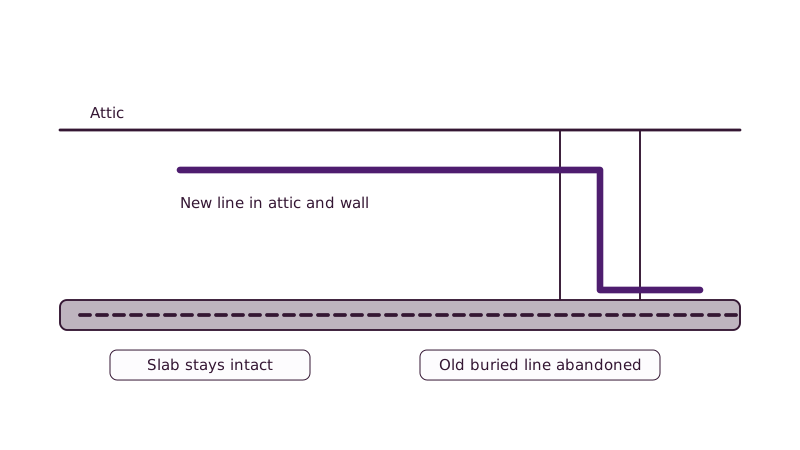
With pipes under concrete, plumbers generally leave the slab intact. New lines are run across the attic and dropped inside the walls, and the buried ones are abandoned. Single-story houses on a slab are the usual candidates. Cutting into the slab is the pricier alternative, and the plumber's survey of your house settles which applies.
Owners often reach this question after a slab leak, meaning water escaping from a line beneath the floor. The two paths are compared in choosing between slab leak repair and repipe. A lone leak might only need a spot repair.
Either route leaves holes in drywall and sometimes the ceiling. Have the quote state who patches and paints, since some repipe businesses only close the opening and leave finishing to a drywall trade.
Common questions
What is the usual time frame for a repipe?
Which questions should I put to a plumber ahead of hiring?
Does someone have to stay at the house?
Sources used
Page updated