You repipe a house when the supply pipes are worn out and fixing leaks one by one has stopped working. The usual reasons are repeated pinhole leaks, falling water pressure, rust-colored water, and a pipe type known for failing. A repipe replaces the water supply lines throughout the house, so it is a bigger step than a repair. The overview is on repiping and pipe replacement, and this page covers the why.
Why would I need to repipe my house?
You repipe because the pipes are failing in ways a repair does not fix. Galvanized steel rusts internally and its bore shrinks with age. Older copper can develop pinhole leaks. Some plastic systems from certain decades have a record of cracking at fittings. When leaks come back in different spots, replacing the whole line saves repeated repairs and the wall damage that comes with them.
The decision usually rests on three questions. How old is the pipe and what is it made of? How often has it leaked? What does the pipe do to your water pressure and water color? If the answers are old, often and badly, a repipe is worth pricing.
What signs point to a repipe instead of a repair?
Several leaks in different places, pressure that drops over the years, brown or orange water when you first turn on a tap, a metallic taste, stained fixtures, and pipes visible in a crawlspace or garage that are flaking or crusted at joints. A single leak in a young pipe calls for a repair, while repeated leaks in an old pipe raise the question of a repipe.
Check these yourself:
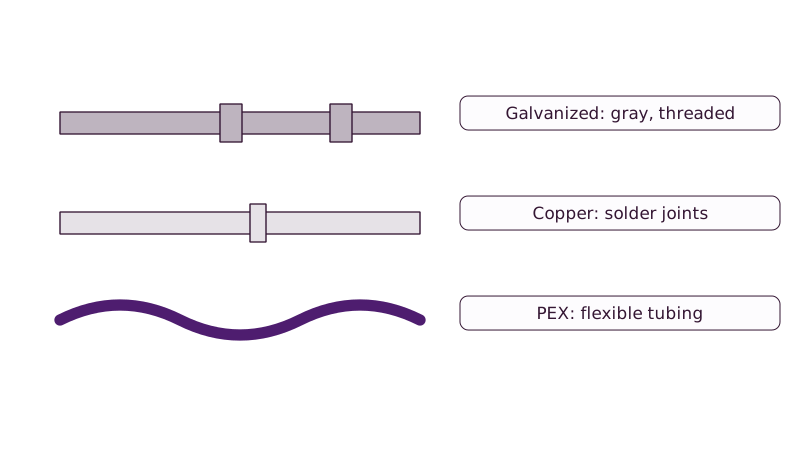
- Check any exposed pipe by the main shutoff and the water heater. Gray threaded steel is galvanized. Reddish-brown metal with soldered joints is copper. Cream, red or blue flexible tubing is PEX.
- Let a hot tap run for sixty seconds and see if the water comes out clear.
- Compare the pressure of the kitchen tap with the pressure outside at the hose bib.
- Look under sinks for green crust or white mineral deposits.
If pressure is your main concern, see the reasons for low water pressure. A failing pressure regulator, not the pipes, can cause that symptom.
Which pipes in Riverside homes are most likely to need replacing?
Homes from the early and mid 1900s in Downtown Riverside, the Wood Streets, Arlington and Eastside may have started with galvanized steel, perhaps with copper added over time. Homes from the 1970s through 1990s in Moreno Valley and La Sierra may have copper. Newer communities such as Orangecrest may have PEX or newer plastic.
We have no checked year-built numbers for these cities, so these are general patterns, not counts. You can only find out by looking at the pipe itself, and a plumber can identify it within minutes. See also galvanized pipe replacement, polybutylene replacement and PEX versus copper.
Riverside Public Utilities' 2025 water quality report lists hardness averaging 197 mg/L, about 12 grains per gallon, so scale is common. Scale can restrict old pipe and fixtures, though how much it matters depends on the metal and how the water is used.
What does a repipe replace, and what stays?
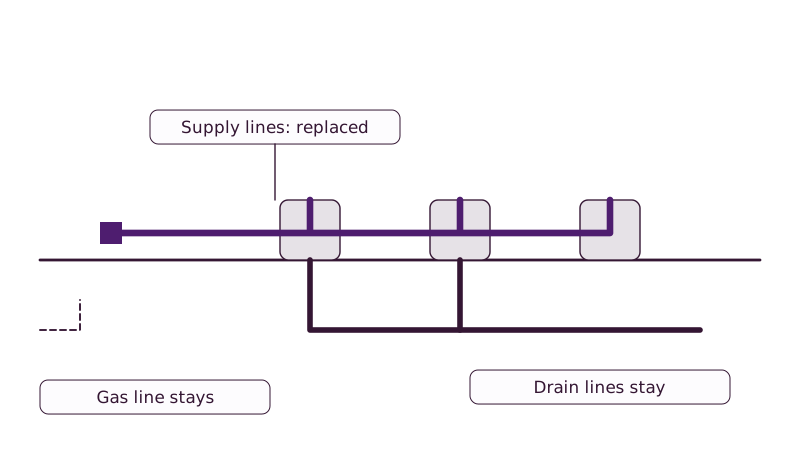
A repipe replaces the hot and cold supply lines from the main shutoff to each fixture. Drain and sewer lines are separate and remain in place unless they too are failing. Gas lines are separate as well. The plumber either opens walls and ceilings or routes new lines via the attic or crawlspace, then patches the access holes. Drywall and paint are usually a separate job.
Bob Vila's "PEX vs. Copper," updated July 23, 2025, says that for an average two-bath, 1,500 square foot home, copper runs $8,000 to $10,000 and PEX $4,000 to $6,000. These are national guide figures and not Riverside rates. The written quote sets the price. See what a repipe costs for the breakdown.
Is repiping worth it compared with patching leaks?
A repipe pays off if the pipe itself is the problem. Each patch on an old line is a repair on a section that is about as worn as the rest, and the next leak shows up nearby. A repipe replaces that risk with new pipe and fewer joints. It is not worth it if one section failed from a clear cause such as a nail through the line or a bad fitting.
Have the plumber show you what was found. A good explanation names the material, the condition, how many repairs the pipe has had and what the alternatives are. If you are selling, tell your agent, because disclosure rules depend on what you know about the pipes.
Is a permit needed for a repipe?
In Riverside, replacement of piping behind the face of a wall or below the floor requires a permit per the city's exempt-work handout, and a repipe falls squarely in that. Confirm with Riverside Building and Safety at (951) 826-5800. Other cities and the county have their own offices. Normally the plumber obtains the permit and books the inspection.
Any job at $1,000 or more in labor and materials, or one that needs a permit, requires a California contractor license. A repipe clears that bar easily, so before signing, verify the license number at cslb.ca.gov.
When to call a plumber
Call when you see two or more of the signs above, when a hidden leak is suspected, or when the pipe type is on the list of materials with a poor record. Call right away for a burst pipe, a bulge in a wall, or water through a ceiling. A plumber can inspect, check pressure and use a camera or moisture meter to see what is inside the walls.
Also compare the choice with a slab leak repair or repipe when the leak lies beneath the concrete floor, and for the age question see the repiping interval.
Common questions
What is the typical duration of a repipe?
Which questions belong in a repipe interview?
Do I need to be home during a repipe?
Can I repipe just part of the house?
Does a repipe fix low water pressure?
The rest of our guides start from plumber riverside.
Sources used
Page updated