A relief valve that drips, hisses or has been discharging water onto the floor is telling you something about the tank. The part is cheap, but replacing it without learning why it opened can hide a bigger fault. This article sits within our water heater repair pages and covers what the valve does, why it leaks and who should change it.
What is the purpose of a water heater's relief valve?
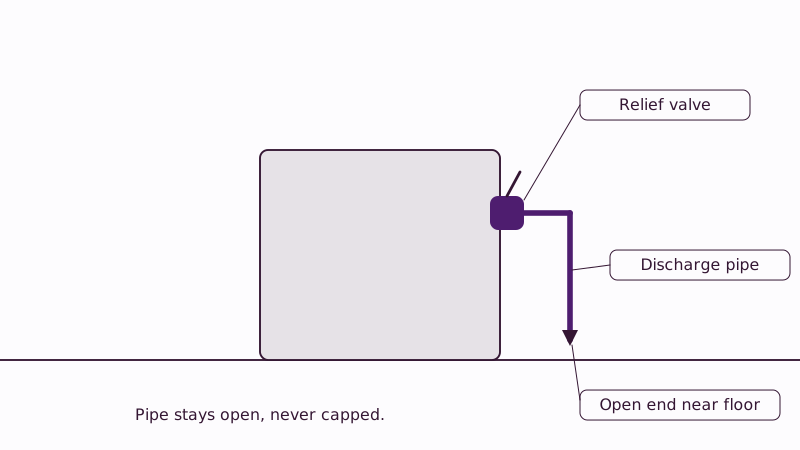
Mounted on the side or top of the tank, the relief valve for temperature and pressure is a spring-operated safety device. Should the water overheat or the internal pressure rise too far, it opens and releases water through a pipe, sparing the tank from rupture. Nothing backs it up, so nobody should cap, plug or remove it.
To locate yours, look for a brass valve with a small lever and a pipe that heads down toward the floor or outdoors. Its ratings are stamped into the metal. A discharge pipe that stops short of the floor is normal, so you can see any water coming out. Never block that pipe or thread a cap on it.
Why is my relief valve leaking?
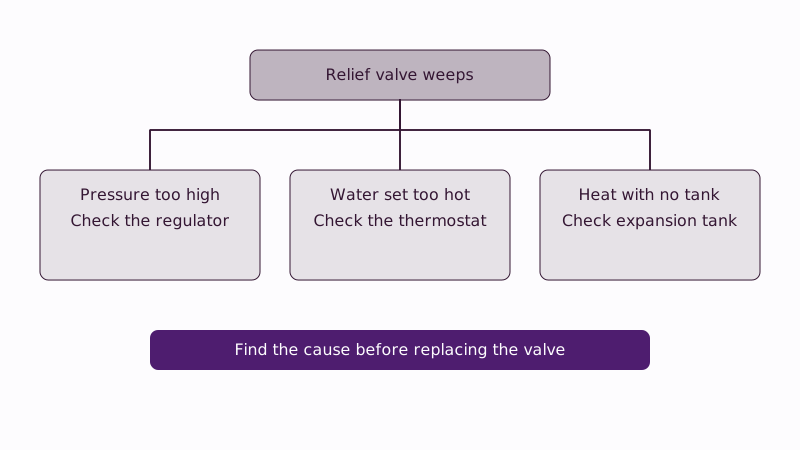
A leaking relief valve points to one of three causes: a worn valve that no longer seats, house water pressure that runs too high, or thermal expansion raising the pressure whenever the heater cycles. The valve is doing its job in the second and third cases, so replacing it alone will not stop the drip.
Check the easy cause first. A steady trickle after you lift the lever to test it can be a bit of debris holding the seat open, and flipping the lever briefly sometimes clears it. Do this carefully, because that water can scald, and keep the discharge pipe pointed at a drain or bucket. A valve that goes on dripping has probably worn out.
Pressure is the next suspect. Section 608.2 of the California Plumbing Code caps pressure at 80 psi, so a house running higher needs a regulator. A failing regulator or a street connection with strong pressure can make the relief valve weep. A gauge threaded onto a hose bib gives a pressure reading within a minute. See pressure regulator replacement for the next step.
Expansion is the third. When a water heater is on a closed system, with a check valve or backflow device at the meter, the heated water cannot expand anywhere and the relief valve becomes the pressure outlet. An expansion tank often helps there; see our page on replacing an expansion tank.
Should I replace the valve myself?
We recommend a plumber, mainly because of the burn risk, the need to partly drain a tank, the gas or electric supply and the permit question. The City of Riverside handout on permit-exempt work does not list water heaters, and replacement generally needs a permit, so confirm with Building and Safety at (951) 826-5800 before starting.
If you are handy and decide to do it anyway, the safety rules matter more than the steps. First shut off the power or the gas control, then close the cold supply, wait for the water to cool, and drain the tank to below the valve. Use a valve with the same ratings as the tank label, and never reuse a damaged discharge pipe. Smelling gas at any stage means going outside and phoning SoCalGas on 1-800-427-2200. Piping for gas beyond the heater's own connection needs a contractor.
Old tanks have rusted fittings that can break when twisted. A heater that is old, or one with a leaking tank seam, is a candidate for replacement and not a valve swap. Our guide on how long water heaters last helps you decide.
California also requires strapping a water heater against earthquakes, so the plumber may inspect the straps as well. Have them check the discharge pipe too: it should run downhill to a safe spot, with no cap, no valve and no kinks that would stop water from leaving the tank.
What will it cost?
We did not find a readable published guide that prices a relief valve replacement on its own, so we will not quote a dollar figure. The part is inexpensive, and most of the bill is labor, travel and any extra work the plumber finds. The written quote sets the price, so ask for parts, labor and permit on separate lines.
Costs shift if the visit turns into a regulator, an expansion tank or a heater replacement. Compare quotes for the same scope. Related reading: what a water heater replacement costs and leaking water heaters.
Common questions
How much time does replacing a relief valve need?
What should I confirm with the plumber ahead of time?
Must I be home while the work is done?
Is a dripping relief valve dangerous?
For the wider picture, start with Rubidoux Ridge Plumbing.
Sources used
- City of Riverside, work exempt from building permits
- California Plumbing Code section 608.2, water pressure limit of 80 psi
- SoCalGas cities served
- California Contractors State License Board
Page updated