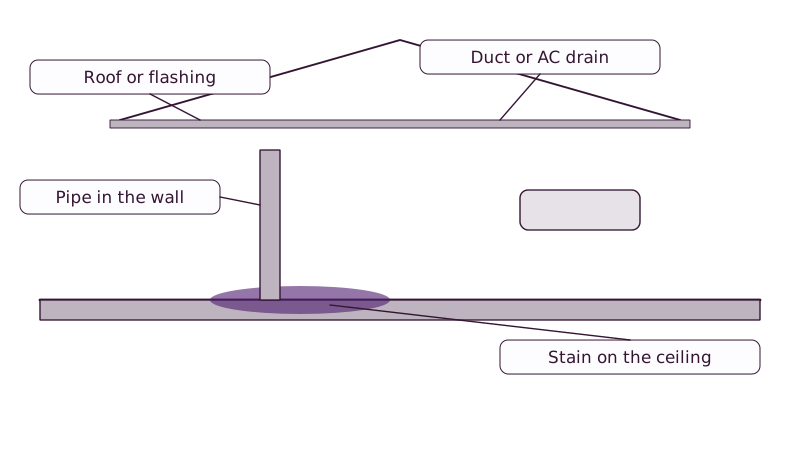
People see a brown or yellow ring overhead that feels dry and conclude nothing is leaking. Water is behind it, or was. The mark could be old, or it could be a slow plumbing drip that runs only when an upstairs fixture is used. The plumbing side is covered in the guide to leaks and burst pipes, while this page helps you decide whether plumbing is even responsible.
What explains a ceiling stain when nothing is actively leaking?
A stain forms when water soaks drywall and, on drying, leaves minerals and tint. The source may have ended, like a roof leak after rain or a pipe since repaired, or it may come and go, like a drain that leaks only during a shower. Condensation from cold ducts or a poorly vented bathroom can mark a ceiling too.
Sort the suspects by their trigger. A stain that expands after rain implicates the roof or a flashing detail. One beneath an upstairs bathroom that darkens after showers implicates a supply, drain or shower pan leak. A mark along a duct run in summer implicates condensation or an air conditioner drain. A stain that appears after a bath and then fades is bathroom humidity. Plumbing is just one of four suspects, and the right trade depends on the answer.
How can I check if the source is still active?
Outline the stain's edge in pencil and note the date, then look again three days later. A ring that has grown, or paint that is bubbling, means the source is active. A dry ring of unchanged size is probably old. Press lightly: drywall that feels soft or cool means water is still present.
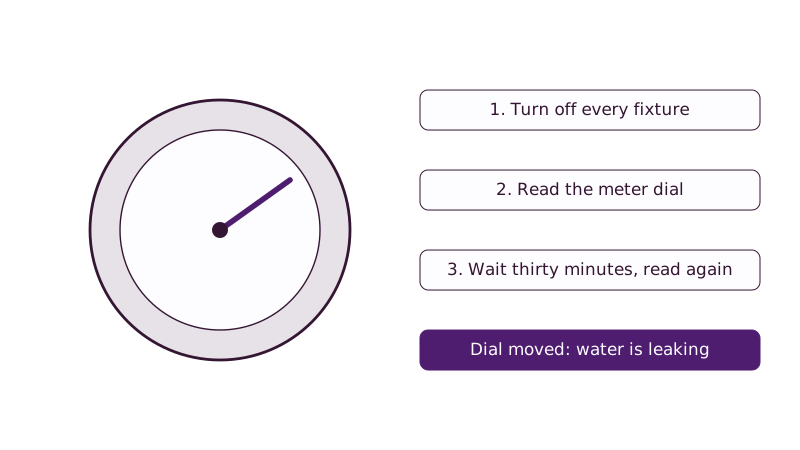
Two more tests help. First, the meter test: shut off every fixture, note the dial on your water meter, leave it two hours and read it again. If it moved, there is a leak somewhere between the meter and the fixtures. EPA reports that household leaks waste over 9,300 gallons yearly, so the effort pays off. Second, use each fixture above the stain in turn, running the shower or tub for a few minutes before checking the ceiling.
A stain under a light fixture or fan means you should flip that circuit's breaker off before approaching. Avoid standing beneath a ceiling that droops or bulges, and keep everyone out of the room. The electrical side is on the page about water leaks above a light.
Could a roof, duct or air conditioner be responsible?
A stain that tracks with rain, or sits under an attic duct or air handler, is not a job for a plumber first. Roof flashing and tile or shingle damage belong to a roofer, and a clogged condensate drain or sweating duct belongs to an HVAC company. After testing, a plumber can still confirm that the supply and drain lines are dry.
Calling the wrong trade wastes money, which is why we say so. Ask whoever visits to state plainly what was tested and what was ruled out. A good answer sounds like "the supply lines held pressure and the meter did not move, so look at the roof or the duct." In California a contractor license is required once labor and materials reach $1,000, and cslb.ca.gov lets you look up any contractor.
Might plumbing be seeping slowly in the wall or above the ceiling?
Yes. A pinhole in a copper supply line, a weeping drain joint or a failing shower valve can drip slowly enough for the ceiling to dry between episodes. Older homes in Downtown Riverside, the Wood Streets and Arlington, with aging copper or galvanized lines, may corrode this way more than newer PEX homes in Orangecrest.
Clues that implicate plumbing include a stain returning to the same place, faint dripping sounds, a damp smell, a rising water bill, and a stain under a bathroom or laundry. A plumber can check with a moisture meter or thermal camera without cutting drywall, and a leak detection visit relies on sound, pressure testing and sometimes a camera inside the wall cavity.
What to look for is listed in signs of a ceiling leak and ceiling water leaks, and high water bills with no visible leak goes further into the meter test.
What does leak detection cost?
The slab leak guide from This Old House, updated April 7, 2026, gives $150 to $600 for leak detection. That is a national guide figure for finding a leak, not a Riverside rate or what we charge, and repair is not included. We found no second readable guide that prices ceiling leak detection separately.
The written quote sets the price, so ask which detection method is used, whether opening drywall is included and whether the fee is credited toward the repair. Repair costs follow what is found. When piping behind a wall face or under the floor must be replaced, the City of Riverside's handout calls for a permit, so ask who takes care of it. More figures are on leak detection cost.
Common questions
How much time does finding the source take?
What questions should I raise before hiring?
Must someone be home?
Should I repaint the stain?
For the wider picture, start with Rubidoux Ridge Plumbing plumber.
Sources used
Page updated