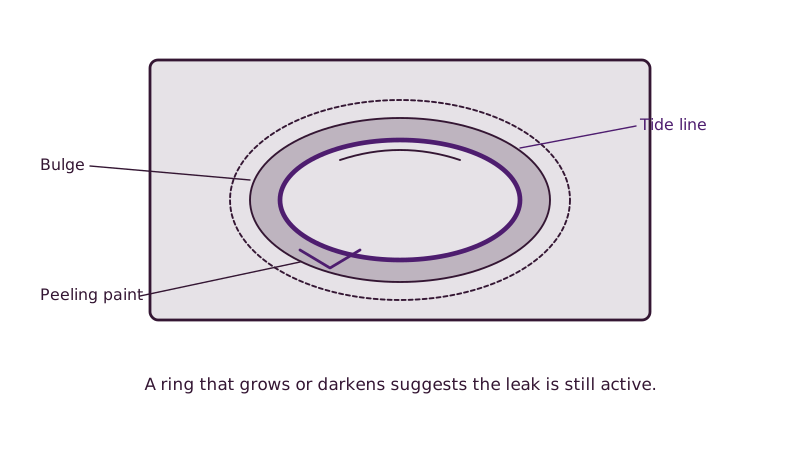
The usual signs of a ceiling leak are a yellow or brown stain, a ring that grows, paint that bubbles or peels, a sagging patch of drywall, drips, a musty smell and sometimes a hissing sound above. A leak from a supply pipe keeps going day and night, while a roof leak tends to follow rain. The plumber for leaks page explains how we pass your request to a local plumber who then visits you.
Which marks on a ceiling suggest a water leak?
Look for stains that are tan, yellow or brown, often with a darker ring at the edge, plus bubbling paint, bulging or soft drywall, mildew smells and drips. A stain that expands, even without rain, suggests a pipe, and one that appears after storms suggests the roof. Sagging means a lot of water is trapped above.
Early signs are easy to miss. A small discolored spot, a damp feel when you press it or a faint smell in a closet below a bathroom may be all you get for weeks. Check the ceilings under bathrooms, kitchens, laundry rooms and water heaters from time to time.
Do not ignore a stain that has dried. It marks where water came through, and the source may start again. See ceiling spots with nothing leaking above for stains with no apparent cause, and ceiling water leak for the repair side.
What noises does a split pipe make?
A burst pipe can make a loud bang when it splits, then a continuous hiss, rushing or spraying sound from a wall or ceiling. You may also hear water running when every tap is off, or a gurgle from drains. Often the first sign is not a sound but a drop in pressure and a wet spot.
Slow leaks are quieter. A pinhole may make only a faint hiss or a tick that you notice at night. If you hear running water when no fixture is on, shut off the main, and see whether the sound stops. Our guides to recognizing a burst pipe and burst water pipe go deeper.
If water is pouring, shut off the main valve, turn off power to the affected area if water is near fixtures or outlets, and phone a plumber immediately. Urgent plumber help for a burst pipe explains what to expect.
How do I know whether the source is a pipe or the roof?
A pipe leak runs regardless of weather and may get worse when someone uses water, while a roof leak follows rain. Test it: turn off water at the main for an hour and watch the stain. If the dripping slows or stops, the cause is a pressurized pipe. If it keeps dripping, inspect the roof, the air conditioning or a drain line.
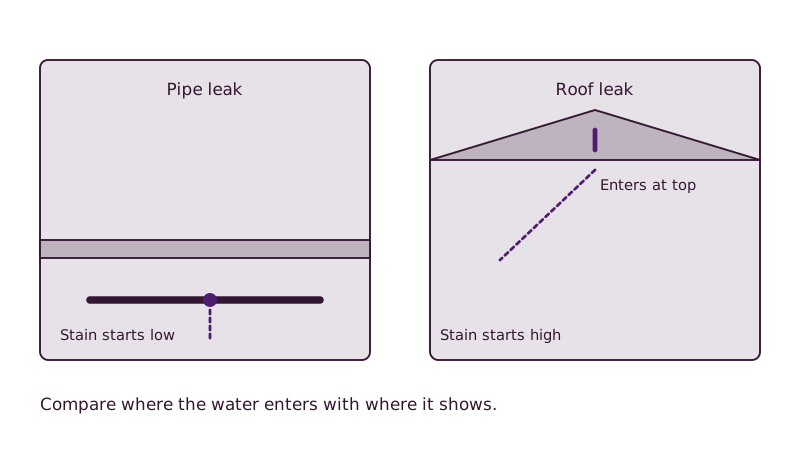
The water meter helps. With everything off, write down the reading, wait two hours, then read it again, as the EPA suggests. A moving meter means water is escaping somewhere in the plumbing. A steady meter and a wet ceiling point away from the supply lines, toward the roof or a drain.
Attics tell the story. If it is safe to look, check the insulation above the stain for dampness, and trace the wet area back. Insulation and framing that are dark and wet around a pipe confirm the plumbing source. Do not step between joists, because the ceiling will not hold you.
Why do copper pipes develop pinholes?
Pinholes are tiny holes that form when the pipe wall thins from the inside, often from corrosion. Causes that plumbers discuss include water chemistry, fast water flow, high pressure, dissolved oxygen, scale deposits and electrolysis. The cause on a given house is rarely clear without testing, and often more than one factor is at work.
Several pinholes in the same house can mean the pipe is wearing out, not that one spot is unlucky. Riverside Public Utilities' 2025 report lists hardness averaging 197 mg/L (about 12 grains per gallon), but we cannot tie a leak to a water supply from that figure alone. A plumber can examine the pipe and judge whether repair or repiping fits.
A pinhole leak in a ceiling can stain drywall long before anyone finds the pipe. Repairing a copper pinhole leak shows temporary fixes and the permanent repair.
What explains a big water bill with no leak in sight?
The usual hidden sources are a silent toilet leak, a leaking irrigation valve, a slab or yard line leak, a water heater relief valve and a faulty softener. Start with the meter test, follow with the toilet dye test, and then inspect the yard. A bill can also jump from a rate or billing period change, so look at the statement.
According to the EPA, leaks in an average home waste over 9,300 gallons of water yearly, most of it small and silent. Our guides reasons for a sudden jump in the water bill and a big bill but no visible leak walk through the hunt. For hidden leaks in concrete, see slab leak detection and repair.
How can I spot a burst pipe in the yard?
Outside signs include a wet or sunken patch of ground that stays damp when it has not rained, a puddle with no source, unusually green grass in a strip, water in a meter box, a drop in water pressure and a bill that jumps. A break in the line running from the meter to the house can leak for a long time before anything shows inside.
Watch the meter. If it keeps spinning with everything off and the yard is soggy, the leak is likely in the yard line. Your water supplier owns the meter, and you generally repair the pipe on your side of it. Telling if a pipe burst underground covers the checks. Tell your water supplier about any break on its side of the meter; its number is on your bill.
Which steps come first with a ceiling leak?
Close the main water valve when a pipe is the likely cause. Clear furniture away and set a bucket beneath any drip. Cut power to lights or outlets on that circuit if water is close to them. A ceiling bulging with water can be relieved by puncturing a small hole at its lowest point over a bucket, but stand clear first.
Record the damage in photos and video for the insurer, and dry the area quickly because mold can begin to grow within days. Fans and dehumidifiers help. Then arrange a plumber to find and repair the source. A separate guide covers damage after a pipe bursts.
In Riverside, piping behind a wall or below the floor needs a permit to replace, per the city's handout, so repairs inside walls may need Building and Safety at (951) 826-5800. We arrange work in Riverside, Moreno Valley and Loma Linda. Use the quote page or visit the home page.
What causes water to leak from a ceiling?
Common causes are a leaking supply or drain pipe in the floor above, a bathroom fixture or shower pan, a roof leak, a leak from an air conditioner drain, or an attic water heater that has failed. A plumber traces the water to its highest wet point to find which it is.
These patterns help narrow it down:
- Directly under a bathroom. Suspect a supply line, drain, tub or shower seal or toilet seal above.
- Near an outside wall or under the roof. Suspect the roof, flashing or a vent boot.
- Under an attic air conditioner or water heater. Suspect a clogged condensate drain or a tank leak.
- Near a recessed light. Water can run along wires and show up at a fixture. Turn off the circuit, and see a ceiling light with water coming through.
- No pattern. A pinhole in a pipe run through the joists can show up anywhere along its path.
Roof leaks are not plumbing, and a plumber will say so if the evidence points up. A roofer is the right call then.
Common questions
How long before a ceiling leak does serious damage?
Is a ceiling stain always a plumbing leak?
Should I cut a hole in a sagging ceiling?
Who can find a hidden ceiling leak in Moreno Valley or Loma Linda?
Sources used
Page updated