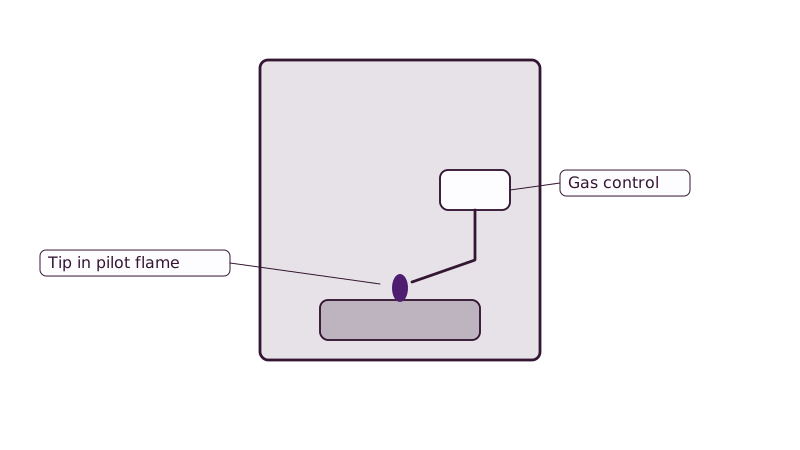
Inside a gas water heater, a thin metal probe sits in the pilot flame and signals the gas valve that the flame is burning. Once that probe is worn or dirty, the valve shuts and the pilot goes dark. The remedy is a new thermocouple, tested and installed by someone experienced with gas. We pass your request to a local plumbing business, and the water heater repair page walks through the steps toward a quote.
What is the job of a water heater thermocouple?
The thermocouple generates a tiny voltage when its tip is heated by the pilot. That voltage holds open a magnet inside the gas control valve. If the pilot goes out, the voltage drops, the magnet lets go and the gas shuts off. It is a safety device that stops raw gas flowing to an unlit burner.
Because it is a safety part, a worn one fails in the safe direction. The heater stops working, which is annoying, but it does not leak gas on its own. That is why a pilot that keeps going out is usually a repair rather than an emergency, provided there is no gas odor.
A gas smell means walking out and phoning SoCalGas at 1-800-427-2200 once you are outdoors. Use 911 if danger is present. When service has been shut at the meter, SoCalGas says to keep the gas off and let the utility restore it.
What are the signs of a failing thermocouple?
The textbook symptom is a pilot that stays lit only while you press the button and dies seconds after release. Others include a weak, yellow or flickering pilot flame, a sooty probe tip, and a heater that runs for a day, then quits. The pattern repeats every time.
Before you blame the part, rule out simpler causes. A draft near the pilot, a dirty pilot orifice, a gas control that is failing, or the gas supply to the house can mimic a bad thermocouple. If other gas appliances also act up, the issue is upstream of the heater. A plumber checks these in order, so you do not pay for a part you did not need.
Plenty of newer gas heaters rely on electronic ignition, so they have neither a standing pilot nor a thermocouple. Others use a thermopile or a flame sensor that does the same job under a different name. The rating plate and the manual say which your heater has, and the plumber will match the part to the model.
If the heater has no hot water for another reason, the guides on the reasons hot water is missing and on a heater that runs but gives no hot water cover the other causes.
How is a thermocouple tested and replaced?
A plumber shuts off the gas at the heater's control, lets the unit cool, removes the old thermocouple from the burner assembly and the gas valve, fits a matching one and relights the pilot following the label. A meter check confirms the new probe produces its rated voltage, and the plumber watches the flame to make sure it holds.
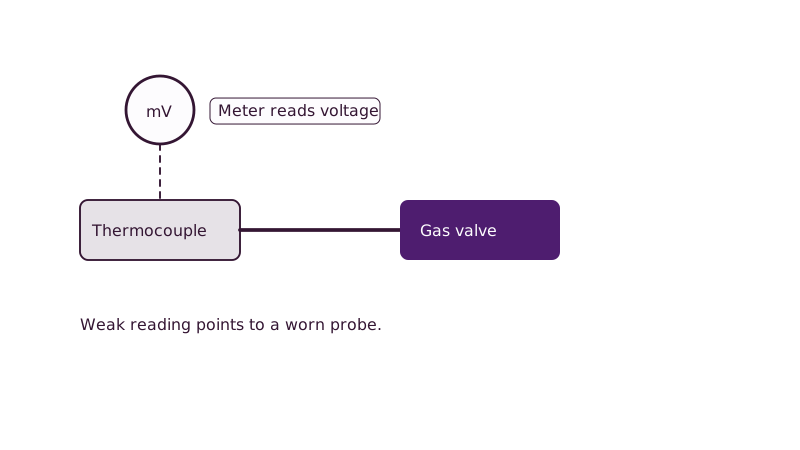
The specification, usually given in millivolts, appears in the maker's service data for the model, which is why none is quoted here. A reading under spec on a clean probe means the probe is worn. A good reading with a pilot that still drops out points to the gas control or something else.
Fit matters. The tip has to sit in the pilot flame at the right depth, and the nut at the gas valve has to be tightened as the maker directs. Over-tightening can damage the valve, and a loose nut can leak gas. Once the work is done, the plumber checks for leaks at every disturbed joint with a leak-detection solution.
Can I replace a thermocouple myself?
Some homeowners do, but we advise against it unless you are practiced with gas appliances and the manual walks you through it. The thermocouple screws into the gas control, so a mistake puts gas at the joint. If you are unsure, hire a plumber. Do not touch a heater while gas can be smelled.
The law draws its line at gas piping and permitted work. Per the Contractors State License Board, California calls for a contractor license on any job needing a permit or reaching $1,000 in labor and materials. A part swap does not reach that, but gas piping, new valves and venting changes do. Do not touch those yourself.
If you do attempt the swap, shut off the gas control, wait for the burner to cool, and follow the manual for your model. Do not use an open flame to look for leaks. Instead, brush on soapy water and look for bubbles. If you see bubbles, stop, close the gas and call.
Should I replace only the thermocouple or the entire heater?
When the rest of the heater is sound, a new thermocouple makes sense, since the part is small and the repair quick. A tank that is old, leaking or rusted cannot be rescued by a part. Start with the age, and use how often a water heater needs replacing to judge whether the unit deserves repair.
Think about what else is on the unit. If the anode rod, relief valve and connectors are all due, a plumber can say whether bundling the work makes sense. Related pages cover anode rod replacement as well as the relief valve swap.
If replacement is the answer, plumber for water heater replacement explains the process and tank versus tankless compares your options. If water is on the floor, read the guide to a leaking water heater.
What else gets inspected during the visit?
A good visit looks at the whole gas path. The plumber checks the pilot flame, the burner, the gas control, the venting, the draft hood and the relief valve, and makes sure the strapping holds the heater against earthquakes. California requires water heaters to be strapped.
Venting deserves attention. If your heater's vent looks loose, gapped or stained, say so at the visit. A heater that backdrafts can put carbon monoxide into the home, so a working carbon monoxide alarm is a sensible precaution.
SoCalGas serves Riverside, Moreno Valley and Loma Linda, and the plumber can help if a gas supply problem sits on the utility's side. Those cities and nearby communities are our service area, and a quote request with the brand and symptoms starts the process. The home page lists everything else we connect you with.
Common questions
What makes a pilot light die over and over?
Is it dangerous to relight the pilot?
Do all water heaters have a thermocouple?
Who replaces one in Riverside, Moreno Valley or Loma Linda?
Sources used
Page updated