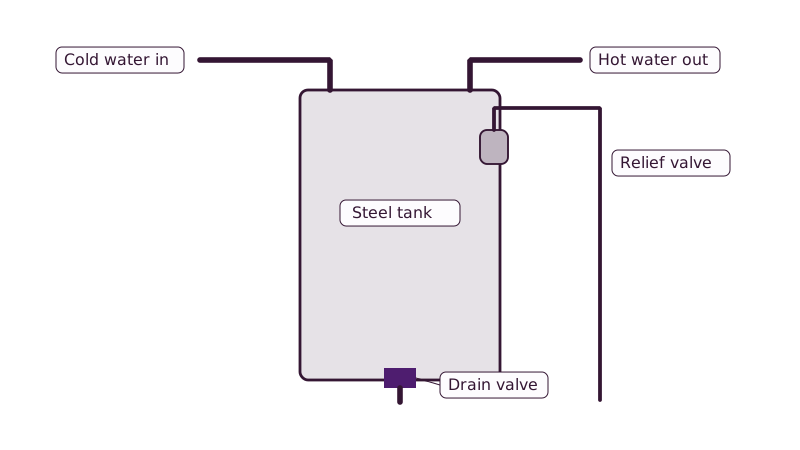
Four spots usually explain a puddle under a heater: a pipe connection that has loosened or corroded, the drain valve, the pressure-and-temperature relief valve, or the body of the tank. Fittings and valves can often be repaired while the heater stays. If water seeps through the shell, no repair exists. The water heater repair page describes how we send your request to a local plumbing business, and the steps below limit the damage until that visit.
What are the first steps if my water heater is leaking?
Shut off the water entering the tank and kill its heat. Turn the cold supply valve at the top of the heater closed. On an electric model, flip its breaker off; on a gas model, move the control knob to pilot or off. After that, set a bucket beneath the drip and keep people from stepping in the wet area.
Do this before you look for the cause. Water that is heated while the tank drains can burn skin, and an electric element that is no longer under water can burn out. Never touch a wet electrical connection. If the floor is soaked around an electric unit, turn off power at the panel and only do it with dry hands and shoes.
Leave the meter valve alone unless gas has a smell. When it does, get out of the house and phone SoCalGas at 1-800-427-2200 from outdoors. SoCalGas says not to turn service back on yourself: it wants SoCalGas or another qualified professional to do a safety inspection before service is restored.
A leak that is spreading toward walls or flooring is urgent. Our emergency water heater repair guide covers the situations where waiting until morning is a poor idea.
What makes a water heater relief valve keep dripping?
A relief valve that drips or runs can be doing its job, because it opens when pressure or temperature rises. Possible causes are street water pressure that runs high, heat expansion inside a closed system, an overly hot thermostat setting, or a worn-out valve. A plumber checks pressure first, then the valve.
High incoming pressure is a common culprit. Under the California Plumbing Code, static pressure may not exceed 80 psi, and a failed pressure regulator is one way a house ends up above it. Our guide to adjusting a water pressure regulator explains how to test for it with a simple gauge.
In a closed plumbing system the heated water has no place to go, and an expansion tank often helps. See expansion tank replacement. Never cap the relief valve discharge pipe, since that valve exists for safety.
Is a leaking water heater worth repairing, or must it be replaced?
Repair is usually possible when water escapes at a fitting, valve or element gasket. When it escapes from the tank body, the steel liner has failed and only a new heater solves it. Within minutes, a plumber can separate the two cases by tracing the source of the water and noting how old the unit is.
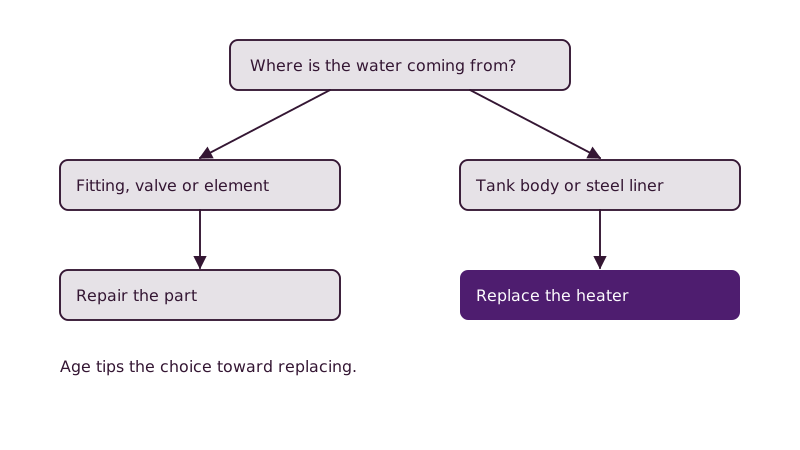
Age is the other factor. A heater close to retirement gets only a brief extension from a repair, so you must decide whether to pay for another visit down the road. The guide on how often a water heater needs replacing can help you decide. If you are choosing a replacement, tank versus tankless is the next read.
Rheem, Whirlpool and Bosch heaters leak for the same reasons, so brand matters mostly for parts. Parts such as valves, elements and gaskets are matched by the plumber to the model number printed on the rating plate.
What leak fixes are reasonable to try on my own?
With the water off, and if you are comfortable, you can snug a loose threaded connection by a quarter turn, put on a new hose-style drain cap or change a drain valve washer. Gas piping, venting and the relief valve discharge line belong to a plumber.
Water heater work is regulated because it touches gas, hot water and pressure. In Riverside, the city's work-exempt-from-permits handout names faucet and toilet replacement as exempt and does not list water heaters, so a replacement generally needs a permit, and in California the contractor license rule applies to any job that needs one. Do-it-yourself work stops at a snug fitting and a dry floor.
A thread-seal tape wrap on a leaking joint rarely lasts. If the joint is corroded, the metal around it is thin, and tightening can crack it. Treat a corroded joint as a plumber's job.
How can I find the source of the leak?
Towel the heater dry, then wrap a strip of paper towel around each spot you suspect and watch which one darkens first. Check the connections up top, the relief valve with its discharge pipe, the element covers if the unit is electric, the base of the tank, and the drain valve low on the side.
The location tells you the cost of the fix:
- Top pipe connections. The cheapest leak to fix is a weeping threaded joint or flexible connector. A plumber can tighten, reseal or replace the connector.
- Relief valve or its pipe. Water dripping from the relief valve discharge pipe means the valve is opening, which can come from pressure or heat. See relief valve replacement and the pressure notes further down.
- Drain valve. A slowly dripping drain valve often has a worn washer. Replacing the valve is a small job, covered in the plumber's visit.
- Element gasket on an electric unit. Water behind the access panel may point to a bad gasket. Replacing the gasket or element is covered in element replacement.
- Tank base. Water at the bottom, with a rusty or wet jacket, usually shows that rust has eaten through the tank.
Not every puddle is a leak. A heater that is cold to the touch and sits in a damp room can collect condensation, especially when cold water comes in during humid weather. Wipe it dry and see whether the water comes back within a day.
What if my water heater leaks and also gives no hot water?
Losing hot water while a leak shows up means two problems that may or may not be connected. If the leak turned off the heat, for example when the tank drained, the water will not warm until the leak is fixed and the tank refills. If the leak is minor, the no-hot-water cause may be a thermostat, element, pilot or thermocouple.
For a gas unit that will not stay lit, the thermocouple is a common culprit, covered in thermocouple replacement. For an electric unit that is wet at the access panel, do not reset breakers until the plumber has dried and checked it. For no hot water without a leak, see reasons for having no hot water.
Searches for DIY tankless water heater installation lead people here too. Tankless installs involve gas sizing, venting and often electrical work, so use the maker's installation manual and plan on hiring a plumber. Our tankless installation guide explains what the job includes.
What will a hot water heater repair run me?
Repair prices depend on the part and the access. No cited guide figure exists for leak repairs, so none is given here. For comparison, replacement figures sit on the water heater replacement cost page. Request a written quote that names both the fault and the fix.
A leak that is not repaired can cost more than the repair. According to the EPA, leaks in a typical home waste over 9,300 gallons of water per year, and a heater leak adds water damage to floors and walls on top of the wasted water. Quote first, then decide between repair and replacement with real numbers in front of you.
To start, request a quote and we will pass it to a local plumbing business that can visit your home. The home page lists the other plumbing help we connect you with.
Common questions
Can a leaking water heater wait until morning?
Can I use a stop-leak product on a tank leak?
Do I need to drain the tank for a repair?
Whom should I contact about a heater leak in Moreno Valley or Loma Linda?
Sources used
Page updated