A worn cartridge, ball assembly or ceramic disc inside the faucet body causes most single-handle leaks. Close the water supply under the sink, disassemble the faucet, install a matching replacement for the worn part, and put it back together. A drip from the spout and a leak at the base call for different parts, so begin by noting where the water shows up. The wider picture is in the section on faucets, sinks, showers and disposals, and our other services are on the home page.
What makes a single-handle faucet leak?
Inside the body, a seal or valve opens and closes the flow as you move the handle. When it wears, hardens or collects mineral grit, water slips past it. A drip from the spout points to a worn cartridge, seat or disc. Water collecting beneath the handle or around the body points to worn O-rings. Both are inexpensive parts.
Hard water can speed the wear. Riverside Public Utilities' 2025 report puts hardness at an average of 197 mg/L, around 12 grains per gallon. Mineral buildup scratches the sealing surfaces. The EPA notes that one drip per second can waste over 3,000 gallons a year, enough for more than 180 showers, so fix it instead of ignoring it.
What type of single-handle faucet do I have?
There are three common designs. A cartridge faucet has a metal or plastic cylinder under the handle. A ball faucet, common in older Delta models, has a rounded cap and a slotted ball. A ceramic disc faucet has a wide cylinder with two polished ceramic plates. The handle and the cap shape give clues, and the brand is often printed on the body.
Look under the handle cap for a set screw, then lift the handle off to see what lies beneath. Take photos at each step and take the old part to the hardware store. Matching the exact cartridge matters, since sizes and splines differ by brand and year. If you cannot identify it, stop and ask a plumber.
How do I replace the cartridge?
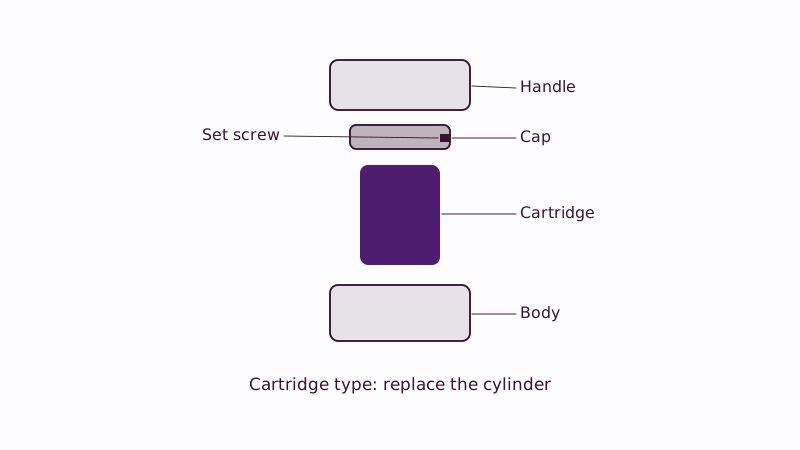
Shut both angle stops under the sink, then open the faucet so pressure bleeds off. Stop the drain to keep small parts from dropping in. Take off the cap and the set screw, lift the handle away, undo the retaining nut or clip, and draw the old cartridge straight up while noting its orientation. Seat the new cartridge the same way, reassemble, and reopen the stops slowly.
Change the O-rings while you are in there, and coat them with a light layer of plumber's grease. Test with the handle in the off position, then run hot and cold and check for drips at the base. The City of Riverside's permit handout lists faucet or toilet repair or replacement as exempt from permits, so a swap of this kind does not need one.
How do I fix a ball-type faucet?
Take off the handle and cap, loosen the cam and packing with a spanner, remove the ball, and replace the springs and seats, which are small rubber seals with springs behind them. A repair kit for the brand has everything needed. Tighten the cap enough to stop leaks at the base without making the handle stiff.
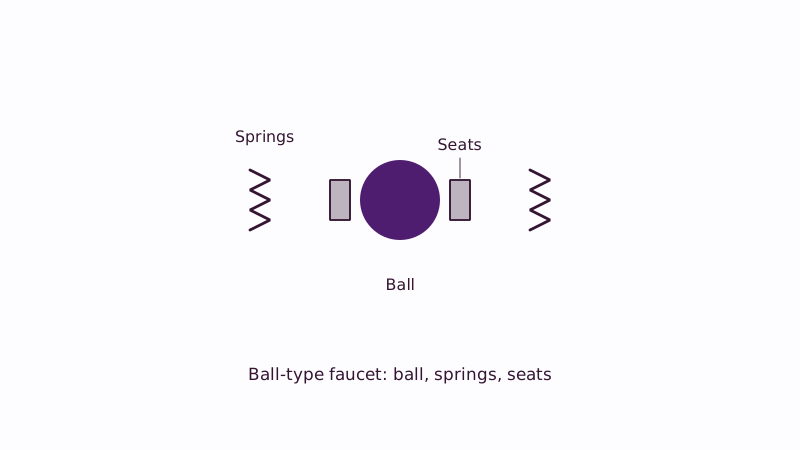
Ball faucets have many small parts, so lay them out in order on a towel. If the ball is pitted or scratched, replace it too. The steps mirror those in the guides to a bathroom sink faucet leak and a general faucet drip. A two-handle design follows a different path, covered in the guide to two-handle faucets.
What if the water shows up at the base or under the sink?
Water at the base of a spout means the spout O-rings are worn. Pull the spout, replace the rings and lubricate them. Water under the sink may come from the supply hoses or the angle stops, not the faucet. Dry everything with a towel, run the tap, and watch where the first bead appears.
Persistent leaks from the supply connections may call for new hoses or valves. Cabinet damage can set in fast from an under-sink leak, so check it soon. For the pipe side, read the page on a leaking pipe below the sink. If a faucet body itself is cracked or corroded, replacement is the answer, and faucet replacement costs explains the numbers.
When does a leaky faucet call for a plumber?
Call when the shutoff valves will not close, when parts do not match after two tries, when the faucet body is corroded, when you see water in the cabinet you cannot trace, or when you simply prefer not to take it apart. A plumber business that takes your request will quote the repair or a new faucet in writing.
A drip can add to your water bill too, which the page on faucet drips and high bills explains. An old faucet may be better value to replace than repair, and the page on faucet installation pricing shows what a plumber's work involves.
Common questions
How much time does a single-handle faucet repair take?
Which questions come before hiring a faucet fixer?
Must I be at home during a faucet repair?
Is it better to replace the whole faucet?
Sources used
Page updated