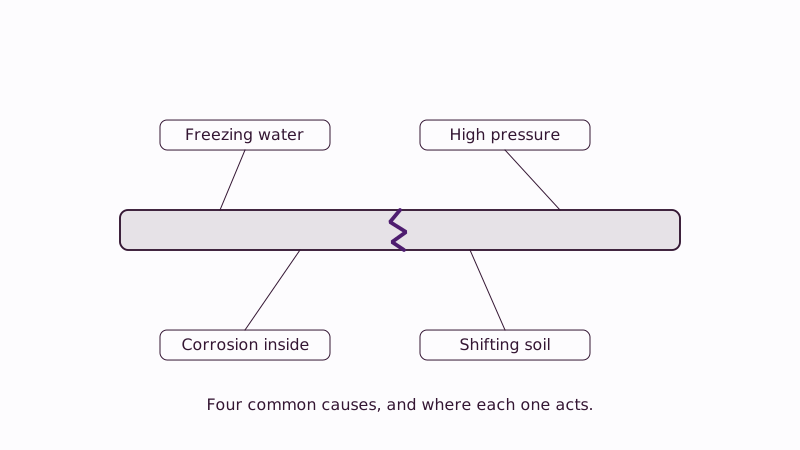
Pipes burst when the force pushing out from inside, or the damage eating them from outside, passes what the metal or plastic can hold. In the Riverside area that usually means high water pressure, old or corroded lines, a rare hard freeze or ground movement. If one is spraying right now, shut the main valve before anything else, and afterward read our leaks and burst pipes guide.
Why do pipes burst in the first place?
Five factors do most of the harm: excessive water pressure, pipe walls thinned by corrosion, freezing, heat with expansion, and shifting ground or framing. Often two combine, such as an old line under high pressure. Knowing the cause matters because the repair differs and the same thing can happen again.
Pressure. Building water pressure is capped at 80 psi by section 608.2 of the California Plumbing Code. Homes at the low end of a hillside, or on a street with strong supply pressure, can sit above that unless a regulator is working. A failed regulator lets the full street pressure into the walls, and a weak joint gives up first. Our page on adjusting a pressure regulator explains the check.
Corrosion and age. Galvanized steel corrodes internally, while copper can develop pinholes. Both are common in older stock such as the orange-grove-era houses in Downtown Riverside, the Wood Streets and the Eastside. A thinned wall fails with an ordinary surge, so a burst can look abrupt although the damage accumulated over years. See also galvanized pipe replacement.
Water hammer. A valve or appliance that shuts quickly sends a pressure shock down the line, and over time it loosens joints. A banging pipe is a warning. The page on water hammer covers the noise and fixes.
Ground and house movement. Settling soil, tree roots and earthquakes can pull on pipes where they leave the slab or the wall. Fixing a pipe that has been pulled apart does not stop the movement, so the plumber looks at how the line is supported too.
How can I recognize a burst pipe by ear?
A burst pipe often makes a hiss or a rush of running water when no tap is open, sometimes with a thump or bang at the moment it fails. Inside a wall you may hear dripping or trickling, and a failed line under pressure can sound like a faint spray. Silence does not clear the line: a slab or sealed-wall leak may be quiet.
Other signs show up elsewhere. A wet spot or stain on a ceiling, bubbling paint, damp baseboards, a musty smell plus a pressure drop all point to a leak. A ceiling leak starts as a tan or brown ring that spreads, then paint that bubbles or sags. A water bill that climbs even though your routine has not changed is another clue. Our guide on signs of a ceiling leak goes through them.
Gas smells are a different matter. Smelling gas means getting out of the building and phoning SoCalGas on 1-800-427-2200 once you are a safe distance away.
Why do pipes burst in cold weather?
Water expands as it freezes, and ice pressure splits the pipe, usually where ice forms a plug and the water behind it has nowhere to go. A freeze is less common in the Inland Empire than in cold states, but a clear winter night can drop below freezing and the exposed lines are at risk: outdoor spigots, pipes along an exterior wall, attic lines and irrigation risers.
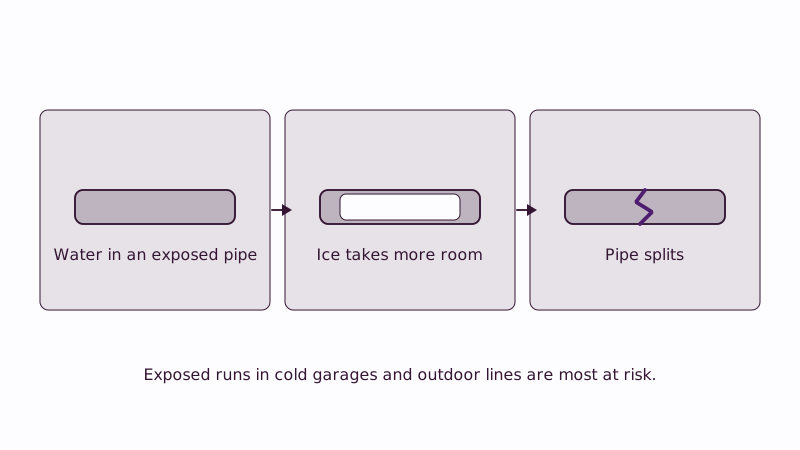
The failure often shows up on the thaw, not the freeze. Ice holds the split closed, then melts and the water runs. Before a cold night, disconnect hoses, cover exposed spigots and open a cabinet door where a sink sits on an exterior wall. Should a pipe freeze, close the main before thawing it, so a hidden split does not flood the room.
Why do pipes burst in hot weather?
Heat does not freeze anything, but it raises pressure. Hot sun on exposed or attic pipes warms the water inside, and a water heater warming a closed system drives pressure up when it has no outlet. A thermal expansion tank is what absorbs that, and a stuck relief valve is a warning sign. A weak fitting will be the first to open.
Summer also brings higher demand and sudden pressure swings from irrigation timers and long cycles. In a house with a high-pressure street connection and no regulator, summer can expose the weakness. If you see a drip at the water heater or hear popping from the tank, see our pages on the expansion tank and the relief valve.
Which actions matter first if a pipe bursts?
Close the main water valve, turn the heater's power or gas off, and drain the lines by running the faucet that sits lowest in the house. Relocate valuables, take pictures of the damage, and stay away from standing water around outlets and appliances. After that, arrange a plumber and ask for the written quote before any work begins.
Unsure where the shutoff sits? Check by the front hose bib or at the meter. If the break is on the utility's side of the meter, phone the water agency. If you are a Riverside Public Utilities customer, it lists (951) 782-0330 for water emergencies; confirm your supplier on your bill. The EPA reports that household leaks waste over 9,300 gallons annually on average, so close the valve even for a small break.
Repair needs a permit in some cases. The City of Riverside's handout says replacing piping behind the face of a wall or below the floor requires one, so confirm with Building and Safety at (951) 826-5800. For help with cost and who to call, see burst pipe emergency help and cleanup and damage once a pipe has burst.
Common questions
What is the typical time to repair a burst pipe?
Which questions should I put to a plumber before hiring?
Must someone be home during the repair?
Is it possible for a pipe to burst without warning?
For the wider picture, start with Rubidoux Ridge Plumbing plumber.
Sources used
- California Plumbing Code section 608.2, water pressure limit of 80 psi
- US EPA, Fix a Leak Week
- City of Riverside, work exempt from building permits
- California Contractors State License Board, home page, accessed 2026-11-17
- Riverside Public Utilities, contact us
Page updated